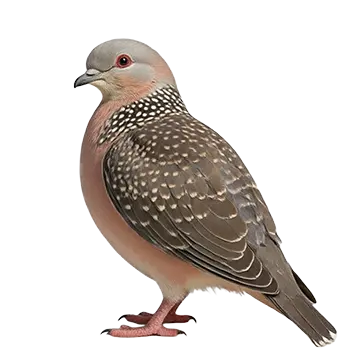

Spotted Dove Species Guide - Furry Critter Network

Spotted Dove

Quick Facts

šŸ”¬ Scientific Name
Spilopelia chinensis
šŸ“Š Care Level
Beginner to Moderate
😊 Temperament
Gentle, Peaceful, Calm
šŸ“ Adult Size
11-13 inches
ā±ļø Lifespan
3-5 years in wild, 10-15 years in captivity
šŸ”Š Noise Level
Quiet
šŸ—£ļø Talking Ability
None (coos)
šŸ½ļø Diet Type
Granivorous (seed-eating)
šŸŒ Origin
South and Southeast Asia
šŸ  Min Cage Size
24x24x24 inches minimum
šŸ“ Size
Small

Spotted Dove - Names & Recognition

The Spotted Dove is scientifically classified as Spilopelia chinensis, belonging to the family Columbidae, which encompasses approximately 340 species of pigeons and doves distributed worldwide. Until recently, the species was placed in the genus Streptopelia, a large genus containing many familiar dove species, but molecular phylogenetic studies resulted in reclassification into the genus Spilopelia, which contains the Spotted Dove and a few closely related species. The genus name Spilopelia derives from the Greek 'spilos' meaning 'spot' or 'stain' and the Latin 'pelia' related to 'columba' meaning dove or pigeon, directly referencing the spotted neck collar that characterizes adult birds. The specific epithet 'chinensis' means 'from China,' referencing one of the regions where the species occurs, though the name is somewhat misleading as the species' range extends far beyond China across much of South and Southeast Asia.

The common name Spotted Dove is universally used in English-speaking regions and directly references the diagnostic spotted black and white neck patch that adorns adult birds, making them immediately identifiable. This name has been standard for over a century and appears in all field guides, ornithological literature, and avicultural references. The name emphasizes the key field mark distinguishing adults from juveniles and from other dove species, making it descriptive and appropriate. Alternative English names are limited and rarely encountered, though occasionally the species is called Indian Spotted Dove emphasizing its presence in the Indian subcontinent, or Chinese Dove referencing the species name, though this latter name is potentially confusing as numerous dove species occur in China.

In the species' native range across South and Southeast Asia, it has numerous regional names reflecting its wide distribution and familiarity to local populations. In Hindi and Urdu, it is called Chitroka Fakhta or Punduk. In Bengali, it is known as Tila Ghughu. In Thai, it is called Nok Khao Lai or Nok Khao Kha. In Malay and Indonesian, it is Tekukur Biasa (common spotted dove). In Chinese, it is called ē é¢ˆę–‘éø  (zhÅ« jǐng bān jiÅ«) meaning 'pearl-necked spotted dove.' In Japanese, it is known as Kanoko-bato. These diverse names reflect the bird's widespread occurrence across densely populated regions where it is a familiar garden and urban bird.

The Spotted Dove shows geographic variation across its extensive range, with multiple recognized subspecies distinguished by differences in size, plumage intensity, and extent of spotting. Taxonomic authorities recognize approximately 5-7 subspecies depending on treatment, including Spilopelia chinensis chinensis (nominate subspecies from southeastern China), S. c. tigrina (Indian subcontinent and mainland Southeast Asia—the most widespread form), S. c. ceylonensis (Sri Lanka), S. c. suratensis (western India), S. c. hainana (Hainan Island), and potentially others. These subspecies show relatively subtle differences, with variations primarily in overall size, intensity of pinkish coloration in the plumage, extent and boldness of neck spotting, and minor proportional differences. The subspecies tigrina, found across much of the mainland range, represents the form most commonly encountered in aviculture. However, all subspecies share the fundamental characteristics of pinkish-gray plumage, spotted neck collar in adults, and gentle temperament.

The Spotted Dove is closely related to other species in the Spilopelia and former Streptopelia complex including the Laughing Dove (Spilopelia senegalensis), found in Africa, Middle East, and South Asia, showing similar size and habits but with different plumage pattern, the Red Collared Dove (Streptopelia tranquebarica), a smaller species with more colorful plumage found across similar ranges, and the Eurasian Collared Dove (Streptopelia decaocto), a larger, paler species that has expanded dramatically across Europe and North America in recent decades. These related species share similar general ecology, behavior, and care requirements in captivity, though the Spotted Dove remains one of the most commonly kept species in aviculture due to its attractive appearance, gentle nature, and adaptability.

The Spotted Dove has been widely introduced outside its native range, establishing populations in numerous regions including Hawaii (where it is abundant and considered established), California (locally common in Los Angeles and other urban areas), Australia (established in parts of eastern Australia including urban areas), Mauritius and other Indian Ocean islands, and various Pacific islands. These introduced populations often thrive in urban and suburban environments, adapting readily to human-modified landscapes. In some areas, introduced Spotted Doves have raised conservation concerns through potential competition with native species, though their impact appears generally limited. The ease with which they establish in new environments reflects their adaptability and tolerance of human presence.

Culturally and historically, Spotted Doves have been kept as cage and aviary birds throughout Asia for centuries, valued for their gentle nature, pleasant cooing, attractive appearance, and ease of maintenance. They have been kept as pets, bred for release in religious ceremonies in some cultures, and maintained in temple and garden aviaries. In aviculture worldwide, Spotted Doves rank among the most commonly kept and bred dove species, prized for their suitability for beginners, peaceful coexistence with other species, reliable breeding, and undemanding care requirements. They are often recommended as ideal first birds for people interested in doves or as peaceful additions to mixed aviaries.

Spotted Dove Physical Description

The Spotted Dove is an attractive, medium-small dove measuring approximately 11-13 inches (28-33 centimeters) in total length from bill tip to tail tip, making it intermediate in size between smaller turtle doves and larger ringneck doves or pigeons. Adult weight typically ranges from 120-180 grams (4.2-6.3 ounces), with males averaging slightly heavier than females though overlap is substantial. The body proportions are typical of doves—compact, rounded body, relatively small head, medium-length tail, and sturdy legs adapted for ground foraging. The overall impression is of a graceful, well-proportioned bird with elegant movements and gentle demeanor.

The most distinctive and diagnostic feature of adult Spotted Doves is the prominent spotted neck collar that gives the species its common name. This collar consists of a broad black patch on the hindneck and upper sides of neck, heavily spotted or scaled with white, creating a conspicuous checkered or spotted pattern clearly visible from both front and rear angles. The pattern resembles a decorative necklace and represents the most reliable field mark for identifying the species. This spotted collar is present in both sexes but develops only as birds mature, being absent in juveniles—its presence immediately identifies an adult bird.

The head is relatively small and rounded, predominantly pinkish-gray or brownish-pink, slightly paler on the face and throat. The crown and nape may show slightly darker grayish tones. The overall head coloration creates a soft, gentle appearance befitting the bird's temperament. The eyes are striking—dark brown to reddish-brown, surrounded by a narrow ring of bare bluish or purplish-gray skin creating subtle but noticeable eye-rings. The eyes appear large relative to head size and convey an alert, gentle expression.

The bill is relatively slender and dark, typically blackish or dark gray, well-adapted for picking up small seeds and grains from the ground. Bill length is moderate, proportional to head size. The cere (fleshy area at bill base) is typically dark gray to bluish-gray.

The upperparts including back, wings, and rump are predominantly brownish-gray to grayish-brown with a warm pinkish-brown wash particularly evident on the back and wing coverts. Individual feathers often show darker centers and paler edges creating subtle scaled or patterned appearance. The wing feathers (primaries and secondaries) are darker brown to blackish-brown, contrasting with the paler wing coverts and creating visible contrast in flight. The overall upperparts coloration provides excellent camouflage when birds are foraging on ground in dappled shade.

The underparts from throat through belly are predominantly soft pinkish-gray to pinkish-buff, creating warm, attractive coloration. The intensity of pink varies between individuals and subspecies, with some showing quite rich pinkish tones while others appear more grayish. The undertail coverts are pale gray to white. The breast and belly coloration gradually pales toward the vent, creating subtle gradation rather than sharp demarcation.

The tail is moderately long and graduated, appearing broad and rounded when spread. The central tail feathers are brownish-gray matching the back, while the outer tail feathers show distinctive patterns visible particularly in flight—the outermost feathers show extensive white on the outer webs and tips, creating bold white corners when the tail is spread during landing or displays. This white in the tail flashes conspicuously during flight and serves as a visual signal.

The legs and feet are relatively sturdy and prominent, dull red to purplish-red or coral-red, creating a colorful accent against the more muted body plumage. The leg color can be quite vibrant in healthy birds and provides an attractive visual element. The feet show strong toes adapted for walking and perching, typical of ground-foraging doves.

Sexual dimorphism is very subtle, making visual sexing difficult or impossible without extensive experience or direct comparison. Males average slightly larger in body size and have marginally larger bills, but overlap is extensive. Males may show slightly more vibrant overall coloration with stronger pinkish tones, though this is variable and unreliable. Behavioral differences are more useful—males coo far more frequently and persistently than females, particularly during breeding season, and perform distinctive courtship displays. Outside breeding season or without behavioral observations, sexing is essentially impossible without DNA testing or surgical sexing.

Juvenile Spotted Doves lack the diagnostic spotted neck collar, instead showing plain grayish-brown neck matching the head. This absence of neck spotting immediately identifies young birds. Juveniles show overall duller, browner plumage with less pinkish coloration, more extensively scaled or barred appearance on wings and back, paler, less colorful leg color, and generally less refined proportions. The spotted collar begins developing gradually as juveniles mature, typically appearing around 3-6 months of age and fully developing by 8-12 months. Young birds show intermediate patterns during the transition, with partial or developing neck spots indicating subadult status.

In flight, Spotted Doves display distinctive silhouettes and patterns. The flight is direct with rapid, powerful wingbeats typical of doves and pigeons, lacking the undulating or bounding patterns of many smaller birds. The wings show darker flight feathers contrasting with paler wing coverts, and the white outer tail feathers flash conspicuously, particularly during landing when birds spread their tails. Flight calls consisting of soft clucking notes may be given when flushed or traveling between feeding areas.

On the ground, Spotted Doves walk with characteristic bobbing head movements, typical of the pigeon family, created by thrusting the head forward with each step. This head-bobbing provides stabilized vision while walking, compensating for birds' inability to move their eyes in sockets. Their ground movements are deliberate and graceful, with birds pecking regularly as they walk, searching for seeds.

Posture when perched is typically horizontal or slightly upright, with the body held fairly erect and tail often slightly raised. During courtship or territorial displays, males adopt exaggerated upright postures with inflated throat and chest, tail raised and fanned, while bowing and cooing. These display postures emphasize the bird's size and prominently display the spotted collar.

The overall impression of an adult Spotted Dove is of an attractive, gentle, well-proportioned bird with pleasing subtle coloration dominated by warm pinkish-gray tones, the distinctive spotted neck collar providing immediate identification, and a calm, peaceful demeanor evident in both appearance and behavior. Their beauty lies in subtlety and grace rather than brilliant colors, and their gentle nature makes them among the most pleasant and undemanding birds in aviculture.

Affection Level
Spotted Doves can become quite tame and comfortable with humans, particularly when hand-raised or given consistent gentle interaction. While not seeking cuddling like parrots, they may perch calmly on hands or shoulders, accept food from fingers, and show recognition of trusted caretakers. Pairs form strong bonds with each other but can remain friendly toward familiar humans. Their gentle, calm nature makes them pleasant companions.
Sociability
Spotted Doves are highly social birds that thrive when kept in pairs or small groups. Mated pairs form strong, enduring bonds, engaging in mutual preening and staying close together. They are peaceful with other doves and can coexist with various bird species in mixed aviaries. Unlike territorial songbirds, they readily accept the presence of other birds and benefit greatly from companionship of their own kind.
Vocalization
Spotted Doves produce soft, pleasant cooing calls that are gentle and melodious rather than loud or disturbing. Males coo more frequently than females, particularly during breeding season, with characteristic rhythmic patterns. Their calls are quiet enough for apartments and close quarters, never becoming overwhelming. The peaceful cooing is often considered soothing rather than bothersome, making them suitable for noise-sensitive situations.
Intelligence
Spotted Doves demonstrate moderate intelligence typical of doves and pigeons. They quickly learn daily routines, recognize their caretakers, remember feeding locations, and can navigate complex environments. While not matching parrot cognitive abilities, they show good problem-solving for foraging tasks, social awareness, and environmental learning. Their intelligence is practical and well-suited to their lifestyle.
Exercise Needs
Spotted Doves are moderately active birds that benefit from spacious housing allowing walking, short flights, and natural foraging behaviors. While not as intensely active as many small birds, they need adequate space to move, stretch wings, and engage in normal behaviors. Ground foraging time is particularly important as they naturally spend considerable time walking and pecking for seeds. Daily movement prevents obesity and maintains health.
Maintenance Level
Spotted Doves have relatively low maintenance requirements compared to many exotic birds. Their seed-based diet is straightforward and economical, housing needs are manageable, and they are hardy, disease-resistant birds. Daily care involves feeding, water changes, and basic cleaning. Their peaceful temperament and lack of destructive behaviors make them easy to manage. They are suitable for beginners willing to provide appropriate care.
Trainability
Spotted Doves show limited trainability but can learn basic behaviors through patient positive reinforcement. Hand-raised birds may learn to accept food from hands, step onto fingers, and tolerate gentle handling. They can be recalled with food rewards and learn to associate sounds with feeding times. However, they lack motivation for trick training and remain primarily calm observation birds rather than interactive performers.
Independence
Spotted Doves show moderate independence. While they benefit greatly from companionship of another dove, pairs or individuals are content occupying themselves with foraging, preening, basking, and other natural behaviors. They do not require constant human attention though they appreciate routine interaction. Their calm, self-sufficient nature within appropriate social contexts makes them undemanding companions that thrive with basic care and respect.

Natural Habitat & Range

The Spotted Dove is native to a vast region encompassing the Indian subcontinent and much of Southeast and East Asia. The natural range extends from the Indian subcontinent (India, Pakistan, Bangladesh, Nepal, Sri Lanka) through mainland Southeast Asia (Myanmar, Thailand, Cambodia, Laos, Vietnam, Peninsular Malaysia) to southern China, Taiwan, and Hainan Island. This extensive distribution covers diverse climatic zones and habitats, reflecting the species' ecological flexibility and adaptability. The range primarily encompasses tropical and subtropical regions, though some populations extend into warm temperate zones particularly in China.

The natural habitats of Spotted Doves originally consisted of forest edges, clearings, and open woodland, though the species has adapted remarkably well to human-modified landscapes and currently thrives in gardens, parks, and urban areas, cultivated lands including farms and plantations, suburban neighborhoods with trees and shrubs, temple grounds and cemeteries with vegetation, coastal scrub and mangroves in some regions, and lightly wooded countryside. These doves show remarkable tolerance of human presence and activity, often being more abundant in settled areas than in wilderness. They are among the most successful birds in adapting to urbanization, thriving in cities throughout their range where they forage in gardens, parks, and streets. This synanthropic tendency—living in close association with humans—has contributed greatly to their success and expansion.

Elevationally, Spotted Doves occur primarily in lowlands and foothills, typically from sea level to approximately 1,500-2,000 meters (4,900-6,500 feet) elevation, though they are most abundant below 1,000 meters (3,300 feet). They occasionally occur at higher elevations where suitable habitat exists, but they are fundamentally lowland birds adapted to warm conditions.

The climate across the Spotted Dove's range is predominantly tropical to subtropical, characterized by warm to hot temperatures year-round with seasonal rainfall patterns in most areas. Mean annual temperatures typically range from 20-30°C (68-86°F) throughout most of the range. Rainfall varies considerably across the extensive distribution, from relatively dry areas receiving 500-1,000mm (20-40 inches) annually to very wet regions receiving over 2,000mm (79 inches). Many areas experience distinct monsoon patterns with heavy wet seasons alternating with drier periods, to which Spotted Doves are well adapted. The species shows good tolerance for both humid and relatively dry conditions, contributing to its broad distribution.

Within their habitats, Spotted Doves are primarily ground-foraging birds that spend much of their time walking on the ground searching for seeds, though they also perch readily in trees and shrubs. Typical daily activity patterns include early morning ground foraging in open areas, mid-morning resting and preening in shade, midday basking and roosting in trees during hot hours, afternoon resumption of foraging, and evening feeding before roosting in trees for the night. They are diurnal with activity concentrated in morning and evening when temperatures are moderate, showing reduced activity during midday heat.

Social structure is centered on pairs. Spotted Doves form strong, long-term pair bonds that often last multiple breeding seasons or potentially for life. Mated pairs remain together year-round, foraging cooperatively, roosting close together, and engaging in frequent social interactions including mutual preening. Outside the breeding season, pairs or small groups may aggregate at abundant food sources, and loose flocks of a dozen or more birds sometimes form where food is plentiful. However, their social organization is fundamentally based on pairs rather than complex flock hierarchies. They are generally peaceful and tolerant of other birds, showing little territoriality outside immediate nesting areas.

Feeding ecology centers on seeds and grains, making Spotted Doves primarily granivorous. Their diet consists predominantly of seeds from grasses, weeds, and cultivated crops including millet, rice, wheat, and other cereal grains, seeds from numerous herbaceous plants, occasionally small snails and insects (particularly during breeding season when protein requirements increase), grit and small stones aiding digestion, and occasionally young shoots and green plant material. Foraging behavior involves walking slowly on the ground, head bobbing with each step, while pecking regularly at seeds and grains encountered. They show keen eyesight for locating small seeds and can feed efficiently even in sparse conditions. In agricultural areas, they forage extensively in fields after harvest, cleaning up spilled grain. In urban areas, they readily visit bird feeders and forage in gardens, parks, and streets.

Breeding biology shows patterns typical of doves. Breeding season timing varies across the extensive range but generally occurs during warmer months and often coincides with peak food availability. In many tropical areas, breeding can occur nearly year-round with peaks during favorable seasons. Courtship involves males performing characteristic displays including bowing displays where males bow deeply while cooing, inflating the throat and chest, raising and fanning the tail, and sometimes circling the female, flight displays where males fly upward steeply then glide back down with wings held in a V-shape, and persistent cooing advertising territory and attracting females. Both sexes participate in nest construction, building flimsy platforms of twigs, grass stems, and rootlets placed in trees, shrubs, or occasionally on building ledges at heights ranging from 6-30 feet (2-10 meters) or more. Dove nests are notoriously simple and flimsy, often appearing barely adequate to support eggs and young. Females typically lay 2 (occasionally 1 or 3) white or creamy-white eggs. Both parents share incubation duties over approximately 13-15 days. Squabs (baby doves) are altricial (born helpless with eyes closed, covered in sparse down) and are fed crop milk (a nutritious secretion produced in the adult's crop) by both parents for the first days, transitioning gradually to regurgitated seeds. Young fledge at approximately 12-15 days but remain dependent on parents for another 1-2 weeks. Pairs often raise multiple broods in a single season, sometimes beginning a new nest while previous fledglings are still dependent.

Conservation status of the Spotted Dove is assessed as Least Concern globally by the IUCN, reflecting the species' vast range, large population, adaptability to human-modified habitats, and thriving populations in urban and suburban areas throughout its range. The species faces no significant conservation threats and in fact has likely increased in many areas due to human landscape modification creating favorable habitats. In regions where the species has been introduced, it has established successfully, further demonstrating its adaptability. Spotted Doves are abundant and familiar birds throughout most of their range, commonly seen in gardens, parks, and cities, and they represent one of the great success stories of avian adaptation to human-dominated landscapes.

Temperament

The Spotted Dove possesses a temperament characterized by gentleness, calmness, peacefulness, and adaptability that has made them beloved companions in aviculture for centuries. Their demeanor is fundamentally peaceful, lacking the aggression, territorial intensity, or nervous energy of many bird species, making them among the most pleasant and undemanding birds to maintain. Understanding their naturally gentle behavior patterns and social needs allows keepers to provide appropriate environments where these doves can thrive and display their full range of natural behaviors.

Social bonding between paired Spotted Doves represents one of their most endearing characteristics. Mated pairs form strong, affectionate bonds lasting months, years, or potentially lifetimes, with pairs remaining inseparable through all activities. Bonded pairs perch side-by-side in close contact, engage in extensive mutual preening (allopreening) particularly around the head and neck where birds cannot preen themselves, coordinate their activities moving and foraging together, share food occasionally offering choice items to partners, sleep roosting close together often with body contact, and show obvious distress when separated. These strong pair bonds mean that Spotted Doves should ideally be kept in compatible pairs whenever possible, as the presence of a mate provides essential social and emotional support. Single doves can survive and may accept human companionship to some degree, but they miss the intensive social bonding that pairs enjoy, and their quality of life is enhanced substantially by appropriate companionship.

Interactions with humans in Spotted Doves can become quite trusting and comfortable, particularly in hand-raised birds or those given consistent gentle interaction over time. Hand-raised Spotted Doves often become remarkably tame, readily perching on shoulders or heads, accepting food gently from fingers, remaining calm when caretakers approach or work around their enclosures, and showing recognition of familiar people with apparent pleasure at their arrival. Even parent-raised birds in aviaries become habituated to regular caretakers, continuing to feed and behave normally when humans are present at appropriate distances. The key to successful taming lies in patience, consistency, gentle approach, and respect for the bird's comfort zones—forcing interaction or sudden movements causes stress and setbacks. With appropriate management, Spotted Doves make pleasant, gentle companions that can be surprisingly interactive while maintaining their essential dove nature of calm, peaceful presence rather than demanding attention.

Activity levels are moderate and balanced. Spotted Doves are not hyperactive or intensely energetic like many small birds, instead showing calm, deliberate movement patterns befitting their gentle nature. Typical daily activities include extended periods of ground foraging with characteristic walking and pecking patterns, perching quietly in sunny locations for basking and preening, engaging in mutual preening sessions with mates, flying to and from favorite perches and feeding areas, drinking and bathing when water is available, and resting during midday hours in shade. Their activity rhythm follows natural patterns with peaks during morning and evening when they are most active in foraging, and quieter periods during midday when they rest, preen, and digest. This moderate activity level makes them undemanding regarding space compared to more energetic species, though they still benefit from adequate room for natural movements.

Peacefulness and lack of aggression represent defining characteristics. Spotted Doves show minimal territorial behavior outside immediate nesting areas, readily tolerating other doves nearby, showing peaceful coexistence with various bird species in mixed aviaries, and generally avoiding confrontation even when competing for food. Males may show mild territorial behaviors during breeding season including cooing more persistently and occasionally displacing other males from preferred perches, but serious aggression is rare. This peaceful nature makes them ideal for community aviaries housing multiple species and excellent choices for beginners concerned about managing aggressive behaviors common in many bird species.

Vocalization patterns center on soft cooing calls that are gentle, melodious, and never overwhelming. Males are more vocal than females, particularly during breeding season when they coo persistently to advertise territory and attract mates. The characteristic call is a rhythmic series of low, mellow coos often described as 'coo-coo-cook' or 'coo-croo-coo' with distinctive cadence. These calls are delivered from prominent perches, often early morning and evening, and while clearly audible, they lack the volume or harsh quality that makes some bird vocalizations disturbing. Most people find dove cooing pleasant and soothing rather than annoying, and the quiet nature makes Spotted Doves suitable for apartments and close quarters where loud birds would be inappropriate.

Intelligence is moderate, typical of doves and pigeons. Spotted Doves demonstrate practical intelligence including quickly learning daily feeding times and locations, recognizing individual caretakers and showing different responses to familiar versus unfamiliar people, remembering successful foraging locations, learning to avoid negative experiences, and showing good spatial memory navigating complex environments. However, they lack the problem-solving abilities and cognitive sophistication of parrots or corvids. Their intelligence is well-suited to their lifestyle, supporting efficient foraging, social interactions, and adaptation to changing conditions without the neurotic tendencies sometimes seen in more intelligent species that become bored or frustrated easily.

Mood indicators in Spotted Doves are relatively subtle. Normal, content behaviors include steady foraging with characteristic head-bobbing walk, relaxed perching with smooth, well-maintained plumage, frequent preening and bathing, steady cooing in males indicating contentment and breeding readiness, alert but calm posture, and strong appetite. Signs of stress or illness include fluffed, poorly maintained plumage, lethargy and reluctance to move, huddling on cage floor or in corners, reduced appetite, cessation of normal cooing, rapid breathing or open-mouth breathing, and isolation from social companions if housed with others. Spotted Doves are relatively poor at hiding illness compared to parrots, and sick birds often show obvious signs requiring prompt attention.

Bathing behavior is pronounced. Most Spotted Doves love bathing and will bathe enthusiastically multiple times daily if given opportunity, splashing vigorously in shallow water and preening extensively afterward. Bathing appears to provide genuine pleasure and is important for maintaining plumage condition and health. Providing adequate bathing facilities significantly enhances wellbeing.

The overall temperament profile—gentle, peaceful, calm, socially bonded in pairs, moderately active, pleasantly vocal, intelligent enough to learn routines but not neurotic, and remarkably adaptable—makes Spotted Doves ideal for people seeking pleasant, undemanding bird companions. They lack the drama, demands, and potential aggression of many bird species, instead offering calm, peaceful presence, soft cooing, and the pleasure of observing strong pair bonds and natural behaviors. For those appreciating gentleness and tranquility in their bird companions rather than intense interaction or spectacular displays, Spotted Doves represent excellent choices combining beauty, pleasant disposition, and straightforward care requirements that make them accessible to beginners while remaining rewarding for experienced keepers.

Care Requirements

Providing appropriate housing for Spotted Doves is straightforward compared to many exotic species, though attention to their specific needs ensures optimal welfare and allows full expression of natural behaviors. These moderately sized, ground-foraging birds benefit from spacious horizontal housing allowing walking and short flights rather than tall, narrow cages emphasizing height.

The minimum cage size for a single Spotted Dove or pair should be 24 inches long by 24 inches wide by 24 inches high (61 x 61 x 61 centimeters), though substantially larger dimensions are strongly preferred. Cages measuring 36 inches or more in length (91+ centimeters) provide better flight opportunities and more natural movement. For multiple pairs or small groups, calculate approximately 4-6 square feet of floor space per bird minimum. Flight cages or aviaries measuring 6-8 feet long (1.8-2.4 meters) or more are ideal, particularly for breeding pairs, allowing proper flight, natural courtship displays, and more naturalistic behaviors. Ground space is particularly important for these ground-foraging birds that spend considerable time walking and pecking.

Cage construction should feature horizontal bars facilitating climbing though doves are primarily fliers and walkers. Bar spacing of 1/2 to 3/4 inch works well, preventing escapes while allowing good ventilation. The cage should be constructed from powder-coated metal or stainless steel. Doors must feature secure closures as doves can sometimes push open simple latches. Good ventilation without drafts is essential.

Cage location should provide bright natural light supporting circadian rhythms and vitamin D synthesis, avoiding direct harsh sun causing overheating. Position away from kitchens preventing exposure to toxic fumes from non-stick cookware and other hazards. Maintain ambient temperatures 60-80°F (16-27°C), avoiding extremes. Moderate humidity (40-60%) is appropriate. These adaptable birds tolerate a range of conditions but appreciate protection from extremes.

Perching should include multiple natural branches of varying diameters (3/4 to 1.5 inches thick) positioned at different heights, though not so many that they impede flying and ground movement. Natural branches from safe species provide varied texture essential for foot health. Doves appreciate fairly thick perches allowing them to grip comfortably. Position perches at moderate heights (not extremely high) as doves prefer lower to mid-level perching compared to many birds.

Ground substrate is particularly important for ground-foraging doves. Options include clean sand allowing natural grit consumption and foraging behaviors, commercial bird sand with crushed shells providing grit and calcium, pine or aspen shavings (avoiding cedar which is toxic), or paper products for easy cleaning though less natural. Many keepers provide sand or appropriate substrate allowing birds to forage naturally, scratch, and engage in dust-bathing behaviors. Substrate requires regular replacement (weekly or more often) preventing bacterial buildup and odors.

Feeding stations should provide appropriate dishes for different food types. Shallow dishes work well for seeds allowing easy access. Ground feeding may also be appropriate, scattering some seed on clean substrate encouraging natural foraging. Provide grit in separate dishes or mixed in substrate. Water should be offered in sturdy bowls that cannot tip easily, changed daily or more often if soiled. Many doves appreciate bathing, so providing shallow water dishes (2-3 inches deep) large enough for bathing enhances welfare.

Nest sites for breeding pairs should include nest platforms, baskets, or boxes placed in secure, quiet locations. Provide nesting materials including small twigs, grass stems, and rootlets allowing pairs to construct nests. While dove nests are notoriously simple, pairs appreciate having options and materials available.

Enrichment for Spotted Doves is relatively simple but important. Provide varied natural branches, leaves, and vegetation regularly, bathing dishes or opportunities for water bathing which most doves enjoy, foraging opportunities through scattering food or hiding seeds, safe sunny spots for basking, and for pairs, nesting materials and sites allowing breeding behaviors even if eggs are removed. Their calm nature means they require less intensive enrichment than hyperactive or highly intelligent species, but environmental variety enhances welfare.

Cleaning requirements are moderate. Daily tasks include removing and replacing soiled substrate in high-traffic areas, cleaning food and water dishes thoroughly, removing droppings from perches, and spot-cleaning as needed. Weekly tasks include complete substrate replacement, thorough cage cleaning with bird-safe disinfectants, washing all perches and dishes, and inspecting for damage or wear. Dove droppings are formed and relatively easy to clean compared to softbill species with liquid droppings.

Lighting and photoperiod should follow natural seasonal variations, approximately 12-14 hours light during spring/summer and 10-12 hours during fall/winter. Natural lighting through windows works well, or artificial lighting on timers. Consistent photoperiod supports normal hormonal cycles and breeding condition.

Out-of-aviary time in bird-safe rooms can be provided for tame birds, allowing additional flight and exploration. However, doves can be challenging to recatch once free-flying indoors, and care must be taken to prevent escapes through open doors or windows. Recall training with food rewards helps return birds to cages.

Breeding setups require larger aviaries providing adequate space for courtship and nesting, multiple nest sites allowing pairs to choose preferred locations, ample nesting materials, enhanced nutrition including increased protein and calcium, and quiet, low-disturbance environments supporting successful breeding. Pairs should be separated from other birds during breeding to reduce stress.

Multiple dove housing works well when adequate space is provided. Compatible pairs can coexist peacefully in aviaries providing sufficient space. Mixed-species aviaries housing doves with finches, softbills, or other peaceful species often succeed, as doves are non-aggressive and occupy different niches. However, avoid housing doves with parrots or aggressive species that may harass or injure them.

Outdoor aviaries work excellently for Spotted Doves, providing natural sunlight, fresh air, and more spacious environments. Outdoor housing requires predator-proof construction protecting from cats, dogs, raccoons, and birds of prey; weather protection including solid roofing and wind breaks; secure foundations preventing digging predators from entering; and protection from wild birds potentially transmitting diseases. In cold climates, provide heated indoor areas or bring birds indoors during winter.

Safety considerations include secure latches preventing escapes (doves that escape rarely return), elimination of toxic materials including zinc, lead, and non-stick coating fumes, covering windows in free-flight areas preventing collisions, and protection from household hazards. Their calm nature and lack of destructive behaviors make them relatively safe around household items, though basic bird-proofing remains important.

The relatively straightforward housing requirements—manageable cage sizes, simple substrate and cleaning routines, peaceful coexistence with other species, adaptability to various housing types—make Spotted Doves accessible to beginners and rewarding for experienced keepers. With appropriate spacious housing providing ground foraging opportunities, perching, bathing facilities, and proper environmental conditions, Spotted Doves thrive and display their full range of gentle, peaceful behaviors that have endeared them to aviculturists for centuries.

Feeding & Nutrition

Proper nutrition for Spotted Doves is relatively straightforward compared to specialized exotic species, as their granivorous (seed-eating) diet is economical, readily available, and easy to prepare. However, attention to providing balanced nutrition rather than monotonous seed-only diets ensures optimal health, good feather quality, and successful breeding. Understanding their nutritional requirements and providing appropriate variety supports their 10-15+ year captive lifespans.

The foundation of captive Spotted Dove diet should consist of quality dove and pigeon seed mix comprising approximately 70-80% of daily intake. Commercial dove mixes typically contain small grains and seeds including white millet, red millet, canary seed, hemp seed (in limited amounts), safflower seed, wheat, cracked corn, and various other appropriate seeds. These mixes provide energy and baseline nutrition. When selecting commercial mixes, choose reputable brands with fresh, clean seeds free from dust, mold, or insect infestation. Store seed in cool, dry conditions in sealed containers preventing spoilage and pest contamination. Offer seed either in dishes allowing easy access or scattered on clean substrate encouraging natural ground foraging behaviors.

Grit and minerals are essential for doves. Provide grit in separate dishes or mixed with substrate, as doves require small stones to grind food in their muscular gizzards, facilitating digestion. Both soluble grit (like crushed oyster shell or cuttlebone providing calcium) and insoluble grit (like crushed granite providing grinding action) should be available. Grit requirements are genuine and essential—without adequate grit, digestion is impaired and health problems develop. Additionally, provide cuttlebone or mineral blocks supplying calcium, particularly important for breeding females producing eggs.

Fresh greens and vegetables should comprise approximately 10-20% of diet, providing essential vitamins, minerals, and dietary variety. Appropriate items include fresh greens like chickweed, dandelion leaves, lettuce (romaine or other nutritious varieties), spinach in moderation, and kale chopped fine; vegetables including finely chopped broccoli, grated carrot, corn, peas, and green beans; and fresh herbs like parsley. Introduce variety gradually as some doves initially ignore novel foods. Persistence usually succeeds in encouraging acceptance. Greens should be washed thoroughly, chopped appropriately, and offered fresh daily. Remove uneaten greens after 4-6 hours preventing spoilage.

Protein supplementation is particularly important during breeding season, molt, and for growing young birds. Appropriate protein sources include small amounts of hard-boiled eggs finely chopped (2-3 times weekly), mealworms or other small insects offered occasionally, commercial insectivore or softbill diets in small amounts, and sprouted seeds which provide enhanced nutrition and protein compared to dry seeds. Breeding pairs with chicks require increased protein supporting rapid chick growth, though dove chicks are fed primarily crop milk (a nutritious secretion produced by parents) for the first days before transitioning to regurgitated seeds.

Avoid foods inappropriate or toxic for doves including avocado (highly toxic), chocolate and caffeine, salt and salty foods, sugar and sugary foods, dairy products (birds lack lactose-digesting enzymes), alcohol, and any spoiled or moldy items. Additionally, avoid feeding excessive amounts of high-fat seeds like sunflower which can cause obesity.

Water must be fresh and clean, changed at least once daily, provided in sturdy dishes that cannot tip easily. Doves drink by sucking water rather than the head-tipping method most birds use, meaning they can drink from relatively small openings. Monitor consumption as changes can indicate health problems. Many keepers provide separate water dishes for drinking and bathing, as doves often bathe enthusiastically, soiling drinking water.

Supplementation with vitamins and minerals can be beneficial, particularly during demanding periods like breeding or molt. Water-soluble vitamin supplements designed for pigeons and doves can be added to drinking water following label directions 2-3 times weekly. However, avoid constant supplementation as over-supplementation can cause problems. Cuttlebone and mineral blocks provide ongoing calcium and mineral supplementation.

Feeding schedules should provide fresh food daily with seed available at all times, as doves are continuous feeders that eat small amounts frequently throughout the day. Offer fresh greens and vegetables once daily in morning, removing uneaten items after several hours. Maintain consistent feeding times as doves appreciate routine. Monitor consumption to ensure adequate intake—decreased appetite warrants investigation.

Foraging enrichment makes feeding more engaging. Scatter seed on clean substrate encouraging natural ground foraging and pecking behaviors, hide seeds in small amounts throughout the enclosure, offer variety in seed types and presentation, occasionally provide fresh seeding grasses, and rotate feeding locations. These enrichment strategies engage natural foraging behaviors providing mental stimulation beyond simple food consumption.

Monitoring food intake and body condition ensures adequate nutrition. Healthy Spotted Doves should maintain rounded body condition with smooth plumage—the breastbone should be easily palpable but well-covered with muscle, not prominent (indicating underweight) or completely covered by fat (indicating obesity). Weekly weighing using accurate scales (healthy adults typically weigh 120-180 grams) tracks trends with significant changes warranting investigation. Good feather quality, steady cooing in males, active normal behaviors, and strong appetite all indicate adequate nutrition.

Breeding pairs require enhanced nutrition including increased protein from eggs and insects, enhanced calcium from cuttlebone and supplements, increased overall food quantities as parents feed chicks, and consistent high-quality diet supporting multiple breeding attempts. Pairs raising chicks may consume substantially more food than non-breeding birds.

Dietary transitions should be gradual when converting birds from one diet to another or introducing new items. Sudden changes can cause digestive upset and food refusal. Gradually mix new items with familiar foods over 1-2 weeks, increasing proportions of new items slowly while decreasing old foods.

The relative simplicity of providing proper dove nutrition—based on readily available, economical seed mixes with basic supplementation—makes Spotted Doves among the most straightforward birds to feed properly. While attention to variety and balance enhances health, the fundamental seed-and-grit based diet is far less technically demanding than the specialized insectivorous or frugivorous diets required by softbills and toucans. With appropriate seed mixes, grit provision, fresh greens, and basic supplements, Spotted Doves thrive and maintain excellent health throughout their 10-15+ year captive lifespans, making them accessible choices for beginners learning bird nutrition while remaining satisfying for experienced keepers appreciating their gentle presence and pleasant cooing.

Spotted Dove Health & Lifespan

Spotted Doves are generally hardy, robust birds with good disease resistance when provided with proper care, appropriate housing, and balanced diet. With optimal husbandry, captive Spotted Doves typically live 10-15 years or occasionally longer, substantially exceeding their wild lifespan of 3-5 years where predation, disease, and environmental challenges take heavy tolls. Their hardiness compared to many exotic species makes them relatively forgiving of minor husbandry errors, though serious health problems can still occur when care is inadequate. Understanding common health issues and maintaining preventive practices ensures long, healthy lives for these gentle birds. Respiratory infections including bacterial, viral, and fungal diseases can affect Spotted Doves, particularly birds housed in improper conditions including inadequate ventilation, excessive humidity or dampness, drafts or temperature fluctuations, overcrowding, or exposure to stress. Clinical signs include labored breathing, nasal discharge, sneezing or coughing sounds, tail bobbing with each breath, reduced activity and fluffed feathers, cessation of cooing in males, and loss of appetite. Canker (trichomoniasis), a protozoal infection particularly common in doves and pigeons, can cause respiratory symptoms along with throat lesions, difficulty swallowing, and caseous (cheese-like) material in the mouth and throat. Respiratory problems require prompt veterinary attention with appropriate diagnostics and treatment. Prevention involves maintaining proper housing conditions, avoiding overcrowding, minimizing stress, ensuring good nutrition, and quarantining new birds.

Regular health monitoring is essential. Daily observation should note activity level and normal behaviors, appetite and food intake, droppings appearance (normal dove droppings are formed with white urate portion), breathing pattern, plumage condition with smooth, well-maintained feathers, cooing in males, and any abnormalities. Weekly weighing using accurate scales (adult Spotted Doves typically weigh 120-180 grams) tracks trends with losses exceeding 10% warranting investigation. Routine veterinary examinations by avian veterinarians should occur annually, including physical examination, weight monitoring, and fecal testing for parasites. Proper diet, clean housing preventing bacterial and parasite buildup, appropriate environmental conditions, regular deworming and health screening, quarantine of new birds, and prompt veterinary attention when concerns arise form the foundation of preventive health care. The hardy nature of Spotted Doves means that with basic appropriate care, most birds remain healthy throughout their 10-15+ year captive lifespans. Their robustness and relative disease resistance compared to many exotic species make them forgiving of minor care lapses, though serious problems can still develop when husbandry is truly inadequate. With diligent basic care, Spotted Doves rank among the healthiest and most resilient commonly kept birds.

Common Health Issues

  • Canker (trichomoniasis) - A protozoal infection particularly common in doves and pigeons, can cause respiratory symptoms along with throat lesions, difficulty swallowing, and caseous (cheese-like) material in the mouth and throat.
  • Respiratory problems require prompt veterinary attention with appropriate diagnostics and treatment. - Respiratory problems require prompt veterinary attention with appropriate diagnostics and treatment.
  • Doves can carry and shed bacteria including Salmonella and Chlamydophila - Causative agent of chlamydiosis/psittacosis, that pose zoonotic risks (transmissible to humans), making good hygiene essential when handling birds or cleaning cages.
  • Vitamin A deficiency causes respiratory problems - Poor feather quality, and increased infection susceptibility.
  • Obesity contributes to fatty liver disease - Reduced breeding success, cardiovascular problems, and shortened lifespans.

Preventive Care & Health Monitoring

  • Prevention involves maintaining proper housing conditions - Avoiding overcrowding, minimizing stress, ensuring good nutrition, and quarantining new birds.\n\nParasites represent significant concerns for doves, particularly those in outdoor aviaries or with exposure to wild pigeons and doves.
  • Prevention involves good hygiene and preventing mosquito exposure which can transmit the virus - \n\nNutritional deficiencies can develop in doves fed inadequate diets.
  • Vitamin A deficiency causes respiratory problems - Poor feather quality, and increased infection susceptibility.
  • Calcium deficiency particularly affects breeding females - Leading to egg-binding and poor eggshell quality.
  • Preventing nutritional problems requires balanced diets including quality seed mixes - Supplements, and appropriate additions like greens and minerals.\n\nObesity affects captive doves with unlimited food and inadequate exercise space.
  • Prevention requires appropriate portion control - Spacious housing encouraging activity, and balanced diet avoiding excessive high-fat seeds.\n\nEgg-binding affects breeding females when eggs cannot be expelled normally, caused by calcium deficiency, obesity, stress, cold temperatures, or first-time breeding.

Training & Vocalization

Training and interaction with Spotted Doves can be quite rewarding, particularly with hand-raised individuals or those given consistent patient attention. While they will never match the trainability of parrots, their gentle, calm nature and food motivation allow development of basic cooperative behaviors facilitating care and creating pleasant interactions between birds and caretakers.

Basic taming of Spotted Doves involves gradual habituation to human presence through consistent, gentle, non-threatening interaction. Hand-raised chicks become remarkably tame adults that readily accept human proximity, though hand-raising doves requires specialized knowledge and is typically undertaken only by experienced breeders. For parent-raised birds, taming involves spending regular time near the enclosure speaking softly, moving slowly and deliberately without sudden gestures, offering favorite treats like mealworms or fresh greens from hands or through cage bars, gradually moving closer as birds become comfortable, and always respecting their comfort zones without forcing interaction. Over weeks to months, most Spotted Doves become habituated to familiar caretakers, continuing normal activities when humans are present and eventually accepting food from hands.

Basic training behaviors useful for dove management include food-taking from hands where birds learn to accept treats directly from fingers, accomplished by initially offering food at distance then gradually reducing distance as birds gain confidence; step-up training teaching birds to hop onto an extended finger or hand perch on cue, useful for moving birds when necessary though many doves prefer walking into transport containers rather than perching on hands; recall training where birds learn to fly or walk to handlers when called or when food is presented, useful for returning birds to enclosures after free-flight time; and crate or carrier training teaching birds to voluntarily enter transport carriers, reducing stress during veterinary visits or necessary moves. These basic behaviors are taught using positive reinforcement with food rewards, patience, and consistency.

Training sessions should be brief (5-10 minutes), positive, and ended while birds remain interested. Favorite food rewards work well as motivation—mealworms, fresh greens, or preferred seeds. Doves learn best through consistent, gentle approaches rather than intensive training sessions. Their calm nature means they respond well to patient training but can become stressed by excessive demands or rough handling.

Handling Spotted Doves requires gentle techniques respecting their delicate bodies. When handling is necessary, cup the bird gently but firmly in both hands, supporting the body and controlling wings to prevent injury from frantic flapping. Avoid excessive handling as it causes stress, and most daily care can be accomplished without catching birds. Reading body language including alarm coos, retreat behaviors, and defensive wing-raising helps prevent stress during necessary handling.

Vocalization patterns in Spotted Doves center on soft, rhythmic cooing calls that represent one of their most pleasant characteristics. Male cooing is far more frequent and persistent than female vocalizations, particularly during breeding season when males coo extensively to advertise territory and attract mates. The characteristic call is a mellow, rhythmic series often described as 'coo-coo-cook' or 'coo-croo-coo' delivered in regular cadence. Males typically coo from prominent elevated perches, inflating their throats and throats and sometimes bowing while calling. Cooing sessions are most intense during early morning and evening hours, though sporadic calling occurs throughout the day.

The vocalizations serve multiple functions including territorial advertisement (though Spotted Doves are only mildly territorial), mate attraction and pair bond maintenance, communication between paired birds, and general expression of contentment and vitality in healthy males. Males in good condition coo regularly and enthusiastically, while those experiencing stress, illness, or poor conditions reduce or cease cooing, making vocalization a useful welfare indicator.

Volume and character of Spotted Dove cooing is gentle, melodious, and generally considered pleasant rather than disturbing by most people. The calls are soft enough not to penetrate walls substantially, making them suitable for apartments, close living quarters, and noise-sensitive situations where loud parrots would be inappropriate. Many people find the soft, rhythmic cooing soothing and peaceful, associating it with gentle natural sounds. The quiet nature of dove vocalizations represents a significant advantage for urban and suburban keepers seeking pleasant bird companions without noise concerns.

In addition to typical cooing, Spotted Doves produce several other vocalizations including soft clucking sounds during foraging and general activity, alarm calls consisting of sharper, more urgent notes when startled or threatened, nest calls between paired birds coordinating incubation shifts and chick care, and wing whistles created by rapid wing beats during takeoff or display flights. These varied calls provide insight into the birds' activities and emotional states.

Unlike parrots and some other birds, Spotted Doves show no vocal mimicry abilities and do not learn to reproduce human speech or environmental sounds. Their vocalizations remain limited to species-typical calls, and their appeal lies in natural gentle cooing rather than learned vocalizations.

Encouraging natural vocalizations simply requires maintaining excellent health through proper diet and housing, minimizing stress, providing appropriate social companionship (pairing males with females encourages cooing), ensuring adequate rest and quiet periods, and allowing birds to express natural behaviors without excessive disruption. Males in optimal conditions coo spontaneously without requiring stimulation or encouragement.

The overall approach to training and interaction with Spotted Doves should emphasize gentle taming through patient habituation, basic cooperative behaviors facilitating care, respect for their fundamentally gentle but somewhat reserved nature, and appreciation of their soft cooing as the primary vocal feature. For those seeking pleasant, peaceable bird companions with soft vocalizations and potential for gentle interaction without demands for intensive training or loudness, Spotted Doves represent ideal choices combining accessible care with rewarding quiet companionship.

Children & Other Pets

Spotted Doves are among the most appropriate exotic birds for families with children, as their gentle nature, lack of aggression, soft vocalizations, and hardy constitution make them forgiving and pleasant companions. Their manageable care requirements, inability to inflict serious bites, and calm temperament create positive introductions to bird keeping for children learning responsibility and animal care. However, appropriate supervision, education, and age-appropriate involvement remain essential for ensuring both children's safety and birds' welfare.

Age recommendations suggest children as young as 6-8 years can participate in basic Spotted Dove care under close supervision, as the birds' gentle nature and straightforward care make them accessible. Children aged 8-12 can gradually take on more responsibility including daily feeding, water changes, basic cleaning tasks, observation and health monitoring, and gentle interaction with tame birds—all under adult oversight ensuring proper care. Teenagers (12+) with demonstrated responsibility can potentially assume primary care responsibilities including complete daily care, cage cleaning, health monitoring, and deeper learning about avian husbandry, though adults should maintain oversight and take ultimate responsibility for welfare.

Education is essential even for gentle doves. Teach children that Spotted Doves are living beings deserving gentle, respectful treatment, not toys. Explain their need for calm, quiet environments without loud noises, sudden movements, or excessive disturbance. Demonstrate proper handling techniques if handling is necessary, emphasizing gentle cradling and support. Show children how to observe behavior, droppings, and eating patterns as health indicators. Involve children in age-appropriate care tasks building responsibility while ensuring birds receive proper care. Emphasize consistency—birds thrive on routine, and inconsistent care causes stress.

Supervision requirements vary by children's ages. Young children (under 10) require direct adult supervision during all bird interactions and care tasks. Older children and teenagers can work more independently but still need adult oversight ensuring care standards are maintained, proper techniques are used, and problems are identified and addressed promptly. Adults must take ultimate responsibility for welfare throughout the birds' 10-15+ year lifespans, recognizing that children's interest and involvement will inevitably change as they grow, mature, and pursue other activities.

Safety considerations are minimal as Spotted Doves pose little danger to children. Their beaks are small and soft, incapable of inflicting serious bites. The primary safety concern involves preventing escapes when children access cages—doves that escape rarely return. Teach children proper door security, never opening cages without adult supervision, and immediately reporting any problems. Additionally, educate about basic hygiene including handwashing after handling birds or cleaning cages and avoiding contact with droppings.

Interactions with other household pets require management but are more straightforward than with many exotic species. Cats represent the primary danger to Spotted Doves. Never allow cats in rooms with doves, ensure secure caging that cats cannot access or knock over, and maintain complete separation between cats and birds. Dogs pose variable risks depending on breed and training. Small, calm dogs may coexist in households with proper separation, but prey-drive breeds including terriers and hounds should not have access to bird areas. Always supervise any dog presence near doves.

Interactions with other bird species generally work well. Spotted Doves are peaceful, non-aggressive birds that coexist successfully with many species in mixed aviaries including finches, small softbills, non-aggressive parakeets, and other doves. Their gentle nature and different foraging niche (ground-feeding) reduce competition. However, avoid housing doves with aggressive parrots, large birds that may injure them, or birds with dietary or environmental needs incompatible with dove requirements. Each species should have adequate space and resources preventing stress.

For families seeking gentle first birds teaching responsibility, introducing bird care concepts, or providing pleasant feathered companions without intensive demands or potential aggression, Spotted Doves represent excellent choices. Their straightforward care allows children to learn basic husbandry, their gentle nature creates positive interactions reducing fear, their soft cooing provides pleasant ambiance without noise complaints, their hardy constitution forgives minor care errors while children learn, and their relatively long lifespans (10-15 years) provide substantial time for meaningful relationships while not extending into the 50+ year commitments of large parrots.

However, families must commit to consistent appropriate care throughout the birds' lifespans, provide adequate adult oversight ensuring welfare even as children's interests change, maintain clean, spacious housing meeting birds' needs, and accept responsibility for veterinary care and ongoing expenses. With appropriate family commitment, realistic expectations, and appreciation for these gentle birds' peaceful, undemanding nature, Spotted Doves thrive in family settings and provide years of pleasant companionship, soft cooing, and opportunities for children and adults to observe and appreciate avian behavior in one of nature's gentlest, most accessible forms.