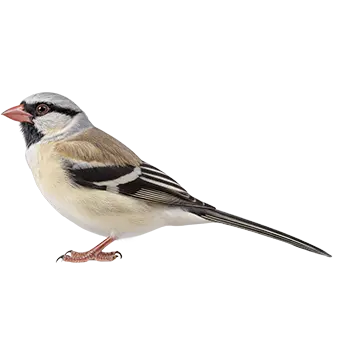

Shaft-tail Finches are among the more behaviorally active grassfinch species, and their enrichment needs reflect both their high energy and their strong social instincts. In the wild, Poephila acuticauda spends the majority of daylight hours engaged in purposeful activity: foraging across open ground, flying between grass stands and water sources, interacting with flock members through contact calls and mutual preening, and building or maintaining nests. A captive environment that fails to provide outlets for these natural behaviors produces birds that are physically healthy but behaviorally understimulated, which can manifest as repetitive pacing, excessive feather preening, or social aggression born of boredom.
Enrichment for finches operates on fundamentally different principles than enrichment for parrots. Parrots are manipulative foragers that interact with objects using their beaks and feet as tools, making puzzle toys and destructible items central to their enrichment plans. Finches, by contrast, are primarily visual and locomotor foragers. They respond most strongly to environmental novelty, spatial complexity, and opportunities to search for food across varied surfaces rather than to toys they grip and manipulate. Understanding this distinction prevents the common mistake of buying parrot-style toys and expecting finches to engage with them.
The social dimension of enrichment cannot be separated from the physical one for this species. Shaft-tail Finches housed alone or in isolated pairs derive less benefit from environmental enrichment because many natural behaviors are inherently social. Flock calling, courtship displays, group bathing, and communal roosting are all activities that enrich the bird's daily experience and cannot be replaced by objects, no matter how cleverly designed. The most effective enrichment strategy for Shaft-tail Finches begins with appropriate social housing and layers physical enrichment on top of that social foundation.
Seasonal variation in enrichment helps prevent the habituation that diminishes the effectiveness of any unchanging environment. Rotating items in and out of the enclosure on a weekly or biweekly schedule, introducing new foraging substrates during different seasons, and adjusting the interior layout periodically all maintain the novelty that drives exploratory behavior. Even small changes, such as repositioning a familiar perch or adding a fresh branch with leaves, can stimulate renewed investigation and activity in birds that have become complacent in an overly familiar environment.