
Enclosure Requirements

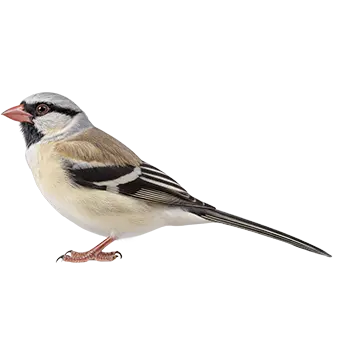
The Shaft-tail Finch is an active, flight-oriented species that requires considerably more horizontal space than its small body size might suggest. In the wild, Poephila acuticauda covers significant distances across open grasslands and lightly wooded savannas in northern Australia, spending much of the day in sustained, direct flight between feeding areas, water sources, and roosting sites. Replicating this natural movement pattern in captivity demands an enclosure that prioritizes length over height, allowing the birds to fly back and forth in level trajectories rather than simply hopping between vertically stacked perches.

The social nature of the species adds another dimension to housing considerations. Shaft-tail Finches are gregarious birds that thrive in the company of conspecifics and compatible finch species. A single pair housed in isolation will survive, but the birds exhibit more natural behavior, stronger pair bonds, and greater psychological well-being when kept in small groups or mixed-species communities. This social requirement directly impacts enclosure sizing, since a cage appropriate for a lone pair is entirely inadequate for the small flock that allows these birds to express their full behavioral repertoire.

Temperature tolerance is a practical advantage of this species that affects housing decisions. Shaft-tail Finches are among the hardier Australian grassfinches and can tolerate a broader range of temperatures than more delicate species like the Gouldian Finch. However, they are not cold-weather birds, and prolonged exposure to temperatures below fifty degrees Fahrenheit can cause stress, respiratory issues, and reproductive failure. Indoor housing with climate control is the safest approach for keepers in temperate climates, while those in warmer regions can successfully maintain the species in outdoor or semi-outdoor aviaries with appropriate shelter from wind and rain.

Ventilation is a frequently underestimated aspect of finch housing. Stagnant air promotes the buildup of airborne pathogens, ammonia from droppings, and fine dust from seed husks and feather dander. An enclosure positioned to allow gentle air circulation without creating drafts strikes the ideal balance. Indoor setups benefit from proximity to a window that can be partially opened during mild weather, while enclosed aviary spaces may require mechanical ventilation to maintain air quality, especially during colder months when natural airflow is reduced.

What to Look For

When evaluating cages and enclosures for Shaft-tail Finches, construction material and quality should be the first considerations. Powder-coated steel and stainless steel are the preferred materials, offering durability, rust resistance, and safety from toxic metal exposure. Avoid cages with zinc-coated or galvanized wire, as finches regularly mouth and chew on cage bars, and zinc ingestion causes heavy metal poisoning that can be fatal. If the coating or plating on a cage is not specified by the manufacturer, it is safer to pass on the product entirely than to risk introducing a toxic enclosure.

Bar spacing is a critical safety parameter for small finches. Shaft-tail Finches require bar spacing no wider than half an inch, with three-eighths of an inch being optimal. Wider spacing allows the bird to push its head through the bars, which can result in entrapment, strangulation, or escape. This is especially important for juvenile birds, which are smaller than adults and can squeeze through gaps that would contain a fully grown finch. Bar orientation also matters to a degree: horizontal bars allow climbing and clinging, which finches engage in less than parrots, but the option does no harm and adds environmental complexity.

Door design and access points affect both daily maintenance and the ability to catch and handle birds when necessary. Cages with multiple large doors facilitate easy access for cleaning, food and water replacement, and nest box installation. Some flight cages feature slide-out trays on the bottom that allow substrate changes without opening the main enclosure, reducing escape risk during routine maintenance. Doors should close securely with latches or clips that cannot be accidentally bumped open, as finches are adept at exploiting loose closures during moments of activity.

Tray and floor design deserve particular scrutiny. Removable bottom trays that slide out for cleaning dramatically reduce the time and effort required for daily cage maintenance. Grated floors positioned above the tray prevent birds from walking in accumulated droppings and discarded food, improving hygiene but also limiting access to ground-level foraging. Some keepers prefer solid-bottom cages with substrate material like paper or sand that allows natural ground-feeding behavior, which Shaft-tail Finches engage in regularly in the wild. The choice between grated and solid floors depends on whether the keeper prioritizes sanitation convenience or behavioral naturalism.

Cage Dimensions and Bar Spacing

The absolute minimum cage size for a pair of Shaft-tail Finches is thirty inches long by eighteen inches deep by eighteen inches tall, though this should be considered a baseline rather than a target. Larger is always better for flight-oriented species, and a cage measuring thirty-six to forty-eight inches in length provides noticeably better flight opportunity and reduces the territorial friction that can arise when active birds are confined in tight quarters. Width and height matter less than length for this species, since finches fly horizontally and rarely utilize vertical space the way climbing parrots do.

Flight cages, which are elongated enclosures specifically designed for finches and other small birds, represent the best commercially available indoor housing option. These units typically measure forty-eight to sixty inches in length and provide ample room for sustained flight, multiple perching stations, and the inclusion of nest boxes and enrichment items without creating a cluttered interior. Many flight cages are designed for stacking or wall mounting, which is advantageous for breeders who maintain multiple pairs and need to maximize their use of available room space.

For keepers who intend to house a small colony of Shaft-tail Finches or a mixed-species community, an indoor aviary measuring at least four feet long by two feet deep by three feet tall begins to approach the space needed for a functional social group. Purpose-built aviary panels that bolt together offer flexibility in sizing and can be disassembled for cleaning or relocated as needed. Walk-in aviaries, while more expensive and space-intensive, provide the ideal indoor environment by allowing the keeper to enter the enclosure for maintenance and observation without disturbing the birds through small cage doors.

Outdoor aviaries for Shaft-tail Finches should be substantially larger than indoor enclosures, both because the available space typically allows it and because outdoor birds benefit from longer flight paths. A minimum outdoor flight of six feet long by three feet wide by six feet tall accommodates a small colony comfortably, with the enclosed shelter section adding additional protected space. The wire mesh on outdoor aviaries must be fine enough to exclude predators, wild birds, and rodents, with half-inch by half-inch welded mesh being the standard. Double-door entry vestibules prevent escapes during keeper access and are considered essential in any outdoor aviary design.

Interior Layout and Perching

The interior arrangement of a Shaft-tail Finch enclosure should create clear flight lanes while providing sufficient perching and resting options. A common mistake in finch housing is overcrowding the cage interior with too many perches, toys, and accessories, which fragments the available flight space and forces the birds into short, stressful hops rather than the sustained flights that promote cardiovascular health and muscular development. As a general principle, the center of the enclosure should remain open, with perches positioned at the ends and along the sides to create predictable takeoff and landing points.

Perch diameter and material significantly affect foot health. Shaft-tail Finches have small, delicate feet that wrap naturally around perches between three-eighths and five-eighths of an inch in diameter. Providing a variety of diameters within this range exercises different foot muscles and prevents the pressure sores and bumblefoot lesions that develop when birds stand on uniform-diameter perches for extended periods. Natural wood branches with their irregular surfaces and slight taper are superior to dowel perches for this reason, as the varying diameter along a single branch provides the foot exercise that uniform dowels cannot.

Perch placement should account for the bird's natural preferences and social behavior. Shaft-tail Finches are contact sitters that frequently perch side by side with their mate or flock members, engaging in mutual preening and social bonding. Including at least one or two longer perches that can accommodate multiple birds sitting together supports this behavior. The highest perches in the enclosure will typically be the preferred roosting and sleeping positions, so placing them in the rear corners where the birds feel most secure creates a predictable nighttime routine.

Substrate selection for the cage floor influences both hygiene and behavior. White or brown paper, including plain newsprint, is the most practical substrate for daily monitoring of droppings, which is one of the first indicators of digestive health issues. Sand or fine gravel substrates are used by some keepers because Shaft-tail Finches naturally forage on the ground and will pick through a sand layer searching for stray seeds and grit particles. However, sand is heavier to change, harder to inspect visually, and can harbor bacteria and fungal spores if not replaced frequently. Whatever substrate is chosen, daily spot-cleaning and weekly full replacement keep pathogen loads at manageable levels.

Nesting and Breeding Accommodations

Shaft-tail Finches are enthusiastic nest builders that construct large, enclosed dome nests in the wild using dried grass stems and lined with softer plant fibers and feathers. In captivity, providing appropriate nesting infrastructure is important not only for breeding pairs but also for non-breeding birds, since Shaft-tail Finches build and sleep in roosting nests year-round. Enclosed nest boxes, wicker basket nests, and half-open platforms all serve as foundations that the birds will customize with nesting material to create their preferred structure.

Wooden nest boxes designed for finches typically measure approximately five inches wide by five inches deep by five inches tall with a round entrance hole of about one and a half inches in diameter. These should be mounted high in the enclosure, ideally in a rear corner where the birds feel protected, and positioned so that the entrance does not face directly into prevailing light or toward the busiest part of the room. Offering two or three nest box options per pair allows the birds to select their preferred site, which increases the likelihood of successful breeding and reduces the stress associated with forced nesting in an unsuitable location.

Nesting material should be abundantly available whenever nest boxes are present. Dried grass, coconut fiber, sisal strands, and soft white feathers are all readily accepted by Shaft-tail Finches and can be offered in a small wire basket or clip-on holder inside the enclosure. Avoid cotton, string, or any material with long fibers that can wrap around toes and legs, causing constriction injuries that range from swelling to complete digit loss. The birds will carry material piece by piece to the nest box and spend considerable time arranging it to their satisfaction, a process that serves as important pair-bonding activity even when no eggs result.

For active breeding pairs, nest box hygiene becomes a management concern after chicks fledge. Used nest boxes accumulate droppings, discarded food brought by parent birds, and potentially parasites such as red mites that thrive in the warm, sheltered environment of an occupied nest. After each breeding round, removing the nest box, discarding the old nesting material, and thoroughly scrubbing and drying the box before reinstalling it with fresh material reduces the disease and parasite burden for subsequent clutches. Keepers who maintain multiple nest boxes can rotate them through cleaning cycles while fresh boxes remain available to the birds.

Placement and Environment

Where an indoor cage or aviary is positioned within the home has a measurable impact on the health and behavior of Shaft-tail Finches. The enclosure should be placed in a room with consistent daily activity but not in the center of heavy foot traffic where constant close-range movement creates chronic stress. A living room corner, a dedicated bird room, or a quiet home office provides the right balance of social stimulation and security. The back of the cage should rest against a wall to give the birds a sense of protected rearward space, which reduces startle responses and promotes confident perching and feeding behavior.

Lighting is one of the most influential environmental factors for finch health and behavior. Shaft-tail Finches evolved under the intense Australian sun and benefit enormously from full-spectrum lighting that includes UVA and UVB wavelengths. UVB enables cutaneous vitamin D3 synthesis, which is essential for calcium metabolism, while UVA enhances visual perception, allowing the birds to see plumage colors and environmental details invisible under standard artificial lighting. Full-spectrum avian bulbs mounted above the enclosure on a twelve-to-fourteen-hour photoperiod during the active season provide adequate light exposure for indoor birds.

Temperature stability matters more than hitting a precise number. Shaft-tail Finches are comfortable within a range of sixty-five to eighty-five degrees Fahrenheit and can handle brief excursions outside this range without ill effect. What they tolerate poorly is rapid fluctuation, such as a cage positioned near a heating vent that cycles between hot and ambient temperatures or a window that lets in cold drafts at night. Consistent ambient temperature with gradual seasonal variation is ideal and closely approximates the subtropical conditions of their native habitat.

Noise and visual disturbances deserve consideration, particularly for breeding pairs. While Shaft-tail Finches are generally tolerant of household sounds and can habituate to televisions, music, and conversation, sudden loud noises and unexpected visual stimuli near the cage can trigger panic flights that result in injury. Placing the enclosure away from slamming doors, barking dogs, and areas where large objects are frequently moved reduces stress. For particularly sensitive pairs, partially covering the back and sides of the cage with a solid panel or cloth during the breeding season provides additional visual security without restricting ventilation.

Cleaning and Maintenance

A consistent cleaning routine is the single most effective disease prevention measure for housed Shaft-tail Finches. Daily maintenance should include replacing food and water, spot-cleaning visible droppings from perches and cage bars, and replacing or refreshing the substrate on the cage floor. These tasks take only a few minutes when performed consistently and prevent the accumulation of organic waste that provides a growth medium for bacteria, fungi, and parasites. Seed hulls that collect on the cage floor and around feeding stations should be removed or vacuumed daily, as they attract moisture and can develop mold if left in place.

Weekly cleaning involves a more thorough approach. All removable components, including perches, food and water dishes, nest boxes in non-breeding setups, and any toys or enrichment items, should be removed, scrubbed with hot water and a bird-safe disinfectant, rinsed thoroughly, and dried before being returned to the cage. The cage tray should be fully emptied, washed, disinfected, and lined with fresh substrate. Cage bars and wire panels can be wiped down with a damp cloth to remove dust, feather dander, and food residue that accumulates throughout the week.

Monthly or quarterly deep cleaning addresses the areas that routine maintenance does not reach. The entire cage should be disassembled as completely as practical, with all joints, corners, and crevices scrubbed to remove buildup. This is the appropriate time to inspect the cage structure for signs of rust, coating damage, or loose welds that could create injury hazards. In outdoor aviaries, periodic replacement of substrate material on the aviary floor, whether concrete, gravel, or natural earth, prevents pathogen accumulation in the ground layer where finches frequently forage.

Disinfectant selection is important because many common household cleaning products are toxic to birds. Avian-safe disinfectants based on quaternary ammonium compounds, chlorhexidine, or dilute food-grade hydrogen peroxide are effective against a broad spectrum of pathogens without producing fumes that damage the avian respiratory system. Bleach can be used at a ratio of one part to thirty parts water for deep cleaning but must be thoroughly rinsed and the components fully air-dried before birds are reintroduced, as residual chlorine fumes are harmful. Steam cleaning is an excellent chemical-free alternative for keepers who prefer to avoid disinfectant products entirely, as the high temperature kills bacteria, viruses, and parasites on contact.

Always consult a qualified professional before making any health-related decisions. This content is provided for informational reference only and should not replace professional guidance specific to your animal.