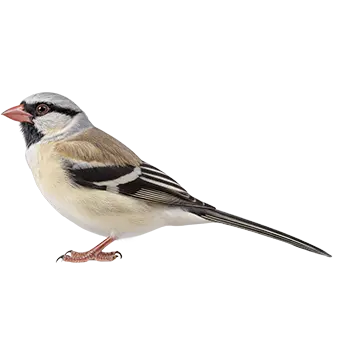

Equipping a Shaft-tail Finch enclosure goes well beyond selecting a cage and filling a food dish. The accessories chosen for daily use directly influence feeding efficiency, hygiene, physical health, and behavioral well-being. A thoughtfully assembled collection of essentials addresses each functional area of the bird's daily life: eating, drinking, bathing, resting, nesting, and traveling. Skimping on accessory quality or selecting items designed for the wrong species creates small daily frictions that accumulate into significant welfare problems over the bird's lifespan.
The Shaft-tail Finch's physical characteristics inform specific accessory requirements. At six to seven inches in total length, a substantial portion of which is occupied by the elongated central tail feathers, this species needs accessories scaled for small to medium finches rather than parakeets or cockatiels. Oversized dishes waste food and water, oversized perches strain foot tendons, and oversized carriers create unnecessary space in which a small bird can be thrown about during transport. Conversely, accessories designed for the very smallest finches, such as waxbills, may be too small for comfortable use by the slightly larger Shaft-tail.
Durability and ease of cleaning are practical considerations that should weigh heavily in purchasing decisions. Accessories made from stainless steel, ceramic, tempered glass, and food-grade hard plastic withstand daily washing and periodic disinfection without degrading, staining, or harboring bacteria in scratches and cracks. Porous materials like unglazed terra cotta, raw wood, and woven natural fiber serve well in specific applications such as perching and nesting but are difficult to sterilize and should be treated as consumable items that are replaced on a regular schedule rather than kept indefinitely.
For keepers maintaining multiple Shaft-tail Finches or mixed-species communities, standardizing accessory types and sizes across all enclosures simplifies cleaning rotations, reduces the number of spare parts needed, and ensures compatibility when items are moved between cages. Purchasing identical feeding dishes, water containers, and perch fittings for every enclosure in a collection may seem like a minor efficiency, but over years of daily maintenance, the time savings and organizational clarity compound significantly.