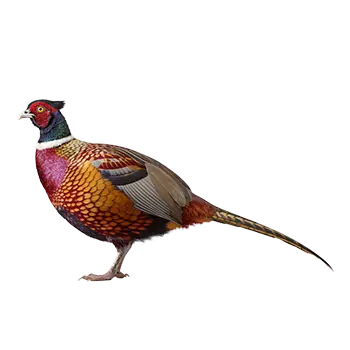

Enrichment for Ring-necked Pheasants requires a fundamentally different approach than enrichment for companion parrots or songbirds. Pheasants are not manipulative birds that interact with objects using their feet or beaks in the way that a cockatoo dismantles a puzzle toy. Instead, they are ground-foraging birds whose natural behavioral repertoire centers on scratching through substrate, pecking at scattered food items, investigating novel environmental features, dust bathing, and navigating complex ground cover. Effective enrichment for this species targets these innate behaviors rather than attempting to impose the interactive toy paradigms designed for psittacines.
The consequences of inadequate enrichment in captive pheasants are well documented and include feather pecking, cannibalism, repetitive pacing along pen walls, excessive startle responses, and generalized fearfulness that makes routine management tasks stressful for both birds and keepers. These behavioral problems are not character flaws in the birds but direct consequences of an environment that fails to provide sufficient outlets for species-typical behavior. A barren pen with nothing but feed and water forces active, curious birds into a state of chronic understimulation that manifests as abnormal behavior.
Seasonal behavioral shifts should inform enrichment planning throughout the year. During the breeding season, male pheasants are intensely territorial and display-oriented, and enrichment should include structures that allow roosters to establish and defend display territories without excessive aggression toward hens or subordinate males. Outside the breeding season, both sexes are more gregarious and spend the majority of their active time foraging. Winter enrichment should emphasize food-based activities that keep birds active during shorter days, while summer enrichment can leverage the greater variety of natural materials available during the growing season.
The wild behavioral budget of a Ring-necked Pheasant allocates the vast majority of daylight hours to foraging-related activities: walking, scratching, pecking, turning over debris, and investigating food sources. In captivity, a bird that receives its daily nutrition from a single feeder in a matter of minutes has the rest of the day with nothing to do. The fundamental goal of pheasant enrichment is to restore time-consuming foraging activity by making food acquisition more effortful and more varied, supplemented by environmental complexity that provides opportunities for exploration, shelter-seeking, and social interaction.