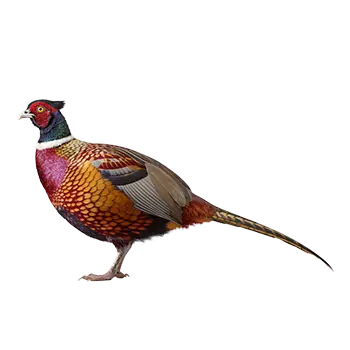

Ring-necked Pheasants have housing needs fundamentally different from those of caged companion birds. These are large, active, ground-dwelling gallinaceous birds that require substantial horizontal space for walking, running, and foraging, along with vertical clearance to accommodate their explosive upward flight response when startled. An enclosure that is appropriate for a pair of quail or a small flock of finches will not work for pheasants, and attempting to keep them in undersized housing leads to chronic stress, feather damage, head injuries from ceiling strikes, and aggressive behavior.
The minimum recommended aviary size for a single pair of Ring-necked Pheasants is roughly one hundred square feet of ground area with a ceiling height of at least six feet, though larger enclosures produce noticeably calmer, healthier birds. Commercial and breeding operations typically allocate twenty-five to fifty square feet per bird in communal flight pens, with ceiling heights of six to eight feet. These dimensions allow the birds to maintain comfortable social distances, engage in natural locomotion, and flush upward without striking the roof hard enough to cause scalp lacerations or neck injuries.
The behavioral profile of this species drives several specific housing considerations. Ring-necked Pheasants are not domesticated in the way that chickens are, and even captive-bred birds retain strong wild instincts including wariness toward perceived threats, rapid flush responses, and seasonal territorial aggression in males. Housing must account for these behaviors by providing visual barriers, escape cover, and enough space that subordinate birds can avoid dominant individuals without being cornered. Enclosures that feel open and exposed from the birds' perspective produce chronic stress even when the square footage appears adequate on paper.
Seasonal considerations influence housing needs throughout the year. During the breeding season, male pheasants become territorial and may injure hens if the enclosure lacks sufficient cover and space for females to retreat. During winter, birds need wind-protected shelter areas and dry roosting spots to maintain body condition. Molt season requires clean, low-stress environments to support healthy feather regrowth. A well-designed enclosure accommodates all of these seasonal demands without requiring the birds to be moved between different housing setups.