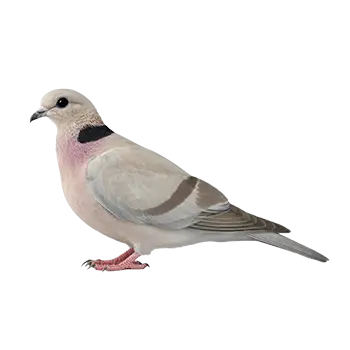

Enrichment Needs

Ring-Necked Doves have enrichment needs that diverge sharply from the commonly held image of a bird playing with toys. Unlike parrots, which are intensely curious, manipulative, and destructive with objects, doves are ground-oriented foragers with a calm, observational temperament. They do not chew, shred, or disassemble objects with their beaks, and they do not use their feet to grasp and hold items. This means that the vast majority of toys sold in the bird aisle of pet stores, designed for the beak-and-foot dexterity of hookbill species, are functionally useless to a dove and simply take up valuable cage space.

The enrichment that matters most to Ring-Necked Doves centers on environmental variety, foraging opportunity, visual stimulation, and social interaction. In the wild, doves spend significant portions of their day walking along the ground searching for seeds, observing their surroundings from elevated perches, and engaging in social behaviors with flock mates. Captive enrichment strategies should aim to recreate these natural behavioral outlets rather than imposing parrot-style play patterns on a species that does not share them.

Social enrichment is arguably the most powerful form of stimulation for this species. A Ring-Necked Dove housed alone will derive far more benefit from the addition of a compatible companion than from any commercial toy product. The cooing, preening, and mutual attention that characterize a bonded dove pair provide continuous, self-renewing stimulation that no object can replicate. For owners who cannot house a second bird, regular and sustained human interaction, including talking to the bird, allowing it out-of-cage time in a safe room, and simply being present nearby during daily activities, partially fills the social gap.

Boredom in doves manifests differently than in parrots. Rather than feather plucking or screaming, an under-stimulated dove may become excessively sleepy, withdrawn, or develop repetitive behaviors such as pacing along the cage floor. These signs are subtler and easier to miss than the dramatic behavioral problems seen in bored parrots, which means that dove owners must be attentive observers and proactive in providing variety even when the bird appears passively content.

What to Look For

When evaluating enrichment products for Ring-Necked Doves, safety and species appropriateness must take priority over visual appeal. Products designed for parrots often include small metal bells with clappers that can be detached and swallowed, chain links that can trap toes, and jingle balls with openings sized to catch a dove's slender beak. A dove's beak is weaker and differently shaped than a parrot's, making it more vulnerable to entrapment in gaps and crevices that a parrot would simply chew through. Every item placed in the cage should be inspected for small openings, loose parts, and sharp edges before it reaches the bird.

Material safety is another critical consideration. Zinc, lead, and copper are toxic to birds and are unfortunately still present in some imported toy hardware, including the clips, chains, and bell components found on inexpensive bird toys. Stainless steel and nickel-plated components are the safest metallic options. Natural materials such as untreated wood, seagrass, palm leaf, and coconut fiber are generally safe, provided they have not been treated with dyes, preservatives, or pesticides. Leather strips used in some toys should be vegetable-tanned rather than chrome-tanned to avoid heavy metal exposure.

Size and scale matter when choosing products for a medium-sized, non-destructive species. Toys designed for finches are often too small and fragile, while those made for cockatiels or larger birds may be too heavy or bulky for a dove's cage. The ideal enrichment items for Ring-Necked Doves are lightweight, smooth-surfaced, and proportioned so that the bird can interact with them through nudging, stepping on, or pecking rather than gripping and tearing.

Cleanability should factor into every purchase decision. Items that cannot be washed, disinfected, or easily replaced accumulate droppings, bacteria, and dust over time, transforming a source of enrichment into a potential source of infection. Products made from hard, non-porous materials like stainless steel, food-grade plastic, or finished hardwood are simpler to maintain than soft, absorbent materials like cotton rope or unfinished pine, which may need to be discarded and replaced rather than cleaned.

Recommended Toy Types

Mirrors are among the most effective and affordable enrichment items for Ring-Necked Doves. Doves are visually oriented social birds that respond strongly to their own reflection, often cooing at and displaying to the mirror as if interacting with a companion. A small, bird-safe mirror mounted securely inside the cage can provide extended engagement for a single dove. Some avian behaviorists caution that mirrors can contribute to hormonal stimulation in certain species, but Ring-Necked Doves generally tolerate mirror exposure well without the obsessive behaviors sometimes seen in budgerigars or cockatiels. Monitoring the bird's response during the first few weeks of mirror use is still advisable.

Swings and gentle-motion perches offer physical enrichment that aligns with a dove's preference for subtle, low-intensity interaction. A wooden or smooth plastic swing mounted in the upper third of the cage gives the bird a perching option with a mild rocking motion that many doves find appealing. Unlike parrots, doves do not perform acrobatics on swings but rather sit calmly and sway, making a lightweight swing with a flat or contoured perch bar more appropriate than the narrow dowel swings sold for smaller hookbills.

Bells that are securely welded and free of removable clappers can provide auditory stimulation. Some Ring-Necked Doves will peck at a small bell to produce sound, though this behavior is more common in younger or particularly bold individuals. The bell should be large enough that the dove cannot fit its beak inside the opening and should be mounted rather than hung on a chain, as freely swinging chain-mounted toys are often ignored by doves or, worse, present an entanglement risk.

Small wicker or seagrass balls placed on the cage floor give doves an object to nudge and push along flat surfaces, engaging their natural ground-foraging movement patterns. These balls should be made from untreated natural fibers and should be large enough that the bird cannot attempt to swallow them. Replacing these items regularly is important because they absorb moisture and organic matter over time, and worn examples should be discarded before they become breeding grounds for mold or bacteria.

Foraging & Puzzle Enrichment

Foraging enrichment addresses the core behavioral drive of a ground-feeding species and is arguably the most species-appropriate form of stimulation available for Ring-Necked Doves. In the wild, doves spend hours walking and searching for scattered seeds, and replicating this activity in captivity provides both mental engagement and physical exercise. The simplest approach is to scatter a portion of the daily seed allowance across a shallow tray filled with clean, dry substrate such as sterilized sand, fine gravel, or shredded paper, allowing the bird to sift and search rather than eating passively from a dish.

Foraging trays and platforms designed for ground-feeding birds are commercially available and offer a structured version of the scatter-feeding concept. These products typically feature a shallow dish with a textured bottom or a series of compartments that hold small amounts of seed, requiring the bird to explore and reach into different areas to find food. The best designs are easy to clean, stable enough that the bird's weight does not tip them, and made from food-safe materials that resist staining and bacterial buildup.

Puzzle feeders designed for parrots rarely work well for doves because they require the kind of beak manipulation and foot dexterity that doves simply do not possess. However, some simple puzzle-style products can be adapted for dove use. A foraging mat made of woven seagrass or sisal with seeds pressed into the weave encourages pecking and exploration without requiring the bird to lift lids or pull drawers. Similarly, a paper cup loosely filled with seed and laid on its side lets the dove reach in and peck at the contents, providing a mild challenge without causing frustration.

Rotating foraging setups keeps the activity novel and engaging. Presenting the same foraging arrangement day after day eventually reduces its enrichment value as the bird habituates to the setup. Changing the substrate type, the location of the foraging tray within the cage, or the specific seeds hidden within the setup on a weekly basis maintains the bird's interest and mimics the natural variability of wild foraging conditions. Even simple changes like switching from a flat tray to a shallow dish or adding a thin layer of dried herbs over the seeds can refresh the foraging experience.

DIY & Natural Options

Some of the most effective enrichment for Ring-Necked Doves costs nothing and requires only readily available household or natural materials. A shallow dish of clean, dry sand placed on the cage floor allows doves to engage in dust bathing, a natural feather-maintenance behavior that also provides tactile and physical stimulation. The sand should be fine-grained, free of sharp particles, and changed every few days to prevent bacterial accumulation. Play sand sold for children's sandboxes is a commonly used and safe option once it has been baked or sun-dried to eliminate residual moisture.

Fresh branches from bird-safe trees provide perching variety and mild environmental enrichment. Apple, pear, willow, and birch branches are safe species that offer different diameters and textures for foot exercise. Branches should be collected from areas free of pesticide exposure, thoroughly washed, and inspected for insects before being placed in the cage. Replacing natural branches every few weeks keeps them fresh and introduces subtle changes in the cage environment that prevent stagnation.

Dried grasses, herb sprigs, and leafy twigs arranged in the cage or in a small bundle offer textural variety and sensory stimulation. Doves may peck at, rearrange, or simply sit among these materials, all of which constitute meaningful behavioral engagement. Safe dried herbs include chamomile, lavender, oregano, and thyme. Aromatic herbs in particular seem to attract dove interest, possibly because the mild scent provides olfactory stimulation in an environment that is otherwise sensorily monotonous.

Paper-based enrichment is simple and endlessly renewable. Sheets of plain, unbleached paper or brown kraft paper placed on the cage floor or crumpled loosely and set in a corner give doves something to walk on, peck at, and rearrange. Some doves will push and arrange paper with surprising persistence, suggesting that the activity provides genuine behavioral satisfaction. Paper is also useful as a medium for scatter feeding, as seeds can be hidden within folds and layers. The only caution is to avoid printed or glossy paper, which may contain inks or coatings that are unsafe if ingested.

Safety & Maintenance

Every toy and enrichment item in a Ring-Necked Dove's environment should be treated as a consumable that degrades over time and must be regularly inspected for emerging hazards. Natural fiber items like seagrass balls, wicker rings, and cotton rope perches break down with use and exposure to droppings, eventually developing weak spots, sharp fiber ends, and microbial contamination. Establishing a replacement schedule based on the material type, with soft natural materials replaced every two to four weeks and hard materials inspected monthly, prevents worn items from becoming safety hazards.

Entanglement is the single most serious toy-related risk for Ring-Necked Doves. Their slender toes and legs can become trapped in loose threads, frayed rope ends, and the links of lightweight chains. Any item showing signs of fraying or unraveling should be removed immediately, regardless of how recently it was purchased. Closed-link chains, if used at all, should be heavy enough that individual links cannot be bent open by the bird's movements but not so heavy that they present a weight hazard if the chain falls.

Placement of toys and enrichment items within the cage directly affects both safety and utilization. Items hung from the cage ceiling should have sufficient clearance that the bird cannot become pinned between the item and the cage wall during a startle response. Floor-based enrichment should not block the bird's walking path or impede access to food and water dishes. A common mistake is cluttering the cage with too many items at once, which reduces flight space and creates a cramped environment that increases stress rather than alleviating boredom.

Cleaning enrichment items follows the same principles as cleaning the cage itself. Items that can tolerate water should be scrubbed with a bird-safe disinfectant, rinsed thoroughly, and dried completely before being returned to the cage. Wooden and porous items that cannot be submerged can be wiped down with a vinegar solution and allowed to air dry in direct sunlight, which provides additional natural disinfection. Items that cannot be effectively cleaned, such as heavily soiled natural fiber toys or cracked plastic components, should be replaced rather than returned to service.

Always consult a qualified professional before making any health-related decisions. This content is provided for informational reference only and should not replace professional guidance specific to your animal.