
Monitoring Needs

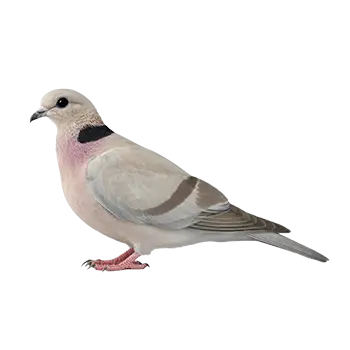
Ring-Necked Doves are quiet, stoic birds that mask illness and discomfort with remarkable effectiveness. By the time a dove displays obvious signs of sickness, the underlying condition has often been progressing for days or weeks. This species-level tendency toward concealing vulnerability, an evolutionary adaptation against predation, makes proactive environmental monitoring and behavioral observation significantly more valuable for dove owners than for keepers of more expressive species. Technology that tracks environmental conditions and captures behavioral patterns can provide the early warning signals that the bird itself will not.

The environmental parameters most relevant to Ring-Necked Dove health are temperature, humidity, light cycle, and air quality. Each of these factors operates within a range that supports wellbeing, and sustained deviation outside that range creates stress that accumulates silently before manifesting as disease. Manual checks of these conditions are better than nothing but inevitably suffer from human inconsistency. A thermometer checked once in the morning misses the afternoon temperature spike from direct sun exposure, and a hygrometer glanced at during feeding does not capture the overnight humidity drop that dries respiratory membranes.

Automated monitoring fills these gaps by providing continuous data collection and, in many cases, real-time alerts when conditions move outside acceptable parameters. The investment in basic monitoring equipment is modest relative to the cost of avian veterinary care, and the information these devices provide enables preventive management rather than reactive treatment. For dove owners who travel for work or spend long hours away from home, monitoring technology provides a way to remain informed about their bird's environment even when physically absent.

The technology landscape for avian care has expanded substantially in recent years, driven partly by the broader smart home movement and partly by increasing consumer demand for pet monitoring solutions. Products range from simple standalone sensors to integrated systems that combine environmental monitoring, camera surveillance, and automated environmental control. Choosing the right level of technological involvement depends on the owner's comfort with technology, budget, and the specific environmental challenges of their home.

Temperature & Humidity Monitors

Digital thermometer-hygrometer units are the most fundamental monitoring devices for any bird room. These compact, inexpensive instruments display the current temperature and relative humidity on a screen that can be read at a glance, and most models also record the daily high and low readings for both parameters. Placing one of these units at cage height near the dove's enclosure provides a continuous baseline of environmental data. The target ranges for Ring-Necked Doves are sixty-five to eighty degrees Fahrenheit for temperature and forty to sixty percent for relative humidity, and consistent readings outside these ranges should prompt environmental adjustments.

Wireless sensor systems represent a meaningful upgrade over basic standalone units. These systems typically consist of one or more remote sensors that transmit data to a base station or smartphone application, allowing the owner to monitor conditions from another room or remotely via the internet. Multi-sensor systems are particularly valuable for owners who keep their dove in a room that experiences significant temperature variation throughout the day, as they can place sensors at different positions around the cage to identify hot spots, cold drafts, and humidity gradients that a single-point measurement would miss.

Smart home-compatible sensors that integrate with platforms like home automation hubs or voice assistants offer the highest level of convenience and functionality. These sensors log historical data, display trends over time, and send push notifications to the owner's phone when temperature or humidity crosses user-defined thresholds. The historical data feature is especially useful for identifying patterns, such as a recurring mid-afternoon temperature spike caused by sun exposure through a west-facing window, that might not be noticed during spot checks. Some models also track barometric pressure, which, while not directly actionable in most cases, provides additional environmental context.

Placement of temperature and humidity sensors requires some thought to produce meaningful readings. The sensor should be positioned at the height of the bird's primary perch and within a few feet of the cage but not directly on it, as the cage itself and the bird's body heat can create a microclimate that differs from the broader room conditions. Avoid placing sensors near heating vents, windows, or doorways, where readings will reflect transient conditions rather than the stable ambient environment the bird actually experiences. Multiple sensors at different positions around the room give the most complete picture of the dove's thermal environment.

Lighting & UV Technology

Appropriate lighting is one of the most impactful technological interventions available for captive Ring-Necked Doves. Birds perceive light differently than mammals, with vision that extends into the ultraviolet spectrum, and their hormonal cycles, calcium metabolism, and psychological wellbeing are all influenced by the quality, intensity, and duration of light exposure. Standard household lighting, whether incandescent, LED, or fluorescent, does not provide the full spectrum of wavelengths that sunlight delivers and that birds have evolved to require.

Full-spectrum avian lighting fixtures produce light that includes UVA and UVB wavelengths alongside the visible spectrum. UVA light enables birds to see the full range of colors they are adapted to perceive, including plumage markings that are invisible to the human eye. Without UVA, the dove's visual world is functionally muted, which can affect mood, social behavior, and appetite. UVB light drives the synthesis of vitamin D3 in the skin, which is essential for calcium absorption and utilization. For Ring-Necked Doves, which are prone to calcium-related issues especially during breeding, UVB exposure is a meaningful complement to dietary calcium supplementation.

The fixture should be positioned above the cage at a distance recommended by the manufacturer, typically twelve to eighteen inches from the bird's highest perch. UVB output decreases with distance and is blocked by glass and most plastics, so the light must shine through the cage bars or wire rather than through a solid barrier. Bulbs that produce UVB degrade over time even when they still produce visible light, and most manufacturers recommend replacement every six to twelve months to maintain effective UVB output. Setting a calendar reminder for bulb replacement ensures the bird continues to receive the intended spectral benefit.

Lighting timers are an essential companion to any avian lighting system. Ring-Necked Doves require a consistent photoperiod to maintain hormonal balance and sleep quality, and manual light switching is inherently inconsistent. A simple plug-in timer or a smart plug controlled by a scheduling app ensures that the light turns on and off at the same times every day, providing the stable day-night cycle that supports healthy circadian rhythms. During winter months, the light schedule may need adjustment to provide a slightly shorter day length that discourages chronic egg laying in hens, while summer schedules can extend daylight hours slightly to support the natural breeding season.

Camera & Surveillance Systems

Pet cameras positioned near a Ring-Necked Dove's enclosure provide behavioral insight and security monitoring that in-person observation alone cannot match. Doves behave differently when their owner is present than when they are alone, and some important behavioral patterns, including nighttime restlessness, early morning lethargy, and interactions between cagemates, occur exclusively during unobserved hours. A camera that records continuously or captures motion-triggered clips reveals a dimension of the bird's daily life that would otherwise remain invisible.

Wi-Fi-enabled cameras with smartphone apps are the most practical option for dove monitoring. Models with high-definition resolution, night vision capability, and wide-angle lenses provide clear footage in both daylight and darkened conditions. Night vision is particularly valuable for detecting nocturnal disturbances. Ring-Necked Doves can be startled by shadows, sounds, or pest intrusions during the night, leading to panicked flight within the cage that can cause injuries. Night vision footage helps identify the source of these night frights and informs corrective action, such as covering the cage more thoroughly or removing external stimuli.

Two-way audio is a feature available on many pet cameras that allows the owner to speak to the bird remotely. The utility of this feature for doves is more limited than for dogs or cats, but some dove owners find that the sound of their voice through the speaker has a calming effect on a bird that is accustomed to their presence. Overuse of the audio feature can also have the opposite effect, as an unexpected voice from an unfamiliar direction may startle a nervous bird, so this feature should be tested carefully and used judiciously.

Cloud storage and local recording options determine how footage is retained and reviewed. Cloud-based storage plans typically offer a rolling window of recorded footage, usually seven to thirty days, that can be reviewed from anywhere via the app. Local storage via a microSD card in the camera provides unlimited retention without a subscription fee but requires manual review and management. For dove owners primarily interested in reviewing footage after a health incident or behavioral change rather than monitoring in real time, a camera with reliable local storage and easy playback navigation is the more cost-effective and privacy-conscious option.

Air Quality & Filtration

Air quality management is a genuinely health-critical technology investment for Ring-Necked Dove owners. Doves produce a persistent fine powder down, a waxy keratin dust that coats their feathers and becomes airborne during preening, wing-flapping, and general movement. This powder, combined with feather dander, dried droppings, and seed dust, creates an airborne particulate load that standard household HVAC systems are not designed to address. Over time, this particulate burden affects both the bird's respiratory health and that of the human occupants of the home, particularly those with asthma or allergies.

HEPA air purifiers are the most effective commercially available solution for managing bird-related air particulate. True HEPA filters capture ninety-nine point ninety-seven percent of particles at zero point three microns and larger, which encompasses the full range of feather dust, dander, and most airborne spores. The purifier should be sized appropriately for the room in which the bird is kept, with a clean air delivery rate sufficient to cycle the room's air volume multiple times per hour. Placing the purifier within the bird room but not directly adjacent to the cage, where the airflow could create a draft, strikes the right balance between filtration efficiency and bird comfort.

Critically, air purifiers used in bird rooms must not produce ozone. Many ionic purifiers, electrostatic precipitators, and some UV-based air cleaners emit ozone as a byproduct of their operating mechanism. Ozone is acutely toxic to birds at concentrations well below the levels that humans perceive, causing respiratory inflammation, air sac damage, and in severe cases death. Any air purification device used near birds should be verified as ozone-free before purchase, and marketing claims should be cross-checked against independent testing data, as some manufacturers use the term ozone-free loosely.

Air quality monitors that measure particulate levels, volatile organic compounds, and carbon dioxide concentration add a data-driven layer to air management. These standalone or smart-home-integrated devices display real-time readings and log historical trends, allowing the owner to see how air quality fluctuates with activities like cooking in an adjacent room, running a space heater, or having the windows closed during a pollen-heavy season. A sudden spike in volatile organic compound readings, for instance, could indicate an off-gassing event from new furniture or cleaning products that requires immediate ventilation before it affects the bird.

Smart Home Integration

Integrating dove care equipment with a smart home system consolidates environmental control into a single interface and enables automation that improves consistency while reducing manual effort. At its simplest, smart home integration means connecting avian lights, heat panels, and air purifiers to smart plugs or switches that can be scheduled, voice-controlled, or triggered by sensor readings. A light that turns on at seven in the morning and off at eight in the evening every day without owner intervention provides a more reliable photoperiod than any manual routine can sustain over months and years.

Automation routines that link sensors to actions represent the most powerful application of smart home technology for bird care. A routine that turns on a heat panel when the room temperature sensor drops below sixty-five degrees and turns it off when the temperature reaches seventy-two degrees maintains thermal stability without any human input. Similarly, a routine that activates a humidifier when relative humidity falls below forty percent and deactivates it at fifty-five percent keeps the air within the target moisture range even during the driest winter weather. These automated responses are faster and more consistent than manual adjustments and operate around the clock, including overnight when the owner is asleep.

Remote monitoring and control through smartphone apps connected to the smart home system provide peace of mind for dove owners who travel or work long hours. Checking the bird room temperature from the office, reviewing camera footage during a lunch break, or adjusting the light timer while traveling all become possible when the care infrastructure is connected and accessible. Push notifications from environmental sensors alert the owner to conditions that need attention even when they are not actively checking, ensuring that a heating failure, humidity crash, or unusual temperature spike does not go unnoticed for hours.

The practical limitations of smart home technology for bird care are worth acknowledging alongside its benefits. Connectivity depends on stable Wi-Fi, and a network outage can disable automated routines and remote access simultaneously. Smart devices require firmware updates, battery replacements for wireless sensors, and occasional troubleshooting that adds a layer of maintenance beyond the straightforward operation of non-smart equipment. Power outages disable everything electronic, making manual backup plans, such as battery-operated thermometers and chemical heat packs for emergency warming, a necessary complement to any technology-dependent care system. The goal is for technology to enhance, not replace, attentive ownership.

Always consult a qualified professional before making any health-related decisions. This content is provided for informational reference only and should not replace professional guidance specific to your animal.