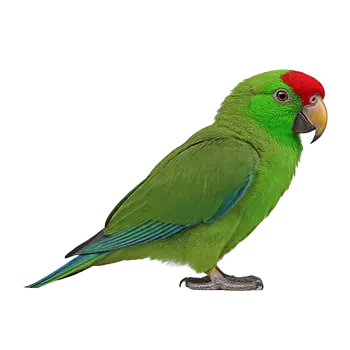

Enrichment Needs of the Red-Lored Amazon

Red-Lored Amazons are intelligent, curious parrots that require consistent mental stimulation to thrive in captivity. In their native Central American forests, these birds spend the majority of their waking hours foraging, socializing, and navigating complex arboreal environments. Captivity eliminates most of those cognitive demands, leaving the bird with surplus mental energy that will be directed toward either constructive play or destructive behavior depending on what outlets are available. Toys and enrichment products are not luxuries for this species. They are essential infrastructure for behavioral health.

Boredom in Red-Lored Amazons manifests in predictable and escalating patterns. Early signs include excessive vocalization, repetitive pacing along cage bars, and over-preening that has not yet progressed to feather damage. If environmental enrichment is not improved, these behaviors can intensify into chronic screaming, self-mutilation through feather plucking, and aggression toward handlers. Once these behaviors become established, they are significantly harder to reverse than to prevent, making proactive enrichment planning one of the most cost-effective investments an Amazon owner can make.

The type of enrichment a Red-Lored Amazon prefers is shaped by individual personality, but certain species-wide tendencies provide useful guidance. Amazons as a group tend to be enthusiastic chewers, vigorous foot-toy manipulators, and somewhat cautious initial responders to novel objects. A new toy hung in the cage may be ignored or even feared for several days before the bird approaches it. This neophobic response is normal and should not be interpreted as disinterest. Placing new items near the cage first, then on the outside of the cage, and finally inside, often accelerates acceptance.

A well-rounded enrichment program for a Red-Lored Amazon incorporates multiple categories of stimulation: destructible chewing items, mechanical puzzle toys, foraging devices, tactile and auditory toys, and opportunities for physical exercise. No single toy or toy type satisfies all of these needs, and variety within and across categories is what keeps the bird engaged over the long term.

Foraging Toys and Systems

Foraging toys are arguably the most important category of enrichment for captive parrots because they address the most significant behavioral deficit created by captivity: the elimination of food-seeking effort. Wild Red-Lored Amazons spend an estimated four to six hours daily searching for, extracting, and processing food. A captive bird fed from an open dish accomplishes the same caloric intake in minutes, leaving hours of foraging motivation with nowhere to go. Foraging toys restore a portion of that effort by requiring the bird to work for its food, slowing consumption, and engaging problem-solving circuits that would otherwise lie dormant.

Entry-level foraging toys include devices that hide food behind barriers the bird must lift, slide, or rotate to access. Acrylic boxes with lids, skewers threaded with food items, and paper-wrapped treats tucked into cage bars are simple starting points that teach the bird the fundamental concept that food can be found by manipulating objects. For a Red-Lored Amazon new to foraging enrichment, beginning with transparent containers that allow the bird to see the food inside reduces frustration and builds confidence before advancing to opaque, more challenging devices.

Intermediate foraging systems introduce multi-step problems that require the bird to perform a sequence of actions to reach the reward. Devices with drawers that must be pulled open, rotating compartments that align to release food, and stacking cups that must be removed in order represent this category. Red-Lored Amazons are well-suited to these challenges given their strong foot dexterity and persistent problem-solving temperament. The key is calibrating difficulty to the individual bird's skill level, advancing only after the current challenge is solved reliably but before it becomes so routine that it no longer engages the bird's attention.

Advanced foraging systems use interchangeable components, adjustable difficulty settings, and complex mechanical puzzles that can keep a sophisticated bird challenged for months or years. Wall-mounted foraging boards with multiple stations, each requiring a different manipulation technique, provide extended engagement and can be reconfigured periodically to restore novelty. These systems represent a significant upfront investment but their longevity and adaptability make them the most cost-effective enrichment solution over time for a bird that will live for decades.

Chew and Shred Toys

Chewing is a deeply ingrained behavior for Red-Lored Amazons, driven by the biological imperative to maintain beak condition and the psychological satisfaction of destructive manipulation. In the wild, Amazons chew bark, branches, seed pods, and fruit husks continuously, and captive birds deprived of appropriate chewing outlets will redirect this drive toward cage bars, perches, furniture, and anything else within reach. Providing a steady supply of purpose-built chew toys is both a behavioral necessity and a cage preservation strategy.

Wood-based chew toys are the foundation of this category. Softwoods like pine, balsa, and yucca are readily destroyed by Amazon beaks and provide the satisfying splintering sensation that most birds find irresistible. Hardwoods such as manzanita and java wood last longer and offer more resistance, appealing to birds that enjoy sustained gnawing rather than rapid demolition. Many commercial chew toys combine wood blocks of varying density with interspersed leather strips, sisal rope, and vegetable-tanned leather knots to create multi-textured assemblies that sustain interest longer than uniform wood alone.

Shredding toys constructed from palm leaf, corn husk, seagrass, and unbleached paper provide a different tactile experience that many Red-Lored Amazons find deeply engaging. These materials peel apart in layers and strips, allowing the bird to use both its beak and feet in a fine-motor exercise that closely mimics natural foraging manipulation. Shredding toys are typically consumed quickly, which means they represent an ongoing expense, but their low individual cost and the intensity of engagement they produce make them among the highest-value enrichment items available per dollar spent.

Safety standards for chew toys center on material purity and construction integrity. All wood components should be untreated and free of chemical stains, paints, or lacquers unless those finishes are specifically certified as bird-safe with food-grade vegetable dyes. Metal attachment points should be stainless steel or nickel-plated, never zinc-coated. Quick-link connectors are preferable to split-ring key rings, which can trap toenails. Rope components should be natural fiber such as cotton, sisal, or hemp, and they should be trimmed or replaced when fraying creates loose threads long enough to wrap around toes or tangle around the neck.

Puzzle and Mechanical Toys

Puzzle toys challenge the Red-Lored Amazon's cognitive abilities in ways that foraging and chewing toys do not. While foraging toys reward effort with food, puzzle toys engage the bird's problem-solving instincts through mechanical manipulation that may or may not involve a food reward. Amazons are naturally curious about mechanisms, and many individuals develop an almost compulsive interest in figuring out latches, levers, rotating discs, and interlocking components. This cognitive engagement is one of the most effective defenses against the boredom-driven behavioral problems that plague captive Amazons.

Acrylic puzzle toys represent the largest commercial subcategory. These typically present a food item visible through a transparent enclosure that can only be accessed by manipulating one or more external mechanisms. Designs range from simple turn-and-lift boxes to elaborate multi-station devices where solving one lock reveals the mechanism for the next. The transparency of acrylic is a deliberate design choice: seeing the reward maintains motivation through the frustration of early attempts, and watching the bird's problem-solving process provides useful insight into its cognitive approach for owners interested in tailoring future challenges.

Metal hardware puzzles appeal to a different aspect of Amazon intelligence. Padlocks, carabiner-style clips, and wing nuts threaded onto bolts all present tactile mechanical problems that the bird solves through beak and tongue manipulation rather than visual reasoning. Red-Lored Amazons are particularly adept with these devices, and owners of especially gifted individuals often discover that the bird has learned to disassemble cage hardware, open food doors, or defeat cage locks. While this can create management challenges, it is also a sign of a healthy, cognitively engaged bird that is using its intelligence productively.

The lifespan of a puzzle toy depends entirely on whether it continues to challenge the bird. Once a Red-Lored Amazon has mastered a particular mechanism, the toy's enrichment value drops rapidly even if the physical object remains intact. Rotating puzzle toys in and out of the cage on a multi-week schedule can partially restore their novelty, but eventually the bird will solve familiar puzzles too quickly for them to provide meaningful stimulation. Building a library of puzzle toys and introducing new ones periodically ensures that the cognitive challenge remains fresh throughout the bird's long life.

Physical Exercise and Swing Toys

Physical activity is essential for preventing the obesity and muscle atrophy that commonly affect captive Red-Lored Amazons, and toys that promote movement serve this need while providing entertainment. Swings are one of the most universally enjoyed physical toys among Amazon parrots. A well-constructed swing mounted at the top of the cage or on a play stand encourages the bird to balance actively, engaging core and leg muscles that remain static during perching. Swings with flat perch-style seats tend to be preferred over round dowel versions, as the flat surface provides a more stable platform that encourages longer use.

Ladders and climbing structures promote vertical and lateral movement within the cage. Rope ladders with wooden rungs, spiral rope perches, and cargo-net style climbing walls all encourage the bird to traverse the cage space actively rather than remaining parked on a single perch. For Red-Lored Amazons, which enjoy climbing but are heavier-bodied than many smaller climbing specialists, sturdy construction is critical. Flimsy rope ladders that twist and spin under the bird's weight create more frustration than enjoyment and may deter the bird from using climbing structures altogether.

Play gyms and tabletop activity centers provide physical enrichment outside the cage during supervised free time. A quality play gym for a Red-Lored Amazon should feature a stable base that resists tipping, multiple perch levels connected by ladders or ramps, toy hanging points, and integrated food cups. The gym serves as a destination during out-of-cage time, giving the bird a designated space where it can climb, play, and eat without wandering onto furniture or into unsafe areas. Play gyms made from natural hardwood branches with varied diameters offer better foot exercise than those constructed from uniform dowels.

Foot toys represent a distinct and often underappreciated category of physical enrichment. These are small objects designed to be grasped in the foot and manipulated by the beak, and they encourage the coordinated foot-beak interaction that is a hallmark of psittacine behavior. Wooden blocks, palm nut shells, small wiffle balls, and knotted leather strips are all popular foot toy options. Red-Lored Amazons often develop strong individual preferences within this category, and observing which foot toys receive the most attention helps guide future purchasing. A handful of foot toys scattered on the cage floor or tucked into foraging areas adds an additional layer of enrichment at minimal cost.

Toy Rotation and Maintenance

A systematic toy rotation schedule is the most effective way to maintain enrichment value over time without continuously purchasing new items. The principle is straightforward: a toy that has been absent from the cage for two to three weeks is perceived as partially novel when reintroduced, even by a bird that previously knew it well. Maintaining a reserve collection of fifteen to twenty toys and cycling groups of three to five into the cage on a weekly basis creates a continuously shifting environment that sustains the bird's interest far more effectively than leaving the same items in place indefinitely.

Monitoring toy condition is a daily responsibility. Chew toys with sharp splinters, frayed rope approaching the point where threads could entangle toes or toes, cracked acrylic with exposed edges, and metal components showing signs of corrosion should all be removed immediately. Red-Lored Amazons chew with enough force to reduce a new wood toy to fragments within days, and those fragments can include pieces small enough to swallow but large enough to cause crop impaction or intestinal obstruction. Regular inspection during daily cage cleaning catches these hazards before they become emergencies.

Cleaning toys between rotation cycles extends their useful life and prevents bacterial buildup. Hard toys made from acrylic, stainless steel, or dense hardwood can be scrubbed with a bird-safe disinfectant, rinsed thoroughly, and air-dried before returning to the reserve collection. Rope and fabric components that cannot be fully sanitized should be replaced rather than cleaned if they are visibly soiled or have absorbed odors. Porous wood toys that have been heavily chewed typically cannot be effectively cleaned and are best discarded once they have been reduced past the point of safe use.

Budgeting for ongoing toy replacement is an unavoidable reality of Amazon ownership. A Red-Lored Amazon that is using its toys appropriately will destroy them, and the rate of destruction is actually a positive indicator of enrichment engagement. Owners who find the expense of commercial toys burdensome should explore the DIY enrichment options discussed below, which can reduce monthly toy costs substantially without compromising the quality of the bird's enrichment experience.

DIY Enrichment Ideas

Homemade enrichment items offer a cost-effective supplement to commercial toys and allow owners to customize difficulty and materials to their bird's individual preferences. The simplest DIY enrichment requires nothing more than items already present in most households. A cardboard toilet paper tube stuffed with crumpled paper and a few pellets becomes a foraging toy that a Red-Lored Amazon will shred enthusiastically. A small paper bag with the top twisted shut around a few nuts provides both a foraging challenge and a shredding opportunity. Phone books, though increasingly rare, provide pages of shredding material when a section is clipped to the cage bars.

More structured DIY projects can replicate the function of commercial foraging and puzzle toys at a fraction of the cost. A muffin tin with treats hidden under crumpled paper or small wiffle balls in each cup creates a multi-station foraging tray. Untreated wood blocks drilled with holes and stuffed with dried pasta, pellets, or dried herbs serve as long-lasting chew-and-forage combinations. Lengths of untreated leather strips knotted around wood beads and strung on stainless steel wire produce durable hanging toys that rival commercial products in both durability and bird appeal.

Natural materials gathered from the outdoors can be excellent enrichment resources if sourced safely. Branches from bird-safe tree species such as apple, willow, elm, and maple provide both chewing material and perching variety. Pine cones collected from unsprayed trees can be stuffed with nut butter and seeds for a foraging challenge, and large dried seed pods offer both chewing resistance and visual novelty. All natural materials must be thoroughly cleaned before use: branches should be scrubbed, soaked in a dilute vinegar solution, and baked at 200 degrees Fahrenheit for thirty minutes to kill parasites, bacteria, and fungal spores.

Safety remains the paramount concern with any DIY enrichment item. Materials must be free of adhesives, inks, chemical treatments, and toxic finishes. Staples, tape, and glue should never be used in toy construction. String and thread lengths must be kept short enough to prevent entanglement, generally no longer than the bird's body length. Metal components should be stainless steel or nickel-plated, and any questionable material should be excluded rather than tested. The enthusiasm of a Red-Lored Amazon's beak will find every structural weakness in a toy, and what a human perceives as sturdy may disintegrate into hazardous fragments within minutes of a determined parrot's attention.

Always consult a qualified professional before making any health-related decisions. This content is provided for informational reference only and should not replace professional guidance specific to your animal.