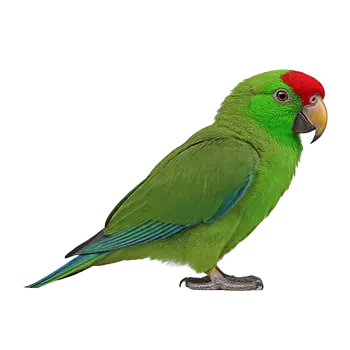

Red-Lored Amazons are active, medium-sized parrots that need substantially more space than their twelve-to-thirteen-inch body length might suggest. The absolute minimum cage dimensions for a single Red-Lored Amazon are 36 inches wide by 24 inches deep by 48 inches tall, but these figures represent a baseline that most experienced owners recommend exceeding significantly. A cage measuring 48 inches wide by 36 inches deep by 60 inches tall provides a far more comfortable living space and allows the bird to move, stretch, and flap without contacting bars or accessories on every side.
Width is more important than height for Amazon parrots. Unlike species that climb vertically as their primary mode of cage navigation, Amazons tend to move laterally, hopping between perches and climbing across horizontal bar sections. A tall, narrow cage may look impressive but provides less usable space than a wider, moderately tall enclosure. When choosing between a taller cage and a wider one at the same price point, the wider option will almost always serve the bird better.
For owners who can accommodate a larger setup, walk-in aviaries or dedicated bird rooms offer the gold standard in captive housing. A walk-in aviary allows the bird short flights, which are essential for cardiovascular health, muscle tone, and psychological well-being. Even a flight space of six to eight feet in length provides enough room for the bird to fly from perch to perch with several wingbeats, a level of exercise that no standard cage can replicate. Indoor aviaries built from powder-coated steel panels are available in modular configurations that can be assembled to fit a variety of room shapes.
Regardless of cage size, supervised out-of-cage time is a non-negotiable part of housing a Red-Lored Amazon responsibly. Even the most generous cage is still a cage, and Amazons that spend all day confined develop behavioral problems including feather destructive behavior, excessive screaming, and aggression. A minimum of three to four hours of supervised free time daily, in a bird-proofed room or on a dedicated play stand, is necessary to maintain the bird's physical and mental health.