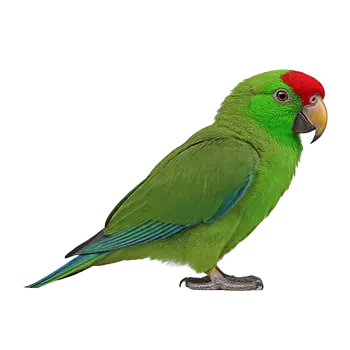

Perches are the single most-used accessory in any Red-Lored Amazon's enclosure, and their quality directly determines the long-term health of the bird's feet. Amazons spend the overwhelming majority of their lives standing, including while sleeping, and feet that grip the same uniform surface day after day develop pressure sores, joint stiffness, and eventually bumblefoot, a painful bacterial infection of the footpad that becomes chronic if the underlying environmental cause is not corrected. A thoughtful perch selection prevents these problems entirely.
Natural wood branch perches are the highest-value perching option for any parrot. Branches from bird-safe hardwood species such as manzanita, java wood, dragonwood, and ribbon wood provide the irregular diameter, textured bark, and slight flex that most closely replicate the branches a wild Red-Lored Amazon would grip. The diameter variation along a single branch forces the foot to adjust its grip constantly, exercising tendons and distributing pressure across different areas of the sole rather than concentrating it on one point. When purchasing natural branch perches, look for diameters ranging from approximately three-quarters of an inch to one and a half inches across the usable length.
Conditioning perches made from concrete, calcium-enriched cement, or textite serve a specific grooming function by gently filing the bird's nails and beak with each step. These should be positioned strategically rather than used as primary perches. Placing a conditioning perch near a food or water station ensures the bird walks across it several times daily without spending extended periods on its abrasive surface. Overuse of conditioning perches can cause excessive wear on the footpad and irritation to the plantar surface, so limiting the bird to one conditioning perch per enclosure is the standard recommendation.
Rope perches made from cotton or sisal offer a soft, flexible perching option that many Red-Lored Amazons enjoy, particularly as a sleeping perch where the yielding surface reduces pressure on the feet during long roosting periods. These perches can be bent into spirals, arches, or angled configurations that add structural complexity to the cage interior. However, rope perches require regular inspection for fraying. Loose threads longer than an inch should be trimmed immediately, and the entire perch should be replaced once the rope begins to unravel to the point where individual fibers could wrap around toes during sleep.