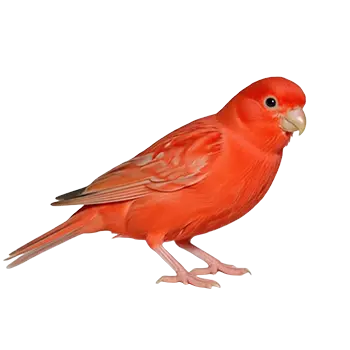

Housing Requirements

Red Factor Canaries are active, flight-oriented birds that spend the vast majority of their waking hours moving within their enclosure rather than climbing, hanging, or manipulating objects the way parrots do. This fundamental behavioral distinction makes horizontal flight space the single most important dimension in canary housing. A cage that is tall but narrow may look impressive in a living room, but it fails the bird because canaries fly back and forth in level lines rather than ascending vertically. Every housing decision should prioritize width and length over height.

The minimum recommended cage size for a single Red Factor Canary is twenty-four inches long by sixteen inches wide by eighteen inches tall, but this is truly a minimum — a flight cage of thirty inches or longer provides substantially better quality of life and allows the bird to build the flight stamina that keeps its cardiovascular system and musculature in peak condition. Canaries housed in cramped cages frequently develop obesity, muscle atrophy, and behavioral dullness, all of which diminish singing activity and can indirectly affect feather quality by reducing the bird's overall metabolic health.

For owners keeping multiple canaries, housing requirements scale upward significantly. Male Red Factors should generally be housed individually unless the cage is large enough to provide distinct territorial zones, as males can become aggressive toward one another, particularly during breeding season. Pairs or small groups require flight cages or indoor aviaries that offer at least twice the space per bird compared to solo housing, with multiple feeding stations and perches to reduce competitive stress.

Light exposure is another housing consideration with particular relevance to Red Factor Canaries. Natural light cycles regulate the molt, which is the period during which color feeding has its greatest impact. Cages placed in rooms with consistent artificial lighting and no exposure to natural daylight variation can experience disrupted molting patterns, leading to uneven feather replacement and inconsistent color. Positioning the cage where it receives indirect natural light — avoiding direct sun that can overheat the bird — supports normal photoperiod-driven behavior.

Cage Types and Materials

The most common cage construction for canaries uses powder-coated steel wire, which offers durability, good visibility, and resistance to rust when the coating is intact. Quality powder coating is non-toxic and withstands regular cleaning without chipping or flaking. Lower-grade cages may use zinc-coated or galvanized wire, which poses a toxicity risk if the bird ingests flakes or particles through contact. When shopping for cages, confirm that the manufacturer specifies lead-free and zinc-safe materials, as heavy metal poisoning is a documented cause of illness and death in caged birds.

Stainless steel cages represent the premium tier of bird housing. They are virtually indestructible, completely non-toxic, resistant to corrosion, and easy to sterilize. Their primary drawback is cost, which can be several times higher than a comparable powder-coated cage. For canary keepers who invest in high-quality birds and intend to keep them for years, a stainless steel cage is a worthwhile long-term purchase that will outlast multiple powder-coated alternatives. The wire gauge in stainless cages also tends to be thinner, improving visibility of the bird's plumage, which is a particular benefit for Red Factors whose color is a primary attraction.

Flight cages differ from standard cages primarily in their elongated rectangular profile. A typical flight cage measures thirty to forty inches in length, providing enough uninterrupted horizontal space for sustained flight between perches placed at each end. Some models include internal dividers that can partition the cage for breeding or separation purposes and then be removed to restore full flight length. This versatility makes divided flight cages popular among breeders who need flexible housing arrangements throughout the year.

Outdoor aviaries constructed from welded mesh panels and wooden or aluminum frames provide the most spacious and naturalistic housing option. An aviary allows canaries to fly freely over distances of several feet, bathe in natural rain and sunlight, and experience seasonal light cycles without intervention. However, outdoor housing introduces predator risk, weather exposure, and the need for parasite management that indoor cages eliminate. Aviaries must be double-wired or fitted with fine mesh to exclude snakes, rodents, and predatory birds, and they should include a sheltered section where birds can retreat from wind, rain, and excessive heat.

Bar Spacing and Security

Bar spacing is a non-negotiable safety specification for canary cages. Red Factor Canaries, like all domestic canaries, are small-bodied birds with narrow skulls, and they can push their heads through bars spaced wider than half an inch. A trapped bird that panics with its head between bars can strangle itself or sustain fatal neck injuries within minutes. The correct bar spacing for canaries is three-eighths of an inch to no more than one-half inch. This range prevents head entrapment while still allowing adequate airflow and visibility.

The orientation of the bars also influences usability. Horizontal bars on at least two sides of the cage give the bird additional climbing surfaces, which canaries occasionally use to move between perch levels or investigate food dishes mounted on the cage wall. Vertical-bar-only cages are functional but offer slightly less environmental complexity. Many flight cages feature horizontal bars on the ends and vertical bars on the long sides, which is a practical compromise.

Door design and security deserve careful attention. Canaries are not typically escape artists in the way parrots are — they lack the dexterity to manipulate latches — but poorly designed doors can swing open if bumped or if the cage is moved. Spring-loaded doors, guillotine-style sliding doors, and clip-secured doors all provide adequate security. The main access door should be large enough to allow the keeper's hand and a food dish to pass through comfortably, while smaller secondary doors for seed cups and water bottles simplify daily maintenance without opening the main enclosure.

For households with cats, dogs, or young children, cage security extends beyond the doors to the overall stability of the setup. A cage on a lightweight stand can be toppled by a curious cat or a toddler pulling on the base. Heavy, wide-footed stands, wall-mounted shelf placement, or suspension hooks rated for the cage's weight all reduce this risk. The cage itself should not have any external perches or landing areas that encourage a predatory pet to investigate, and the room should be arranged so that the bird has a clear sightline of approaching activity to avoid chronic startle stress.

Interior Setup and Perching

The interior arrangement of a canary cage should facilitate flight, encourage natural behavior, and provide comfortable resting positions without cluttering the flight path. The most effective layout places a perch at each end of the cage, positioned at the same height and several inches below the cage ceiling, allowing the bird to fly back and forth in a clear horizontal corridor. Additional perches can be placed at lower levels for variety, but the primary flight lane between the two end perches must remain unobstructed by toys, dishes, or decorative items.

Perch diameter and material matter for foot health. Canaries have small, delicate feet that can develop pressure sores and bumblefoot from perching on dowels of uniform diameter for extended periods. Natural wood branch perches with varying diameters between three-eighths and five-eighths of an inch encourage the foot to grip at different positions throughout the day, exercising the tendons and distributing pressure across the sole. Safe wood species for canary perches include manzanita, java wood, willow, and untreated fruit tree branches such as apple or pear. Avoid cedar, which contains aromatic oils irritating to avian respiratory systems, and any wood that may have been treated with pesticides.

Sandpaper-covered perches, once widely recommended as nail-maintenance tools, have fallen out of favor among avian veterinarians and experienced keepers. The abrasive surface wears down the skin on the underside of the foot far more than it trims nails, creating raw spots that invite bacterial and fungal infection. Concrete or pumice conditioning perches placed at a secondary position — not as the bird's primary sleeping perch — are a safer alternative for gentle nail maintenance. These textured perches keep nails from becoming excessively long without damaging foot skin when used in moderation.

The cage floor should be lined with a material that is easy to replace and does not produce harmful dust or fumes. Plain newspaper, paper towels, or unprinted cage liner paper are the simplest and most sanitary options. Sand sheets and loose corncob bedding are marketed for cage use but present drawbacks — sand sheets are abrasive to feet if the bird spends time on the cage floor, and corncob bedding can harbor mold when wet. A grate positioned above the cage floor prevents the bird from walking in its own droppings and makes daily paper changes quick and hygienic.

Placement and Environmental Factors

Where the cage sits in the home affects the bird's health, stress level, and singing behavior as much as the cage itself. The ideal location provides indirect natural light for at least part of the day, stable temperatures between sixty-five and seventy-five degrees Fahrenheit, protection from drafts, and a moderate level of household activity. Canaries that are isolated in unused rooms often become listless and stop singing, while those placed in high-traffic areas with constant noise and movement may develop chronic stress responses.

Kitchens are categorically unsuitable for canary housing despite their social appeal. Fumes from heated nonstick cookware coated with polytetrafluoroethylene are rapidly fatal to birds, causing acute hemorrhagic lung edema within minutes of exposure. Self-cleaning oven cycles, aerosol sprays, and gas burner emissions further degrade air quality in ways that compromise avian respiratory health over time. Even kitchens that use only stainless steel and cast iron cookware expose the bird to cooking smoke, humidity fluctuations, and temperature spikes that make the room a poor environment for a species with highly efficient and sensitive lungs.

Draft exposure is a serious concern for canaries. Their small body mass makes them vulnerable to rapid heat loss, and a steady draft from a window, air conditioning vent, or exterior door can cause respiratory illness even if the ambient room temperature seems comfortable. Position the cage against an interior wall, away from windows that are frequently opened, and out of the direct path of heating and cooling vents. If the bird's feathers appear constantly fluffed or it sits with its head tucked during the day, drafts or temperature drops should be investigated before assuming illness.

Noise environment influences singing behavior directly. Male Red Factor Canaries sing most prolifically when they can hear moderate ambient sound — household conversation, background music, or the sounds of daily activity — without being subjected to sudden loud noises that trigger alarm responses. Placing the cage in a living room or home office where the bird can observe household routines without being startled by slamming doors or barking dogs encourages confident, sustained singing. Covering the cage at night with a breathable cloth provides a consistent dark period that supports healthy sleep cycles and hormonal regulation tied to seasonal singing and molting.

Breeding Enclosures

Keepers who breed Red Factor Canaries need housing that accommodates pair bonding, nesting, chick rearing, and the eventual separation of juveniles as they mature. Breeding cages are typically smaller than flight cages — around twenty-four to thirty inches long — because breeding pairs do not need the same exercise space as single birds and because smaller cages allow the keeper to monitor nesting activity and chick development more closely. A divided breeding cage with a removable center partition is the most versatile design, allowing a pair to see and hear each other through the divider before being united, and providing a way to separate them again after breeding if aggression develops.

Nesting provisions include either an open cup-style nest or a covered wicker nest basket mounted inside the cage near the top corner for security. Red Factor hens typically prefer open nests lined with commercially available nesting fiber — a blend of cotton, jute, or sisal fibers cut to short lengths that the hen weaves into a cup shape. Providing both the nest and the lining material allows the hen to engage in natural nest-building behavior, which is an important behavioral trigger for egg laying and incubation commitment. Offering too little lining material results in a thin nest that fails to insulate eggs properly, while offering too much can overwhelm the hen and lead to nest abandonment.

Juvenile housing becomes necessary once chicks fledge and begin feeding independently, usually around four weeks of age. Young Red Factors should be moved to a weaning cage — a standard canary cage or small flight cage — where they can practice flight and develop independence without competing with adult birds for food and space. Weaning cages should have low-positioned perches and easily accessible food dishes to accommodate the clumsy early flights and uncertain foraging skills of recently fledged birds. Multiple juveniles can be housed together in a flight cage during this stage, as territorial aggression does not typically emerge until they reach hormonal maturity.

For breeders managing multiple pairs, a breeding cabinet or rack system provides efficient, space-conserving housing. These units stack individual breeding cages vertically with pull-out trays for cleaning, and they allow the breeder to house ten or more pairs in the floor space that a few flight cages would occupy. The trade-off is reduced flight space for individual birds, which makes rotating breeding stock into larger flight cages during the off-season an important welfare practice. Proper ventilation within a stacked cage system is essential, as restricted airflow can allow humidity, ammonia, and airborne pathogens to accumulate in ways that compromise respiratory health.

Cleaning and Maintenance

A consistent cleaning routine is fundamental to canary health and directly affects the lifespan and condition of the housing itself. Daily tasks include replacing cage floor paper, washing and refilling food and water dishes, and removing any fresh food remnants such as egg food or greens before they spoil. These simple steps take only a few minutes per cage but prevent the buildup of bacteria and mold that thrive on moist organic matter. Droppings left to accumulate on perches, cage bars, and dishes become a breeding ground for pathogenic organisms and produce ammonia fumes that irritate the bird's sensitive respiratory tract.

Weekly cleaning should involve a more thorough scrub of the cage bottom tray, perches, and any accessories. Removing the bird to a temporary holding cage or a secure room allows unhindered access to all cage surfaces. A solution of mild dish soap and warm water is sufficient for routine cleaning, followed by thorough rinsing to remove all soap residue. For deeper disinfection, a diluted white vinegar solution or a bird-safe veterinary disinfectant can be used after the soap wash. Bleach is effective as a disinfectant when diluted properly and rinsed completely, but its fumes are dangerous to birds, so the cage must be dried and aired thoroughly before the bird is returned.

Perches require individual attention during weekly cleaning because their textured surfaces trap droppings and moisture. Natural wood perches can be scrubbed with a stiff brush under running water and allowed to dry completely in sunlight, which has a natural sanitizing effect. Damaged or deeply soiled perches should be replaced rather than perpetually scrubbed, as wood that has absorbed moisture repeatedly can harbor bacteria deep within its grain. Keeping spare perches in rotation simplifies this process — one set dries while another is in use.

Monthly or quarterly maintenance should include an inspection of the cage structure itself. Check for chips or flaking in the powder coating that could expose bare metal to rust or allow the bird to ingest paint particles. Examine all welds, hinges, and latches for integrity, especially in older cages that have endured years of daily use and cleaning. Springs on doors lose tension over time, and worn latches can create escape or injury risks. Replacing worn components promptly is far cheaper than replacing an entire cage, and it prevents the small mechanical failures that can lead to a lost or injured bird.

Always consult a qualified professional before making any health-related decisions. This content is provided for informational reference only and should not replace professional guidance specific to your animal.