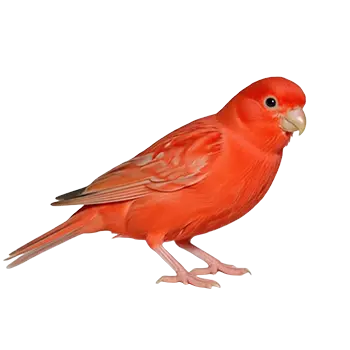

Red Factor Canaries are not toy-driven birds in the way parrots are. They do not manipulate objects with their feet, solve puzzle feeders designed for hookbills, or shred wooden blocks for entertainment. Understanding what enrichment actually means for a canary is essential before spending money on products that will be ignored. Canary enrichment centers on movement, auditory stimulation, visual interest, bathing, and foraging — activities that reflect the species' natural behavior in the wild, where they spend their days flying between feeding sites, singing to establish territory, and bathing in shallow water.
The single most enriching feature in any canary's life is adequate flight space. No toy substitutes for the ability to fly freely across the length of a cage or aviary. A bird that has room to fly vigorously is a bird that exercises its cardiovascular system, maintains muscle tone, and expresses natural locomotor behavior that reduces stress and boredom. Enrichment products should complement flight, not compete with it for cage space. An overcrowded cage packed with toys that obstruct the flight path is less enriching than a spare cage with clear lanes and a few well-chosen items.
Auditory enrichment is uniquely important for canaries. Males are prolific singers, and they develop their song repertoire partly by listening to other birds, household sounds, and recorded music. Exposure to varied sounds stimulates vocal practice and complexity. Some keepers play recordings of accomplished canary singers to encourage their bird to learn new phrases and develop a richer song. This form of enrichment costs nothing beyond a speaker and a playlist, yet it engages one of the canary's most fundamental behavioral drives.
Visual enrichment also plays a role, though its effects are subtler. Canaries are attentive to movement and color in their surroundings. A cage positioned where the bird can observe household activity, watch outdoor birds through a window, or see foliage moving in a breeze provides constant, low-level visual stimulation. Rotating the cage's position within a room every few weeks changes the bird's visual perspective and introduces novelty without requiring any physical product at all.