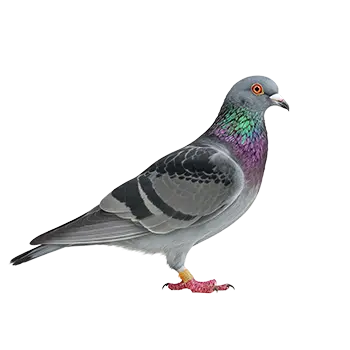

Enrichment for Racing Homer Pigeons operates on fundamentally different principles than enrichment for parrots, finches, or other companion bird species. Parrots are manipulative foragers that interact with objects using their feet and beaks, making puzzle toys and chewable materials central to their enrichment programs. Pigeons, by contrast, are ground-feeding granivores whose behavioral repertoire centers on locomotion, visual scanning, social interaction, and bathing. Effective pigeon enrichment supports these natural behavioral categories rather than imposing enrichment models borrowed from species with entirely different ecological niches.
The concept of enrichment in a racing loft also carries a performance dimension that does not exist in most companion bird contexts. A Racing Homer that is psychologically engaged, physically active, and socially stimulated within its home environment tends to develop stronger loft attachment, higher motivation to return quickly during races, and better overall fitness than a bird kept in a barren, unstimulating loft. Enrichment is therefore not a luxury or an afterthought — it is a management tool that contributes directly to competitive outcomes by shaping the bird's relationship with its loft and flock.
The enrichment needs of Racing Homers also vary with the competitive calendar. During the racing season, the primary enrichment comes from the racing itself — the transport, the release, the flight home, and the social rituals of trapping and feeding that surround race day. Outside the racing season, during the molt and the rest period, birds spend far more time in the loft and benefit from increased environmental stimulation to compensate for the reduced activity level. Breeding season brings its own form of natural enrichment through courtship, nesting, and chick-rearing, but stock birds and unmated youngsters still need stimulation during this period.
Effective pigeon enrichment can be organized into several overlapping categories: environmental enrichment, which modifies the physical loft space; foraging enrichment, which changes how food is presented; bathing and water enrichment; social enrichment, which manages flock dynamics and interactions; and exercise enrichment, which provides opportunities for physical activity beyond routine daily flights. Products and strategies from each category can be combined to create a rich, varied environment that sustains the behavioral health of every bird in the loft.