
Bands, Rings & Identification

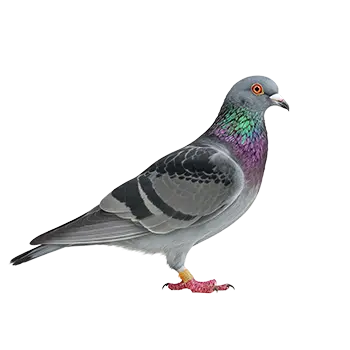
Identification is the administrative backbone of competitive pigeon racing, and the band system is where it begins. Every Racing Homer entered in organized competition carries a seamless aluminum leg band applied when the bird is approximately five to seven days old. These bands are issued by national pigeon racing organizations — such as the American Racing Pigeon Union or the International Federation — and carry a unique serial number, the year of hatching, and the organization's code. Because the band is seamless and sized to fit only a young bird's leg, it cannot be removed or transferred to another bird without cutting it, which makes it a tamper-resistant proof of identity and origin.

Band application requires proper timing and technique. Applied too early, the band slips off the still-tiny foot. Applied too late, the foot has grown past the point where the band can slide over the toes without causing injury. The window is typically between day five and day eight, depending on the growth rate of the individual squab. The band is slid over the three forward-facing toes, eased past the rear toe, and pushed up onto the shank, where it will remain for the bird's lifetime. Improperly applied bands that sit at an angle or trap a toe against the shank must be corrected immediately, as they can cause circulation problems, swelling, and permanent lameness if left in place.

Beyond the primary seamless band, many fanciers use secondary identification in the form of colored snap-on plastic bands or clip bands. These removable bands serve practical management purposes: color-coding birds by year class, sex, breeding pair, or racing team makes visual identification from a distance possible without catching and handling each bird. A fancier running a widowhood team, for example, might band all racing cocks with a red clip band and all reserve cocks with blue, allowing instant identification at feeding time or when selecting birds for basketing. These secondary bands should be lightweight, smooth-edged, and checked periodically for fit, since they can tighten if the leg scales thicken with age or loosen and snag on loft fixtures.

Electronic identification has become integral to modern competitive racing. Electronic counter-mark bands, commonly called electronic chips or RFID tags, are encased in a small plastic ring that attaches to the bird's leg alongside the permanent band. When the bird enters the loft through the electronic timing pad, the chip transmits a unique signal that registers the bird's arrival time to the hundredth of a second. These chips are issued by racing organizations or electronic timing system manufacturers and must be registered to a specific bird and loft. Proper placement — snug against the leg without rotating freely, positioned on the leg that will pass closest to the antenna pad — ensures reliable reads. A chip that fails to register on race day can cost a bird its placing regardless of how fast it actually flew.

Feeders & Waterers

Feeding and watering equipment for a racing loft must balance hygiene, accessibility, and waste prevention. The most common feeder design for pigeons is the trough feeder, a long, narrow container with a raised lip or anti-perching rail that allows birds to reach in and eat but discourages them from standing in the feed and contaminating it with droppings. Quality trough feeders are made from galvanized steel, stainless steel, or food-grade plastic, all of which resist corrosion and can be cleaned and disinfected without degrading. The feeder length should accommodate the number of birds being fed — roughly one inch of feeder space per bird — to prevent crowding and the aggressive pecking that breaks out when subordinate birds cannot reach the feed.

Hopper feeders offer a hands-off alternative for situations where daily manual feeding is impractical. These gravity-fed units store a volume of grain in an enclosed upper chamber and dispense it into a lower feeding tray as birds eat. Hopper feeders keep the bulk of the feed clean and dry, protected from dust and droppings, while making a controlled portion available at floor level. The disadvantage is reduced control over feed consumption — birds fed ad libitum from a hopper tend to selectively eat their preferred grains and leave less palatable items, and they can overconsume during periods when caloric restriction would be beneficial. Most competitive fanciers reserve hopper feeders for young bird rearing and stock lofts where controlled feeding is less critical than in the racing team section.

Waterers for racing lofts must provide clean water while preventing contamination and minimizing spillage. Vacuum-type drinkers, consisting of an inverted water reservoir mounted on a shallow base tray, are the standard for pigeon lofts. As birds drink from the base tray, water flows from the reservoir to maintain a constant level. The enclosed reservoir protects the water supply from droppings, dust, and feed debris, and the narrow drinking channel makes it difficult for birds to bathe in the drinker, a behavior that rapidly fouls open water containers. Drinker capacity should provide at least two ounces of water per bird per day, with larger reservoirs preferred during hot weather when water consumption increases significantly.

Nipple drinker systems, borrowed from commercial poultry production, provide the highest level of water hygiene by eliminating open water surfaces entirely. Each nipple delivers water only when a bird pecks at it, keeping the supply clean and eliminating the daily chore of emptying, scrubbing, and refilling traditional drinkers. Installation requires a pressurized water line or a header tank mounted above the nipple height, and birds must be trained to use the nipples, which typically takes two to three days of guided introduction during which traditional drinkers are gradually removed. Nipple systems are best suited to larger lofts where the labor savings of automated water delivery offset the initial installation cost.

Medication cups and supplementary water stations serve specialized purposes within the feeding and watering program. Small, removable cups that attach to perch boxes or wall-mounted brackets allow the fancier to deliver targeted supplements, medications, or electrolyte solutions to individual birds or specific sections of the loft without dosing the entire water supply. These are particularly useful during the racing season, when individual birds may need antibiotic treatment, vitamin supplementation, or electrolyte support without affecting the rest of the team. Cups should be non-porous, easy to remove and clean, and securely mounted to prevent tipping.

Transport & Shipping Equipment

Transport equipment is essential hardware for any racing pigeon operation, since birds must be moved regularly between the loft and training release points, race club marking stations, and occasionally between lofts for breeding loans or sales. The standard transport container is the wicker or plastic pigeon basket, designed to hold between one and thirty or more birds depending on size. Traditional wicker baskets remain popular for their excellent ventilation, light weight, and durability, though they are difficult to clean and disinfect thoroughly. Modern plastic and fiberglass baskets offer smoother, non-porous interiors that can be washed and sanitized between uses, reducing the risk of disease transmission during transport.

Basket sizing and loading density directly affect bird welfare and post-transport condition. An individual training basket measuring roughly twelve by twelve by ten inches provides comfortable accommodation for a single bird on short-duration tosses. Club race baskets, which may hold ten to thirty birds per section, should provide enough floor space for each bird to sit without being compressed by its neighbors. Overcrowded baskets generate excessive heat and humidity, raise stress levels, and increase the risk of feather damage and physical injury from pecking. Well-designed race baskets include internal partitions that divide the total space into manageable sections, slatted or mesh bottoms that allow droppings to fall through, and water troughs or cups accessible from outside the basket for in-transit hydration.

Specialized shipping containers are used when birds must travel long distances by ground courier or air freight. These containers are built to meet shipping carrier requirements for live animal transport, with solid construction to withstand stacking and handling, ventilation openings that cannot be blocked by adjacent packages, absorbent litter floors, and food and water provisions for extended transit times. Labeling must clearly identify the contents as live birds, indicate the correct orientation, and provide sender and recipient contact information. Many experienced shippers include a small amount of grain scattered on the container floor and a water cup with a gel-type hydration medium that will not spill during movement.

Vehicle-mounted basket racks and custom transport trailers serve fanciers who train and ship large numbers of birds regularly. A properly designed basket rack secures multiple baskets in a vehicle without blocking airflow, preventing baskets from shifting during transport and ensuring that each basket receives adequate ventilation. Racks built from aluminum or PVC are lightweight and resist the corrosion that metal racks suffer from exposure to moisture and droppings. Purpose-built pigeon transport trailers, though a significant investment, allow the fancier to move dozens of baskets in a single trip to a training point, with built-in ventilation fans, water systems, and release mechanisms that open all baskets simultaneously for a flock release.

Grooming & Health Accessories

Routine grooming and health monitoring require a small but specific set of tools that every racing pigeon keeper should have on hand. A quality pair of pigeon-sized nail clippers allows the fancier to trim overgrown toenails, which can occur in birds that spend most of their time on smooth perch surfaces rather than abrasive natural substrates. Overgrown nails snag on basket mesh, catch in loft fittings, and impair the bird's ability to land cleanly on the electronic timing pad. Trimming should remove only the sharp tip, well short of the blood vessel visible as a dark line within the nail on light-colored nails. A small container of styptic powder should be kept nearby in case of accidental quick cuts.

Crop needles and syringes are indispensable for administering medications, supplements, and rehydration fluids directly into the crop. A crop needle — a blunt-tipped, curved metal tube that attaches to a standard syringe — allows the fancier to deliver a precise volume of liquid past the tracheal opening and directly into the crop without risk of aspiration into the lungs. Crop needles come in various gauges; a sixteen- to eighteen-gauge needle is appropriate for adult Racing Homers. The technique requires practice and confidence: the needle is inserted gently into the left side of the mouth, guided over the tongue and past the glottis, and advanced smoothly into the crop. Administered correctly, crop tubing causes minimal stress and delivers medication far more reliably than adding it to drinking water, where individual intake is impossible to control.

Dropping boards and diagnostic supplies support the daily health monitoring that is fundamental to competitive loft management. Many racing lofts are designed with removable dropping boards beneath the perches, allowing the fancier to slide the board out each morning and inspect the droppings for changes in color, consistency, and volume that signal digestive disturbance, parasitic infection, or systemic illness. Experienced fanciers can identify healthy droppings — firm, well-formed, with a white urate cap — at a glance and will immediately investigate any deviation. A basic fecal flotation kit, consisting of a microscope, flotation solution, slides, and coverslips, enables in-house parasite screening that supplements veterinary diagnostics and allows rapid treatment decisions without waiting for laboratory results.

First aid supplies tailored to pigeon injuries and emergencies should be assembled in a dedicated kit stored in the loft. Common racing injuries include wing and keel bruises from collisions, minor lacerations from hawk strikes, and foot and leg injuries from rough landings or entanglement. A well-stocked pigeon first aid kit includes sterile saline for wound irrigation, an antiseptic solution safe for avian use, non-adhesive wound dressings, self-adhering cohesive bandage wrap for stabilizing wing or leg injuries, small hemostats for removing embedded debris, and a broad-spectrum topical antibiotic ointment. A pillowcase or soft cloth tube for restraining injured birds during treatment reduces stress and prevents further injury from struggling.

Nesting Supplies & Breeding Accessories

The breeding phase of the pigeon calendar demands specialized accessories that support successful reproduction while maintaining the hygienic standards required in a competitive loft. Nest bowls are the foundational breeding accessory. Most racing lofts use disposable or semi-disposable nest bowls made from compressed paper, felt, or molded plastic, set inside the permanent nest box. Plastic bowls are durable, easy to clean, and reusable across multiple breeding rounds. Paper and felt bowls absorb moisture from droppings and broken eggs, keeping the nest environment drier, but they must be replaced between each round. The bowl diameter should be approximately eight to nine inches — large enough for the hen to sit comfortably without the eggs rolling to the edge, but small enough to contain the squabs during their first days of life.

Nesting material provides the substrate that insulates the eggs and gives the sitting bird a comfortable platform. Tobacco stems are the traditional and still the most widely recommended nesting material for racing pigeons. Their natural nicotine content acts as a mild insecticide, deterring feather lice and nest mites that can parasitize incubating birds and young squabs. The stems interlock naturally as the birds arrange them, creating a stable nest structure that conforms to the bowl shape. Pine needles serve a similar purpose and are readily available in many regions, though they lack the pest-deterrent properties of tobacco stems. Commercial nesting fiber, made from sterilized plant fibers compressed into pads, offers convenience and consistency but may need to be supplemented with loose material to satisfy the birds' nest-building instinct.

Egg management accessories support the controlled breeding programs that most competitive lofts employ. Dummy eggs — ceramic, plastic, or wooden eggs sized and weighted to mimic real pigeon eggs — allow the fancier to manipulate breeding timing by replacing real eggs with dummies, prompting the pair to incubate for a full cycle without producing squabs. This technique is used to control population, synchronize hatching across multiple pairs, or allow valuable eggs to be fostered to nurse pairs whose own eggs have been replaced. Dummy eggs should match the size and weight of real pigeon eggs closely enough that the incubating bird does not reject them. Egg candling lights — small, high-intensity flashlights designed to illuminate the interior of an egg — allow the fancier to check fertility and embryonic development without opening the egg, typically at five to seven days of incubation.

Fostering trays and isolation cages support the advanced breeding strategies employed in high-performance racing lofts. When valuable youngsters must be raised by foster parents rather than their genetic parents, a short-term isolation cage within the breeding loft allows the foster pair to be presented with the eggs or hatchlings in a controlled setting where the fancier can monitor acceptance. These cages are typically wire construction with a solid floor, a nest box, and food and water provisions, placed within view of the main loft to maintain social connection while preventing interference from other pairs. Rearing records — whether maintained on paper forms, spreadsheet printouts mounted near the nest boxes, or digital platforms accessed via phone or tablet — track parentage, hatch dates, band numbers, and fostering assignments, forming the pedigree documentation that underpins a serious breeding program.

Training Flags & Settling Aids

Settling aids and training support accessories bridge the gap between loft equipment and the active management practices that develop a Racing Homer's competitive abilities. The settling cage, discussed briefly in the housing context, deserves closer attention as an accessory category. Modular settling cages constructed from galvanized wire panels connected by spring clips can be assembled, resized, and disassembled without tools, making them adaptable to lofts of different sizes and configurations. Standard panels come in dimensions of roughly twenty-four by twelve inches, and six to eight panels create a cage large enough to settle a team of young birds comfortably. When not in use, the panels stack flat for storage, a significant advantage in lofts where space is at a premium.

Training baskets for individual tosses differ from the larger race baskets used by clubs and combine units. Personal training baskets are typically sized for one to six birds and designed for frequent, short-duration use on daily training runs. The best training baskets are lightweight, well-ventilated, and equipped with a quick-release lid that allows the fancier to open the basket with one hand while controlling the vehicle or managing other tasks at the release point. Wicker remains the preferred material for training baskets due to its light weight and natural ventilation, though molded plastic models with ventilation slots offer easier cleaning and greater durability over years of daily use.

Loft orientation markers help young birds learn the visual signature of their home loft from the air. Since Racing Homers navigate the final approach to the loft using visual landmarks, the loft's appearance from above and from several miles out matters for trapping speed. Distinctive roof markings — painted patterns, contrasting panels, or mounted shapes visible from altitude — help birds locate the loft quickly upon return. The specific design is less important than consistency: once the birds have learned to associate a particular visual pattern with home, it should not be changed. Some fanciers mount brightly colored wind socks or spinning reflectors near the loft that are visible from distance and provide motion cues that a flat roof marking cannot.

Call-in devices and auditory signals complement visual orientation. Many experienced fanciers use a specific whistle, bell, or feed rattle to signal feeding time, and returning race birds learn to associate that sound with the reward of food and the security of the loft. The sound carries across a much greater distance than visual loft markers, particularly in overcast or hazy conditions when aerial visibility is reduced. Consistency is again the key — the same sound, delivered at the same time in the routine, builds an auditory map that supplements the bird's visual and magnetic navigation. Commercially available pigeon whistles produce a distinctive, carrying tone that differs from environmental noise, making them more effective than improvised sound sources.

Always consult a qualified professional before making any health-related decisions. This content is provided for informational reference only and should not replace professional guidance specific to your animal.