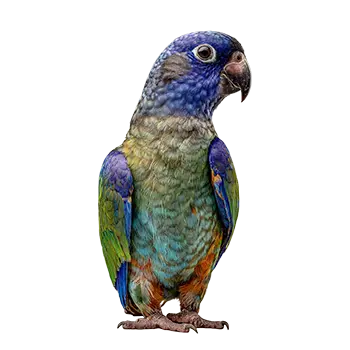

Blue-headed Pionus parrots are medium-sized birds that need a cage large enough to allow full wing extension and comfortable movement between perches. The minimum recommended cage dimensions are 24 inches wide by 24 inches deep by 30 inches tall, though larger is always better. A Pionus that spends the majority of its day inside its cage — as many do when their owners are at work — benefits significantly from a cage that exceeds minimum standards, ideally 30 by 24 by 36 inches or greater.
Bar spacing is a critical safety consideration. For a Blue-headed Pionus, bar spacing should fall between 5/8 inch and 3/4 inch. Bars that are too widely spaced create a risk of the bird wedging its head between them, which can result in serious injury or strangulation. Bars that are too narrow may not provide adequate grip for climbing, which is an important form of exercise for parrots. Horizontal bars on at least two sides of the cage encourage climbing behavior and give the bird more usable surface area.
Cage placement within the home matters nearly as much as the cage itself. Position the cage in a room where the family spends time so the bird feels included in household activity, but avoid placing it directly in the kitchen due to cooking fumes, non-stick cookware off-gassing, and temperature fluctuations. A corner placement with two solid walls behind the cage can help a naturally cautious Pionus feel more secure, while still allowing a clear view of the room.
The cage should be elevated so the bird's resting perch sits at roughly chest height for the primary caretaker. Being too low can make the bird feel vulnerable, while being positioned too high may encourage territorial behavior. A sturdy cage stand or a flat-top dresser can serve as a base, provided it is stable enough to support the cage without wobbling.