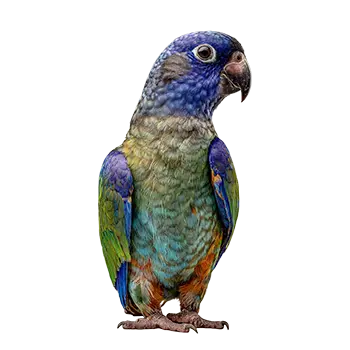

Taking a Blue-headed Pionus outdoors safely requires either a secure travel carrier or a properly fitted avian harness. Harnesses designed specifically for parrots allow the bird to sit on your hand or shoulder while tethered by a lightweight leash, giving it the experience of outdoor air and sunlight without the risk of escape. For a medium-sized Pionus, look for a harness designed for birds in the 200 to 350 gram range, with adjustable straps that sit comfortably around the body without compressing the chest or restricting breathing.
Harness training requires patience and should begin well before the first outdoor outing. Start by letting the bird examine and chew on the harness as a novel object. Over several days, progress to draping it over the bird's body, then to briefly fastening it while offering high-value treats. Most Pionus parrots will tolerate a harness within one to three weeks of consistent, positive training sessions lasting no more than five minutes each. Forcing the harness on a resistant bird will create a lasting negative association.
Flight suits offer an alternative to traditional harnesses and serve double duty as a diaper, catching droppings while the bird is out of its cage. These garment-style accessories are typically made from lightweight, breathable fabric and attach with small fasteners along the bird's back. Some models include a built-in leash loop. Flight suits tend to be easier for the bird to accept than harnesses because they distribute contact more evenly across the body rather than concentrating pressure at specific strap points.
Regardless of which restraint system you choose, never leave a harnessed or suited bird unattended, and keep a close eye on body language. Panting, wing lifting, and agitated vocalizations indicate stress or overheating. Outdoor sessions should begin short — ten to fifteen minutes — and gradually extend as the bird becomes comfortable. Even a well-trained Pionus can be startled by unexpected sounds or movements outdoors, so maintain a firm but gentle grip on the leash at all times.