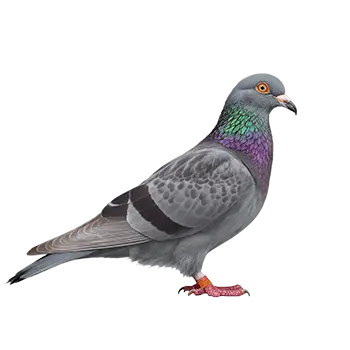

Understanding Pigeon Play & Behavior

Pigeons are intelligent, curious birds with a rich behavioral repertoire that goes far beyond simply eating and roosting. In the wild, rock doves spend a significant portion of their day foraging, exploring, bathing, and engaging in complex social interactions. Captive fancy pigeons retain all of these instincts, and without appropriate outlets, boredom can manifest as feather plucking, excessive aggression, repetitive pacing, or apathy.

Unlike parrots and songbirds, pigeons do not manipulate objects with their feet or shred materials with their beaks in the same way. Their play behavior is more subtle and often centers on ground-based exploration, pecking at novel objects, bathing, strutting, and interacting with flock mates. This means that traditional parrot toys — swings, ladders, and hanging chew toys — are largely irrelevant to pigeons and may even create hazards if birds become entangled.

The most effective enrichment for pigeons mimics the activities they would naturally engage in: foraging across varied surfaces, investigating new objects in their environment, bathing in water, and socializing with other pigeons. Understanding this behavioral baseline helps keepers select products and strategies that genuinely enrich their birds' lives rather than simply cluttering the loft with unused accessories.

Age and breed also influence enrichment needs. Young pigeons are generally more curious and active, while older established birds may be more settled in their routines. Breeds with limited mobility due to heavy feathering or exaggerated body proportions need enrichment that comes to them rather than requiring athletic movement to access.

Foraging & Food-Based Enrichment

Foraging enrichment is the single most effective category of stimulation for captive pigeons. In the wild, pigeons spend hours walking and pecking across the ground searching for seeds, and replicating this experience in the loft provides both mental and physical exercise. Scatter feeding — broadcasting a portion of the daily ration across the loft floor or into a shallow tray of clean substrate — forces birds to search for individual seeds rather than eating passively from a hopper.

Foraging trays filled with clean pebbles, cork pieces, or crumpled paper with seeds hidden among them add complexity to mealtime. The birds must move obstacles aside with their beaks to find food, extending the time spent eating and engaging multiple cognitive processes. Start with easy configurations and gradually increase difficulty as the birds learn the system.

Sprouted seeds offered in shallow dishes provide a foraging-adjacent enrichment because the birds encounter a different texture and flavor than their standard dry mix. Growing a small tray of wheatgrass or other pigeon-safe greens and placing it in the loft gives birds something to pick at throughout the day. These greens also provide nutritional benefits beyond the enrichment value.

Rotate foraging methods regularly to prevent habituation. Birds that experience the same enrichment setup day after day will eventually lose interest. Alternating between scatter feeding, foraging trays, and other food-based activities on a weekly cycle keeps the experience novel and engaging.

Environmental & Sensory Enrichment

Changing the physical environment of the loft periodically provides passive enrichment that stimulates exploration without requiring the keeper to purchase specialized products. Rearranging perches, adding a new platform at a different height, or introducing a textured surface such as a flat stone, a piece of untreated wood, or a section of artificial turf gives pigeons something new to investigate and claim as territory.

Mirrors can be surprisingly engaging for pigeons, particularly unpaired birds or those housed individually during quarantine. A pigeon will often display, coo, and interact with its reflection as though it were another bird. While this should not replace genuine social companionship, a securely mounted shatterproof mirror provides temporary stimulation for birds in isolation. Remove the mirror periodically to prevent obsessive behavior.

Water-based enrichment is one of the most universally enjoyed activities among pigeons. Offering a shallow bathing pan several times per week provides exercise, feather maintenance, and clear enjoyment — most pigeons will splash vigorously, dip their heads, and flap their wings in the water. Vary the size and depth of the bath occasionally, and on warm days, a gentle misting from a spray bottle can serve as additional sensory stimulation.

Auditory enrichment, such as playing soft music or nature sounds in the loft area, has been observed to have a calming effect on pigeon flocks. While the research is limited, many experienced keepers report that their birds are more relaxed and vocalize more frequently when ambient sound is present. Avoid sudden loud noises or jarring music, which can startle the flock and cause panic injuries.

Social Enrichment & Flock Dynamics

For pigeons, the most important form of enrichment is social interaction with other pigeons. These are deeply gregarious birds that form strong pair bonds and maintain complex social hierarchies within a flock. A solitary pigeon, no matter how many toys and foraging devices it has, will not be as mentally healthy as one kept with at least one companion. If you are keeping pigeons as household pets, a bonded pair is the minimum recommended social unit.

Human interaction is also a valuable form of enrichment for tame fancy pigeons. Birds that are handled regularly from a young age often enjoy sitting on their keeper's shoulder, being gently stroked on the head and neck, and following their keeper around during supervised free-flight time indoors. These interactions strengthen the bond between bird and keeper and provide cognitive stimulation that is distinct from flock socialization.

Supervised free-flight time in a bird-safe room provides excellent enrichment for pet pigeons that are bonded to their keeper. Close windows and doors, cover mirrors and glass surfaces that birds might fly into, remove hazards like open water containers or ceiling fans, and let the pigeon explore the room at its own pace. Many pet pigeons will fly to their keeper, explore furniture, and investigate novel objects during these sessions.

Introducing new birds to an established flock should be done gradually and under observation, as social disruption can cause stress for both the newcomers and the existing residents. A period of visual introduction — housing the new bird in a separate but adjacent enclosure where it can see and hear the flock without direct contact — helps reduce aggression when the birds are eventually combined.

Platforms, Swings & Physical Features

While pigeons do not use traditional parrot-style toys, certain physical features and accessories can add variety to the loft environment. Flat platform perches at varying heights encourage birds to fly short distances between levels, providing exercise that is particularly beneficial for breeds that are otherwise sedentary. Platforms should be wide enough for birds to land comfortably and made from materials that are easy to clean and provide good grip.

Pigeon-appropriate swings — essentially a flat perch suspended from two chains or ropes — are used by some birds, though not all pigeons will take to them. If you install a swing, place it in a location where it will not collide with walls or other perches when in motion, and start with the swing at a low height so birds can step onto it from a nearby surface rather than having to fly to a moving target.

Ladders and ramps connecting different levels of the loft can be useful for breeds with limited flying ability. Heavy-bodied breeds or those with impaired wing function due to ornamental feathering may appreciate a gentle ramp between floor level and their preferred perching area. Cover ramps with a non-slip surface to prevent foot injuries.

Natural branches secured inside the loft provide varied perching surfaces that engage the birds' feet differently than uniform dowels or flat shelves. Choose hardwood branches from non-toxic tree species, scrub them clean, and secure them firmly so they do not shift or fall when birds land on them. The irregular shape and bark texture offer subtle foot exercise and a more naturalistic roosting experience.

DIY & Budget Enrichment Ideas

Effective pigeon enrichment does not require expensive specialty products. Many of the best enrichment strategies cost little or nothing and can be assembled from household materials. A cardboard box with a pigeon-sized entrance hole cut in the side becomes an instant exploration station that most birds will investigate with enthusiasm. Replace it with a fresh box every week or two as it becomes soiled.

Paper bags, crumpled newspaper balls, and small piles of dried leaves scattered on the loft floor provide novel textures and sounds for pigeons to explore. While pigeons will not shred or chew these materials the way a parrot would, they will walk through them, peck at them, and push them around with their beaks. Always ensure that materials are free from ink containing heavy metals, staples, tape, or other hazards.

A shallow tray of clean sand or fine gravel serves double duty as enrichment and as a supplemental grit source. Pigeons enjoy scratching and pecking through sand, and the activity mimics natural ground-foraging behavior. Sprinkle a few seeds into the sand for an added foraging challenge.

Rotation is the most budget-friendly enrichment strategy of all. Simply cycling through different activities, rearranging existing perches, offering baths on unpredictable days, and alternating between scatter feeding and hopper feeding keeps the environment feeling fresh without any additional purchases. The novelty of change itself is stimulating to pigeons, and a keeper who maintains a varied routine will notice more alert, active, and contented birds.

Always consult a qualified professional before making any health-related decisions. This content is provided for informational reference only and should not replace professional guidance specific to your animal.