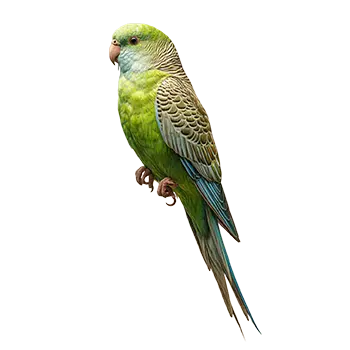

Play Style & Personality

Understanding a Lineolated Parakeet's natural play style is essential for choosing toys that will actually be used rather than ignored. Linnies are not the bold, aggressive chewers that larger parrots tend to be. Instead, they are methodical explorers who prefer manipulating objects with their feet and beaks at a deliberate pace. They are walkers and climbers rather than acrobatic flyers, which means their toy preferences tend to favor items they can investigate up close on a flat surface or while perched.

Linnies are notably tactile birds. They enjoy holding small objects in their feet — a behavior less common in many parakeet species — and will spend extended periods turning, chewing, and examining items that fit comfortably in their grip. This foot dexterity makes them excellent candidates for toys with small movable parts, beads, and components they can manipulate independently.

Social play is another hallmark of the species. Lineolated Parakeets housed with companions will often engage in cooperative play, taking turns with toys or playing alongside each other. Single birds tend to bond with their owners as play partners and may bring small toys to their human for shared interaction. Choosing toys that support this social dynamic — items that can be offered during out-of-cage time or that encourage back-and-forth engagement — adds a valuable bonding dimension to playtime.

It is worth noting that linnies can be initially cautious around new objects. A toy that seems perfect may be avoided for days if introduced abruptly. Placing new toys near but not inside the cage for a day or two, then gradually moving them closer, helps the bird acclimate without stress.

Foraging & Puzzle Toys

Foraging toys are arguably the single most important enrichment category for captive Lineolated Parakeets. In the wild, these birds spend a significant portion of their day searching for food among foliage, bark, and forest floor debris. Replicating this foraging behavior in captivity provides mental stimulation that prevents boredom, feather destructive behavior, and other stress-related issues.

Beginning foraging toys should be simple and transparent. Wrapping treats in a thin piece of paper, placing seeds in an open cup partially covered by a crumpled paper towel, or threading food items onto a skewer gives the bird an easy win that builds confidence with the foraging concept. Once the bird understands that hidden food requires effort to access, you can gradually increase the difficulty with more complex designs.

Intermediate and advanced foraging toys include puzzle boxes with sliding lids, acrylic foraging wheels, and multi-step devices that require the bird to move components in sequence to access a reward. Look for toys designed for small parrots or parakeets — many foraging devices marketed for larger species have components too heavy or too stiff for a linnie to operate effectively.

Rotating foraging toys regularly maintains their novelty. Even a favorite foraging device loses its stimulating effect after weeks of daily use. Keep a collection of foraging toys and cycle three or four into the cage at a time, swapping them out weekly. This rotation strategy keeps the bird mentally engaged without requiring a constant investment in new products.

Shreddable & Chew Toys

While Lineolated Parakeets are not destructive power chewers, they do enjoy shredding soft materials and chewing on wood and plant-based textures. Providing appropriate shreddable toys satisfies this natural behavior and helps maintain beak condition. The key is matching the material hardness to the bird's beak strength — linnies prefer softer substrates that yield satisfyingly to their smaller beaks.

Balsa wood, cork, yucca, sola, and palm leaf are excellent shreddable materials for linnies. These soft woods and plant fibers tear apart easily, giving the bird a sense of accomplishment without the frustration of trying to destroy something too hard for its beak. Toys constructed from woven palm fronds, shredded paper, or corn husk are also popular and provide varied textures.

Placement of shreddable toys within the cage matters. Position them near favorite perching spots where the bird naturally spends downtime. Some linnies prefer to shred while perched, while others enjoy pulling apart materials while standing on the cage floor — observe your bird's preference and accommodate it. Hanging shredders near sleeping perches can encourage the natural behavior of preening and manipulating materials before sleep.

Safety considerations for chew toys include avoiding dyed materials unless the dye is specifically certified as bird-safe, checking for small metal components like zinc-coated clips or lead-containing bells, and ensuring that no toy components are small enough to be swallowed whole. Inspect shreddable toys regularly and remove them when they are reduced to bare wire, chain, or hardware that could injure the bird.

Climbing & Swinging Toys

Given their natural inclination toward climbing over flying, Lineolated Parakeets are enthusiastic users of ladders, rope networks, and swing-style toys. These climbing structures serve as both exercise equipment and entertainment, encouraging physical activity that supports muscle tone, coordination, and cardiovascular health.

Wooden and rope ladders that can be positioned at various angles offer versatile climbing opportunities. Some linnies prefer ladders mounted vertically against the cage wall, while others enjoy them placed at an angle like a ramp. Rope boings — the flexible spiral perches that can be bent into curves and loops — are particularly well-suited to linnies, as they can be shaped to create climbing paths that connect different areas of the cage.

Swings provide a different type of physical engagement. The gentle motion of a swing challenges the bird's balance and grip, engaging core muscles and feet. Choose swings sized for small parrots, with perch diameters appropriate for a linnie's foot. Some swings incorporate additional elements like beads, bells, or small chewable components that add sensory variety to the swinging experience.

Playground-style tabletop gyms designed for small parrots extend climbing enrichment beyond the cage during supervised out-of-cage time. These freestanding structures typically include ladders, bridges, swings, and toy hooks that create a designated play area on a table or counter. A well-designed play gym gives a linnie a safe, engaging space to explore outside the cage while keeping it in a defined area that reduces the risks associated with free-roaming.

Sound & Interactive Toys

Lineolated Parakeets are vocal birds with a wide repertoire of chirps, chattering, and quiet conversational sounds. Toys that produce sound can be engaging enrichment, though the bird's noise sensitivity should guide selection. Linnies generally prefer gentle, natural sounds over harsh metallic clanging. Small stainless steel bells with a soft chime are often popular, while large brass bells or heavy metal components may startle rather than entertain.

Some interactive toys are designed to produce sound in response to the bird's actions — rattles that make noise when shaken, beaded chains that click when manipulated, or wooden blocks that knock together during play. These cause-and-effect toys are mentally stimulating because the bird learns that its actions produce a predictable result, reinforcing engagement and problem-solving behavior.

Mirrors are a divisive topic in avian enrichment. Some Lineolated Parakeets enjoy mirrors as casual entertainment, while others may develop obsessive bonding with their reflection, leading to behavioral issues such as regurgitation, aggression toward the mirror, or disinterest in real social interaction. If you choose to include a mirror, monitor the bird's behavior closely. Remove the mirror if the bird shows signs of becoming fixated or if its social behavior toward humans or companion birds changes.

Toys that encourage interaction between bird and owner add a valuable social enrichment layer. Small foot toys that the bird can pick up and hand back, training props used during trick sessions, and even simple items like a wadded-up piece of paper for a game of fetch all leverage the linnie's social nature. Interactive play sessions of 15 to 30 minutes daily contribute significantly to the bird's emotional wellbeing and strengthen the human-bird bond.

DIY & Budget Options

Some of the most effective enrichment for Lineolated Parakeets costs little or nothing to produce. DIY toys made from household materials can be just as stimulating as commercial products, provided the materials used are verified as bird-safe. The key is understanding which common materials are safe and which must be avoided.

Plain unbleached paper, untreated popsicle sticks, natural wicker balls, and untreated wooden clothespins are all safe and inexpensive materials for DIY bird toys. Stringing these items on a piece of vegetable-tanned leather or untreated sisal rope creates a shreddable hanging toy in minutes. Small paper cups can be inverted over treats to create instant foraging opportunities. Paper muffin liners wadded into balls make lightweight foot toys that linnies can toss and chase.

Cardboard from plain, unprinted boxes can be cut into strips and woven through cage bars for shredding enrichment. Avoid cardboard with heavy ink, glossy coatings, or adhesive residue. Toilet paper and paper towel rolls can be stuffed with paper strips and seeds to create simple foraging cylinders. These disposable toys are ideal for daily rotation since they can be recycled and replaced with fresh versions at no cost.

Safety remains paramount with DIY toys. Never use materials treated with chemicals, paints, varnishes, or stains. Avoid string or thread that could wrap around toes or become ingested. Do not use rubber bands, twist ties, or staples. Ensure all DIY toy components are large enough that the bird cannot swallow them, and supervise initial interactions with any new homemade toy to identify potential hazards before leaving the bird unattended with it.

Always consult a qualified professional before making any health-related decisions. This content is provided for informational reference only and should not replace professional guidance specific to your animal.