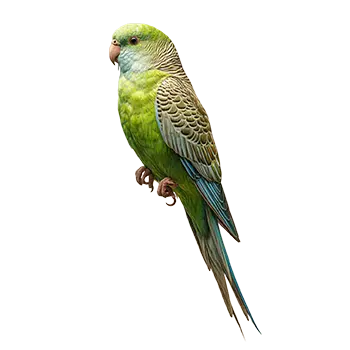

Space Requirements

Lineolated Parakeets are relatively small birds, but their housing needs are often underestimated. Despite their calm demeanor and tendency to walk and climb rather than fly long distances, linnies still require ample space to move, stretch their wings, and engage in natural behaviors. A cage that feels adequate at the pet store often proves cramped once perches, toys, and food dishes are installed.

The minimum recommended cage size for a single Lineolated Parakeet is approximately 24 inches long by 18 inches wide by 24 inches tall, though larger is always better. For a pair of linnies, increase the dimensions proportionally — at minimum 30 inches in length. Horizontal space is more valuable than vertical height for this species, as linnies spend much of their time climbing laterally and walking along perches rather than flying vertically.

Bar spacing is a critical safety consideration. Lineolated Parakeets require bar spacing no wider than half an inch. Wider spacing creates a risk of the bird getting its head caught between bars, which can result in injury or death. Bar orientation also matters — horizontal bars on at least two sides of the cage allow linnies to climb freely, which is one of their preferred forms of exercise and exploration.

Cage placement within the home affects the bird's wellbeing significantly. Position the cage at chest height in a room where the family spends time, but away from the kitchen — cooking fumes, particularly from nonstick cookware, are toxic to birds. Avoid placing the cage in direct sunlight, in drafty areas, or near heating and cooling vents. A wall behind at least one side of the cage provides a sense of security.

Cage Types & Construction

Flight cages and standard parrot cages are the two most common housing options for Lineolated Parakeets. Flight cages offer extended horizontal length, giving linnies room to take short flights and exercise more naturally. Standard parrot cages with appropriate dimensions work well for birds that receive regular out-of-cage time. Either style should feature a removable bottom grate and slide-out tray for easy cleaning.

Material quality determines both safety and longevity. Stainless steel cages are the gold standard — they resist rust, are non-toxic, and last for decades. Powder-coated steel cages are a more affordable alternative and are generally safe, provided the coating is lead-free and zinc-free. Always verify that any cage is manufactured with bird-safe materials, as some imported cages use coatings that contain heavy metals harmful to birds.

Door design deserves attention. Linnies are intelligent and surprisingly dexterous, and some individuals learn to open simple cage latches. Look for doors with secure locking mechanisms — spring-loaded clips or small padlocks can prevent escape. Multiple door openings are useful for attaching accessories, introducing food dishes, or allowing the bird to exit on its own terms during supervised out-of-cage time.

Avoid decorative cages with ornate scrollwork, rounded tops, or narrow corners. These designs often create pinch points where a bird can trap toes or wing feathers. Simple rectangular or square cage shapes with clean lines are safer and provide the most usable interior space per unit of floor area.

Perches & Interior Setup

Perch selection directly impacts a Lineolated Parakeet's foot health and overall comfort. Provide a variety of perch types, diameters, and textures to exercise different foot muscles and prevent pressure sores. Natural wood perches with varying diameters are ideal — branches from bird-safe trees such as apple, willow, or manzanita provide an irregular surface that mimics the bird's natural environment.

Rope perches and flexible boing-style perches add variety and allow climbing at different angles. Cotton rope perches should be inspected regularly for fraying, as loose threads can entangle toes. Replace rope perches at the first sign of significant wear. Cement or textured conditioning perches can help maintain nail and beak length, but should be placed in low-traffic areas of the cage — never as a primary sleeping perch, as their rough surface can cause foot irritation with prolonged contact.

Perch placement should create a logical layout within the cage. Position the highest perch as a sleeping spot, away from food and water dishes to prevent contamination from droppings. Stagger perches at different heights and angles to encourage movement without creating a direct vertical line where droppings from one perch fall onto another. Leave clear flight paths within the cage so the bird can move between areas without navigating an obstacle course.

Avoid dowel perches of uniform diameter, which are often included with new cages. These smooth, consistent surfaces provide no variation for the feet and contribute to bumblefoot and other pressure-related conditions over time. Replace factory dowels with natural wood branches as one of the first upgrades to any new cage setup.

Aviary & Outdoor Enclosures

For owners with available space, an indoor aviary or outdoor flight enclosure provides the most enriching housing option for Lineolated Parakeets. Indoor aviaries — essentially walk-in enclosures or large cabinet-style units — allow linnies to fly, forage, and interact in a more naturalistic setting. This is particularly beneficial for owners keeping multiple linnies or mixed-species small bird groups.

Outdoor aviaries require careful planning around climate, predator protection, and toxic exposure. Lineolated Parakeets originate from cool mountain forests and tolerate moderate temperatures well, but they are not suited to extreme heat or freezing conditions without shelter. An outdoor aviary should include a fully enclosed, weather-protected shelter section where birds can retreat from rain, wind, and temperature extremes.

Predator-proofing is non-negotiable for any outdoor enclosure. Use welded wire mesh rather than chicken wire, which can be torn open by raccoons, rats, or cats. Hardware cloth with half-inch openings is the standard recommendation. The enclosure floor should either be a solid surface or have buried wire mesh to prevent predators from digging underneath. Double-door entry systems prevent birds from escaping when you enter the aviary.

Planting bird-safe vegetation within or around an aviary adds enrichment and visual barriers that reduce stress in multi-bird setups. Potted herbs, non-toxic grasses, and small shrubs give birds opportunities to forage and hide. Ensure all plants within reach are verified as non-toxic to birds, and avoid any plants that have been treated with pesticides, herbicides, or chemical fertilizers.

Climate & Environmental Control

Lineolated Parakeets are native to highland cloud forests, which means they are more comfortable in moderate, humid conditions than many tropical parrot species. Ideal ambient temperatures for linnies range from approximately 65 to 80 degrees Fahrenheit. They tolerate cooler temperatures better than extreme heat, but sudden temperature fluctuations should be avoided regardless of direction.

Humidity management is important for feather and respiratory health. Household air in many climates — particularly during winter with forced-air heating — can drop to humidity levels well below what is comfortable for a bird adapted to cloud forest conditions. A room humidifier can help maintain appropriate moisture levels. Regular misting or bathing opportunities also support feather condition and help compensate for dry ambient air.

Lighting plays a significant role in avian health. Lineolated Parakeets benefit from exposure to full-spectrum lighting that includes UVA and UVB wavelengths, which support vitamin D synthesis, calcium metabolism, and natural behavioral cycles. Position a bird-rated full-spectrum light above or beside the cage on a timer that provides 10 to 12 hours of light and 12 to 14 hours of darkness. Consistent light cycles help regulate hormonal health and sleep patterns.

Air quality in the bird's room must be carefully managed. Birds have extremely efficient respiratory systems that make them vulnerable to airborne toxins that would be harmless to mammals. Never use aerosol sprays, scented candles, air fresheners, or nonstick cookware near a bird. Ensure adequate ventilation without creating direct drafts on the cage. A standalone HEPA air purifier in the bird room can help manage dust, dander, and airborne particulates.

Multi-Bird & Companion Setups

Lineolated Parakeets are among the most social small parrot species, and many thrive when housed with a companion of the same species. Pairs and small groups often display more natural behaviors, vocalize more, and show lower stress levels than solitary birds. If you plan to keep multiple linnies, housing considerations change accordingly.

For a bonded pair, the cage should be at least 30 inches long to provide adequate personal space for both birds. Each bird should have access to its own food and water station to prevent resource guarding, even in pairs that appear to get along perfectly. Dominant-submissive dynamics can emerge subtly, and separate feeding stations ensure the less assertive bird maintains adequate nutrition.

Mixing Lineolated Parakeets with other species requires caution and research. Linnies are generally peaceful and can coexist with similarly sized, non-aggressive species such as bourke's parakeets or certain finch species in a sufficiently large aviary. However, mixing with larger or more territorial parrots is risky. Even species that appear compatible may develop aggression during breeding season or when resources are perceived as limited.

Introducing a new bird to an existing setup should be done gradually. Quarantine any new bird for at least 30 days in a separate room before introduction — this protects against disease transmission. After the quarantine period, place cages side by side for several days so the birds can see and hear each other before sharing space. Supervised neutral-territory introductions outside of either bird's established cage help prevent territorial aggression during the transition.

Always consult a qualified professional before making any health-related decisions. This content is provided for informational reference only and should not replace professional guidance specific to your animal.