
Space Requirements

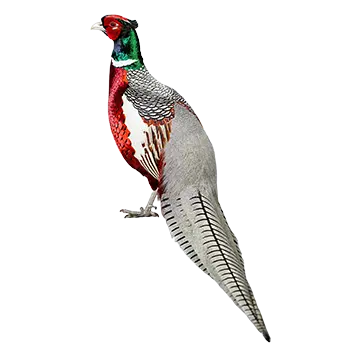
Lady Amherst's Pheasants require substantially more space than most commonly kept aviary birds, and underestimating their enclosure needs is one of the most frequent mistakes new keepers make. The male's tail alone can reach three to four feet in length, and the bird requires room to carry it without constant contact with walls, vegetation, or other obstacles that abrade and break tail feathers. A single pair should be housed in an aviary no smaller than twelve feet long, six feet wide, and seven feet tall. These are minimum dimensions, and larger enclosures produce demonstrably better outcomes in terms of feather condition, breeding success, and overall behavioral health.

Height matters as much as floor space for this species. Lady Amherst's Pheasants are capable of explosive vertical flight when startled, and a low-ceilinged enclosure turns this natural alarm response into a collision hazard. Birds that repeatedly strike the roof of their enclosure during panic flights develop scalp injuries, broken blood feathers, and chronic stress that suppresses immune function and breeding behavior. A ceiling height of at least seven feet gives the bird enough vertical space to execute a startle flight without catastrophic impact. Some experienced keepers install soft netting as the aviary roof rather than rigid wire, which absorbs the energy of an upward flight and significantly reduces injury risk.

The shape and proportions of the enclosure influence its effective utility as much as its total square footage. Long, narrow aviaries are generally preferable to square ones for pheasants because they allow the birds to move in a natural linear pattern, building speed and momentum during ground-level runs. This running behavior is a natural component of the species' daily activity and courtship display, and an enclosure that is too short to permit it forces the bird into truncated, repetitive movement patterns. A length-to-width ratio of approximately two to one provides a good balance between running space and overall enclosure footprint.

Multiple birds require proportionally more space, but the relationship is not strictly linear. A second hen can often be added to a single-male enclosure with a modest increase in total area, but housing two males together is inadvisable regardless of enclosure size. Males are territorial during the breeding season and will fight, sometimes fatally. Even outside the breeding season, the stress of cohabitation with another male typically results in feather damage, reduced feeding, and chronic behavioral anxiety. Each breeding pair or trio should have its own dedicated enclosure with solid visual barriers between adjacent aviaries to prevent territorial stress through the wire.

Aviary Design and Construction

The structural framework of a Lady Amherst's Pheasant aviary must balance durability, safety, and practicality. Galvanized steel or aluminum framing provides the longest service life and resists the corrosion that degrades untreated wood in outdoor settings. Pressure-treated lumber is a viable alternative for framing, though the preservative chemicals used in modern treatments should be researched to confirm they are not toxic to birds. Older pressure-treated wood containing chromated copper arsenate should never be used in aviary construction, as arsenic leaching poses a direct poisoning risk.

Welded wire mesh is the standard cladding material for pheasant aviaries, and the gauge and opening size must be selected with predator exclusion as a primary design criterion. Half-inch by one-inch welded wire in fourteen-gauge or heavier keeps out rats, snakes, weasels, and the reaching paws of raccoons. Lighter gauges and larger openings may seem adequate initially but will fail when a determined predator applies sustained pressure. Chicken wire, despite its name, is not appropriate for permanent aviary construction because its thin gauge is easily breached by predators and its hexagonal openings can trap pheasant toes and heads.

The aviary floor presents a design decision with significant management implications. Earth-floor aviaries are the most natural and the most popular among experienced pheasant keepers. They allow the birds to scratch, dust-bathe, and forage through substrate, all of which are core behavioral needs. The disadvantage of earth floors is that they require periodic substrate management to prevent pathogen buildup, particularly coccidia and roundworm eggs that accumulate in soil over time. Some keepers address this by establishing a deep litter system, adding fresh substrate in layers and allowing microbial decomposition to process waste, while others prefer to strip and replace substrate on a seasonal schedule.

Concrete or paved floors offer superior sanitation and easier cleaning but eliminate the birds' ability to engage in natural ground behaviors. If a hard floor is used, a deep layer of substrate must be provided on top to allow dust bathing and foraging. Sand, fine gravel, or a mixture of the two works well over concrete. Hardware cloth buried along the perimeter and extending outward at least eighteen inches creates an apron that prevents digging predators from tunneling under the aviary walls, an essential safeguard in areas where foxes, coyotes, or badgers are present.

Shelter and Weather Protection

Lady Amherst's Pheasants originate from mountainous regions of southwestern China where they experience cold winters, monsoon rains, and considerable seasonal temperature variation. This geographic origin gives them reasonable cold tolerance, but captive birds still require protection from wind, driving rain, and prolonged exposure to wet conditions. A covered shelter area within the aviary, typically occupying one-quarter to one-third of the total floor space, provides the essential refuge that allows the birds to manage their own microclimate exposure throughout the day.

The shelter structure should be enclosed on three sides with the open face oriented away from the prevailing wind direction. This configuration provides protection from wind and rain while maintaining airflow that prevents condensation and ammonia buildup from droppings. The roof of the shelter area should be solid rather than mesh, constructed from corrugated metal, polycarbonate sheeting, or marine-grade plywood. Polycarbonate panels offer the advantage of transmitting diffused light into the shelter, reducing the cave-like dimness that can make some birds reluctant to use an enclosed space.

Ventilation within the shelter is critical and often underserved in amateur aviary construction. A sealed, unventilated shelter traps moisture from the birds' respiration and droppings, creating a humid environment that promotes fungal growth and respiratory disease. Ridge vents along the roof peak, mesh-covered openings near the ceiling of the back wall, or adjustable louvers provide the air circulation necessary to keep the shelter interior dry without creating drafts at bird level. The goal is to move stale air out from the top of the space while keeping the lower occupied area calm and protected.

In regions with extreme winter conditions, supplemental protection may be necessary beyond the standard shelter structure. Windbreak panels made of solid wood, corrugated plastic, or commercial wind fabric can be attached to the exposed sides of the aviary during the coldest months and removed in spring. These seasonal additions block wind chill without permanently closing off the aviary, maintaining the open, airy feel that pheasants prefer during warmer weather. Insulated shelters are rarely necessary for Lady Amherst's Pheasants since the species tolerates cold well, but the shelter floor should be raised slightly above grade or equipped with drainage to prevent water pooling during freeze-thaw cycles.

Substrate and Ground Cover

The choice of substrate in a Lady Amherst's Pheasant aviary affects hygiene, behavioral enrichment, foot health, and the keeper's daily maintenance workload. There is no single perfect substrate, and the best choice depends on climate, aviary design, and management preferences. What all suitable substrates share is the ability to stay reasonably dry, support natural scratching and foraging behavior, and resist rapid pathogen accumulation.

Sand is one of the most popular substrates for pheasant aviaries and offers several practical advantages. Coarse builder's sand drains well, dries quickly after rain, and supports dust bathing, which is a critical feather-maintenance behavior for pheasants. Droppings are easy to spot and remove from a sand surface, and the substrate can be raked and leveled quickly. The primary disadvantage of sand is that it provides no organic material for the birds to forage through, which can be addressed by scattering a thin layer of leaf litter, straw, or dried grass clippings over the sand surface and refreshing it regularly.

Wood chips and shavings, particularly those made from untreated hardwoods, provide a soft, absorbent surface that encourages foraging and scratching. Pheasants will spend considerable time turning through wood chip substrate in search of insects and scattered food, and the material decomposes gradually, supporting a microbial ecosystem that helps break down droppings. Cedar and pine shavings should be used with caution, as the aromatic oils they contain can irritate avian respiratory tracts in enclosed or poorly ventilated spaces. In open aviaries with good airflow, kiln-dried pine shavings are generally acceptable, but cedar should be avoided entirely.

Natural earth substrate, either the native soil of the aviary site or imported topsoil, provides the most naturalistic environment and supports the full range of ground-dwelling behaviors. Pheasants housed on natural earth engage in more vigorous dust bathing, more active foraging, and more diverse locomotor behavior than those on artificial substrates. The management challenge with earth substrate is parasite control, as coccidia oocysts and helminth eggs accumulate in soil and can persist for months or years. Rotating the aviary location periodically, resting enclosures between occupants, or treating the soil surface with horticultural lime between seasons helps manage parasite loads without resorting to continuous chemical intervention.

Gravel and pea stone are sometimes used in high-traffic areas or under feeding stations where substrate compression and moisture accumulation are highest. These materials drain effectively and do not harbor organic matter that supports mold growth. However, gravel is uncomfortable for prolonged standing and does not support dust bathing, so it should be limited to specific zones within the aviary rather than used as the sole substrate. A common approach is to use gravel immediately around feeders and drinkers, where spillage keeps the ground perpetually damp, and softer substrates throughout the rest of the enclosure.

Perching and Roosting Structures

Although Lady Amherst's Pheasants are primarily ground-dwelling birds, they roost off the ground at night and benefit from elevated perching options within their aviary. In the wild, these pheasants fly up into low trees and dense shrubs to sleep, a behavior driven by predator avoidance that persists strongly in captivity. Providing appropriate roosting structures is essential for the birds' sense of security and sleep quality, both of which directly influence health and breeding condition.

Natural branch perches are the best roosting option for this species. Branches with a diameter of approximately one and a half to two inches suit the foot anatomy of Lady Amherst's Pheasants, allowing the toes to wrap approximately three-quarters of the way around the perch surface without straining. The bark texture of natural branches provides grip and exercises the foot muscles in a way that smooth dowels or milled lumber cannot replicate. Hardwood species such as oak, maple, and fruit tree branches are durable and resistant to splitting. Softwood branches are acceptable but may need more frequent replacement as they wear and splinter.

Perch placement requires consideration of the male's extraordinary tail. Roosting perches should be positioned so that the male can settle without his tail pressing against the aviary wall or dragging across the ground below. This typically means mounting the primary roosting perch at least three feet from the nearest wall and at a height that allows the full tail to hang freely. A perch height of three to four feet is generally appropriate, high enough to satisfy the roosting instinct but low enough that the bird can reach it without a high-impact flight. A step-up arrangement, with a lower perch positioned as an intermediate landing point, allows the bird to ascend in two controlled hops rather than one explosive flight.

Sheltered perching within the covered section of the aviary is important for inclement weather. Birds should have the option to roost under cover during rain, snow, or high wind without being forced to sleep on the ground. A dedicated roosting perch inside the shelter area, positioned at the same height as the outdoor perch, gives the birds a choice between open and covered sleeping positions based on conditions. Some keepers install a simple roosting shelf or platform as an alternative to round perches, which pheasants sometimes prefer for overnight sleeping because it allows them to settle with their keel resting on a flat surface.

Avoid overcrowding the aviary with perching structures. While multiple perch options are beneficial, excessive clutter at the birds' flight level creates collision hazards during startled flights and restricts the open ground space that pheasants need for running and display. Two to three well-placed perches at varying heights, plus a sheltered roosting option, are sufficient for a single pair. Each perch should be removable for cleaning and replacement, as droppings accumulate under and on roosting perches and require regular attention.

Landscaping and Vegetation

Planted vegetation within the aviary transforms a bare enclosure into a functional habitat that supports the Lady Amherst's Pheasant's behavioral repertoire and psychological well-being. In their native environment, these pheasants inhabit dense undergrowth and bamboo thickets, using vegetation for concealment, nesting, and thermal regulation. An aviary devoid of plant cover produces birds that are visibly more nervous, more prone to startle injuries, and less likely to breed successfully than those housed in naturalistic, planted enclosures.

Evergreen shrubs provide year-round visual screening and hiding cover that pheasants rely on as escape routes from perceived threats. Species such as boxwood, yew (noting that yew berries are toxic and must be inaccessible), privet, and holly create dense, low-growing cover at the ground level where pheasants spend most of their time. Ornamental grasses, including miscanthus, fountain grass, and switchgrass, offer seasonal cover and movement that creates visual complexity within the enclosure. Bamboo, where climate permits, recreates a close approximation of the species' wild habitat and provides both cover and roosting perches in taller culms.

Planting layout should create distinct zones within the aviary: open areas for feeding, display, and dust bathing; densely planted areas for hiding and nesting; and transitional edges where the birds can move between exposure and concealment. This zonation mimics the edge habitat that pheasants naturally prefer and gives the birds a sense of control over their visibility. A hen that feels she has no place to hide from the male's persistent courtship attention will become stressed and may refuse to nest, so escape cover that allows the hen to move out of the male's direct line of sight is particularly important during the breeding season.

Protecting vegetation from the birds themselves is an ongoing challenge. Pheasants will scratch around the base of shrubs, strip bark from low branches, and eat tender new growth. Placing wire cages or guards around the base of newly planted shrubs until they are well established gives plants a chance to develop root systems strong enough to withstand the birds' attention. Choosing tough, fast-growing species that can tolerate some browsing is more sustainable than trying to maintain delicate ornamental plantings in an active aviary.

Toxic plant species must be identified and excluded from the aviary and its immediate surroundings. Rhododendron, azalea, oleander, foxglove, lily of the valley, and nightshade family members are all dangerous to pheasants. Even plants growing outside the aviary wire can be problematic if leaves or berries fall through the mesh. A thorough review of existing vegetation before constructing an aviary, followed by removal of any toxic species, prevents accidental poisoning and eliminates a risk that is easy to overlook during the excitement of enclosure planning.

Security and Predator Protection

Predator protection is not a secondary consideration in Lady Amherst's Pheasant housing. It is the single most consequential design element of the aviary, and the consequences of underbuilding security are immediate and irreversible. The combination of bright plumage, ground-roosting habits, and relatively slow ground speed makes ornamental pheasants among the most vulnerable aviary birds to predation. A comprehensive security strategy addresses threats from the air, from the ground surface, and from below ground.

Aerial predators including hawks, owls, and corvids are a persistent threat to any outdoor aviary. A fully enclosed top made of welded wire mesh or aviary netting is essential. Open-topped enclosures are not acceptable for pheasant housing under any circumstances, regardless of geographic location. Where raptors are prevalent, a double-layer roof consisting of wire mesh topped with a secondary netting layer provides additional protection and also reduces the visual impact of an overhead predator passing above the aviary, which can trigger panic flights even when the bird cannot physically enter the enclosure.

Ground-level predators vary by region but commonly include raccoons, foxes, coyotes, weasels, mink, domestic cats, and feral dogs. Each of these predators exploits different vulnerabilities in aviary construction. Raccoons can reach through openings as small as two inches and will pull birds apart through the wire. Weasels and mink can squeeze through gaps as small as one inch and typically kill every bird in the enclosure once they gain entry. The wire mesh selected for the aviary must exclude all of these animals, which is why half-inch by one-inch welded wire in a heavy gauge is the recommended standard. All joints, corners, door frames, and connection points must be secured with hardware rather than wire ties or zip ties, which predators can defeat with sustained effort.

Subterranean entry is addressed through a buried perimeter barrier. A twelve-to-eighteen-inch-wide apron of welded wire mesh extending outward from the base of each wall, buried three to four inches below grade, prevents digging predators from tunneling under the aviary. An alternative approach is to bury the wall mesh twelve to eighteen inches straight down into the ground, though the outward apron method is generally more effective because it deflects the digger away from the wall rather than simply presenting a deeper obstacle to push past. In areas with persistent digging predators, combining a buried apron with a concrete or paver foundation along the perimeter provides maximum security.

The aviary door is frequently the weakest point in the security perimeter. A double-entry vestibule, sometimes called an airlock or sally port, prevents birds from escaping during entry and also creates a two-barrier system that a predator must defeat sequentially. Each door should be fitted with a latch that requires opposable thumbs or a tool to open, as raccoons can operate simple lift latches, hook-and-eye closures, and even some spring-loaded latches. Padlocks or carabiner clips on all latches add a final layer of security that is simple, inexpensive, and effective. Doors should close automatically using spring hinges or pneumatic closers, eliminating the risk of a keeper accidentally leaving a door ajar.

Always consult a qualified professional before making any health-related decisions. This content is provided for informational reference only and should not replace professional guidance specific to your animal.