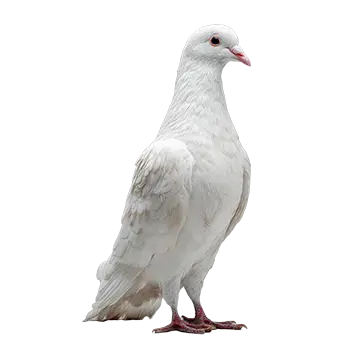

King Pigeons are among the largest domestic pigeon breeds, and their substantial body size imposes specific spatial demands that smaller pigeon housing cannot accommodate. An adult King Pigeon standing upright measures thirteen to fifteen inches from head to tail, with a broad chest and wide wingspan that requires generous clearance for comfortable movement. Housing that might serve a smaller breed like a Diamond Dove or a Racing Homer will feel cramped and restrictive for a King, leading to feather damage, stress behaviors, and reduced quality of life.
Because King Pigeons are poor fliers, having been selectively bred for body mass rather than aerial agility, their housing design should prioritize horizontal floor space over vertical height. Unlike slender, athletic breeds that naturally roost on high perches and fly between levels, King Pigeons spend most of their time on the ground or on low platforms. An enclosure that is tall but narrow forces the bird into a confined footprint that does not match its natural movement patterns. Wide, walk-in enclosures with ample floor area serve this breed far better than tall, narrow cages.
Ventilation is a critical and often underestimated factor in pigeon housing. Pigeons produce a fine powder down, a waxy dust shed from specialized feathers, that accumulates rapidly in enclosed spaces. Without adequate airflow, this dust concentrates in the air and on surfaces, creating respiratory hazards for both the birds and their keepers. Good pigeon housing provides cross-ventilation without creating direct drafts on the birds, a balance typically achieved through ventilation openings positioned above the birds' resting level.
Predator protection must be considered regardless of whether the housing is indoors or outdoors. Even indoor pigeons face threats from household pets, and outdoor enclosures must withstand attempts by raccoons, rats, hawks, cats, and snakes to gain entry. Hardware cloth with a mesh no larger than half an inch is the standard for predator-proof construction, as common chicken wire can be bent or torn by determined predators and does not exclude small snakes or juvenile rats.