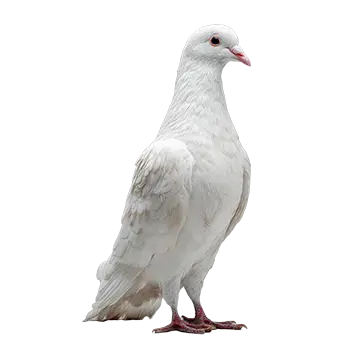

King Pigeons are among the largest domestic pigeon breeds, originally developed for squab production, and their substantial body mass places distinct demands on their diet. An adult King Pigeon can weigh between 750 and 900 grams, roughly double the weight of a feral rock pigeon, and maintaining that frame requires a caloric intake proportional to their size. Their metabolism favors a grain-based diet supplemented with legumes, greens, and mineral sources, a pattern that mirrors the nutritional ecology of Columba livia but scaled to support a heavier, less flight-active bird.
Protein requirements for King Pigeons are moderately high compared to smaller pigeon breeds. During molting, breeding, and recovery from illness, protein needs increase significantly, and the diet should be adjusted to include a greater proportion of legumes such as field peas, lentils, and mung beans. Outside of these periods, a protein content of roughly twelve to fifteen percent of the total diet is adequate for maintenance. Overfeeding protein during sedentary periods can stress the kidneys and liver, so seasonal adjustment is important.
Calcium and phosphorus balance is a foundational concern, particularly for breeding pairs. Hens producing eggs draw heavily on skeletal calcium reserves, and without adequate dietary calcium, eggshell quality declines and the hen risks egg binding, a potentially fatal condition. The calcium-to-phosphorus ratio should remain close to two to one, which is difficult to achieve through grain alone and requires supplementation through grit, mineral blocks, or calcium-enriched products.
Fat content in the diet should be carefully managed. King Pigeons kept as companion birds are far less active than their wild or racing counterparts, and their large frames make them prone to obesity if given unlimited access to high-fat seeds like safflower, hemp, and sunflower. A diet built around lower-fat grains with controlled portions of oilseeds provides the essential fatty acids needed for feather quality and immune function without encouraging excessive weight gain.