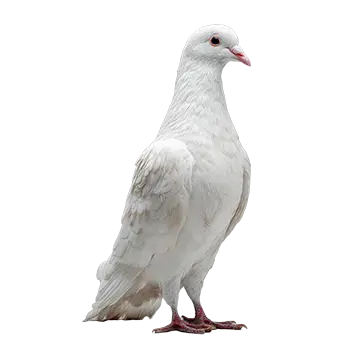

Understanding Pigeon Enrichment

Enrichment for King Pigeons operates on a fundamentally different model than enrichment for parrots, and owners approaching pigeon keeping with a parrot-centric mindset often find themselves frustrated when their birds ignore hanging toys, puzzle feeders, and the elaborate contraptions designed for hookbills. Pigeons are ground-oriented foragers, not manipulators. Their feet lack the dexterity to grasp and hold objects, and their beaks, while capable of precise seed selection, are not designed for the destructive chewing that drives parrot toy design. Effective pigeon enrichment works with the bird's natural behavioral repertoire rather than against it.

The primary enrichment behaviors available to pigeons include foraging, bathing, exploring novel surfaces and objects, social interaction, nesting behavior, and observing their environment. A well-enriched King Pigeon spends its day moving between these activities naturally, and the keeper's role is to provide the physical infrastructure and materials that make each behavior possible and varied. Boredom in captive pigeons manifests as lethargy, excessive preening, feather damage, and repetitive pacing, all of which signal that the bird's environmental needs are not being met.

King Pigeons are particularly susceptible to sedentary lifestyles because their heavy body type makes sustained flight difficult and their calm temperament does not produce the restless energy seen in more athletic breeds. This combination means that without deliberate enrichment, a King Pigeon may simply sit in one spot for hours at a time, eating when food is placed nearby and doing little else. Weight gain, muscle atrophy, and associated health problems follow predictably. Enrichment strategies that encourage the bird to walk, explore, and interact with its environment serve a genuine health function beyond psychological wellbeing.

Social enrichment should not be underestimated. Pigeons are flock animals with complex social behaviors including courtship displays, mutual preening, vocal communication, and territorial negotiations. A single King Pigeon benefits enormously from having a companion, whether another pigeon, a dove of compatible temperament, or consistent human interaction. For birds that must be housed alone, a mirror can provide a partial social substitute, though it does not replace the full behavioral repertoire that a live companion offers.

Foraging Toys and Activities

Foraging is the most biologically significant enrichment category for pigeons, since wild rock pigeons spend the majority of their waking hours searching for and consuming food. Captive pigeons fed from a bowl twice daily complete their most important daily activity in minutes, leaving hours of unoccupied time. Foraging enrichment extends feeding time and requires the bird to move, search, and problem-solve at a level appropriate to its cognitive abilities.

The simplest and most effective foraging enrichment is scatter feeding, the practice of distributing grain across a broad area rather than concentrating it in a dish. Spreading the daily grain ration across the floor of the enclosure, over a bed of clean paper or substrate, forces the bird to walk and search for each seed individually. This single change can extend feeding time from minutes to an hour or more and significantly increases the bird's daily activity level. For outdoor lofts, scattering grain on clean ground or on a dedicated foraging tray achieves the same effect.

Foraging trays filled with textured substrates offer a more complex challenge. A shallow tray containing clean river stones, wooden beads, crumpled paper, or dried leaves with grain scattered throughout requires the bird to navigate around and between obstacles to find food. The substrate should be large enough that the bird cannot swallow the pieces accidentally and should be non-toxic and easy to sanitize. Rotating the substrate material periodically maintains novelty, as pigeons acclimate to familiar textures and may reduce their exploratory effort once the challenge becomes routine.

Herb gardens and edible greens planted in shallow trays provide dual enrichment through foraging and dietary variety. Wheat grass, clover, dandelion, and chickweed can be grown in seed-starting trays and placed in the enclosure for the birds to graze on at their leisure. The birds peck at leaves and seeds, dig in the soil, and interact with a living, changing element that differs from day to day. Once a tray is depleted, it can be removed, replanted, and cycled back in after regrowth. This approach delivers nutritional benefits alongside behavioral enrichment, making it one of the most efficient enrichment strategies available.

Bathing and Water Play

Bathing is one of the most enthusiastically pursued activities for most King Pigeons, and providing regular bathing opportunities serves both enrichment and hygiene functions. Pigeons bathe by wading into shallow water and performing vigorous wing-flapping and body-dipping movements that work water through their feathers, loosening dirt, dander, and excess powder down. A King Pigeon in full bathing mode is an exuberant sight, and the frequency with which most birds engage with a bath pan confirms its value as a primary enrichment resource.

The bath container should be shallow enough that the bird can stand comfortably with water reaching no higher than its belly. A heavy ceramic dish, a wide plant saucer, or a dedicated bird bath pan with a textured bottom for traction all work well. Depth of one to two inches suits most King Pigeons. The container must be heavy or stabilized enough that the bird's vigorous splashing does not tip it over, and its edges should be low enough for the bird to step in and out without difficulty. Placement on a waterproof surface or a tray that catches overflow simplifies cleanup.

Bathing frequency depends on the individual bird's preference, but offering a bath at least three times per week is a reasonable baseline. Some King Pigeons will bathe daily if given the opportunity, while others are more selective. Bathing water should be clean and at room temperature. Additives marketed for bird baths, including aloe sprays and plumage conditioners, are generally unnecessary for healthy birds with intact plumage, though a small amount of apple cider vinegar in the bath water is used by some keepers to support feather condition.

Misting can supplement or substitute for pan bathing, particularly for birds that are reluctant to wade. A clean spray bottle set to a fine mist, directed above the bird so the water drifts down like rain, stimulates preening behavior and helps clean feathers. Some keepers install low-pressure misting nozzles in outdoor lofts that run on a timer during warm weather, providing a periodic rain simulation that the birds can move into or away from at will. The key is always to offer misting as a choice, never forcing a reluctant bird under a direct spray.

Mirrors and Visual Stimulation

Mirrors occupy a unique position in pigeon enrichment because pigeons interact with their reflections in ways that are behaviorally productive rather than psychologically harmful. Unlike some parrot species that can become obsessively bonded to or agitated by mirror reflections, pigeons generally treat their mirror image as a social companion, performing courtship displays, vocalizing, and spending time near the mirror without developing problematic attachment. For single birds in particular, a mirror can reduce loneliness and provide an outlet for social behaviors that would otherwise have no target.

Placement of mirrors matters. A mirror positioned at the bird's resting height, where it can see its reflection while standing naturally, encourages more interaction than one placed high on a wall where the bird must crane its neck to see it. Unbreakable mirrors made from polished metal or acrylic are safer than glass in an enclosure where the bird might fly or stumble into the surface. The mirror should be securely mounted so it cannot fall and injure the bird, and it should be large enough that the bird can see a substantial portion of its body in the reflection.

Beyond mirrors, visual stimulation from the surrounding environment provides significant enrichment. Pigeons are visually oriented animals with excellent color vision and keen awareness of movement. Enclosures positioned where the bird can observe household activity, outdoor wildlife, or passing foot traffic keep the bird engaged with a constantly changing visual landscape. A window view that includes bird feeders, gardens, or street activity provides hours of passive enrichment without any product purchase required.

Color and pattern can also be incorporated into the enclosure itself. Pigeons notice and respond to changes in their visual environment, and periodically rearranging the enclosure layout, adding a new colored object, or draping a fabric with a bold pattern near the enclosure stimulates investigation and exploration. The novelty does not need to be dramatic. Moving a perch to a new position, adding a potted plant within view, or placing a brightly colored dish in the enclosure can spark renewed interest in an environment the bird had stopped actively exploring.

Textured Surfaces and Physical Objects

King Pigeons explore their environment primarily through their feet and beaks, and providing a variety of textures and surfaces within the enclosure encourages physical interaction and movement. A flat enclosure floor covered in a single uniform substrate offers little incentive for a bird to move from one area to another. Introducing zones with different textures, such as an area of smooth river stones, a section of coir matting, a patch of artificial turf, and a platform of untreated wood, creates a more complex and interesting environment that rewards exploration.

Small, lightweight objects placed on the enclosure floor can stimulate investigative pecking and pushing. Wooden blocks, wiffle balls, plastic bottle caps, and small stainless steel bells are all items that King Pigeons may interact with by pecking, nudging with their beaks, or walking around and over. Expectations should be calibrated appropriately: pigeons do not play with objects the way parrots or dogs do, and a pigeon nudging a ball across the floor once before losing interest has still engaged in meaningful enrichment. Rotating objects in and out of the enclosure maintains novelty.

Platforms and ramps at varying low heights encourage climbing and navigating three-dimensional space without requiring flight. A series of wide shelves arranged like broad steps allows the King Pigeon to walk upward to a preferred resting spot, engaging leg muscles and providing choices about where to spend time. The surfaces should be non-slip, as pigeons can injure themselves on smooth, slippery platforms. Cork tiles, rubberized shelf liner, or lightly sanded wood provide adequate traction for the bird's feet.

Nesting material itself serves as a tactile enrichment resource. Providing a pile of straw, shredded paper, or pine needles and allowing the bird to select, carry, and arrange pieces satisfies the strong nest-building instinct present in both sexes. Even birds without a mate will spend considerable time organizing nesting material, and the activity provides exercise, mental engagement, and a sense of purpose that contributes to behavioral contentment. Refreshing the nesting material periodically renews the building activity and keeps the nest area hygienically manageable.

Social Enrichment and Human Interaction

King Pigeons are among the most human-friendly pigeon breeds, a trait shaped by their history as utility birds that were handled frequently from hatching. Many King Pigeons actively seek human contact, landing on their keeper's shoulder, cooing in response to conversation, and settling contentedly on a lap for extended periods. This sociability makes direct human interaction one of the most valuable and readily available enrichment resources for the breed, requiring no special equipment beyond time and willingness.

Structured handling sessions provide both enrichment and practical benefits. A daily routine of gently picking up the bird, checking its feet, examining its plumage, and holding it calmly for several minutes maintains the bird's comfort with handling, which is essential for health monitoring and veterinary visits. Birds that are handled regularly are less stressed during nail trims, wing checks, and other necessary procedures. The handling session itself, with its novel sensory input and social contact, enriches the bird's day in ways that solitary enclosure time cannot.

Out-of-enclosure time in a bird-safe room provides the most expansive enrichment experience available to an indoor King Pigeon. A room that has been secured against hazards, with windows covered, ceiling fans turned off, toxic plants removed, and other pets excluded, allows the bird to walk, explore, and interact with its keeper in a space much larger than its enclosure. Many King Pigeon owners set up a dedicated pigeon room or designate specific times when the living room or bedroom becomes the bird's free-range space. Pigeon pants, cloth diapers designed specifically for pigeons, make indoor free-range time practical by containing droppings.

For owners who keep multiple pigeons, the social dynamics within the flock provide a rich and self-sustaining source of enrichment. Pigeons establish pair bonds, negotiate personal space, engage in courtship rituals, and communicate through an intricate system of vocalizations and body postures. The keeper's role in a multi-bird setting shifts toward ensuring that all birds have adequate space and resources to participate in social life without being excluded or bullied. Observation of these social interactions is itself a rewarding aspect of pigeon keeping that requires no equipment beyond a comfortable chair and patience.

Seasonal and Rotational Enrichment

Enrichment loses its effectiveness when it becomes predictable, and a thoughtful rotation strategy prevents the environment from becoming stale. The principle is simple: introduce new elements periodically, remove familiar ones temporarily, and reintroduce them later when they regain novelty. A foraging tray filled with river stones this week might be replaced with crumpled paper balls next week and reappear a month later, each reintroduction prompting renewed exploratory behavior that a permanently installed fixture would not.

Seasonal changes naturally provide some environmental variation, and keepers can enhance this by aligning enrichment activities with the calendar. In warmer months, outdoor time in a secure aviary or a supervised area on the lawn provides exposure to natural sunlight, fresh grass, insects, and ambient sounds that no indoor setup can replicate. A portable exercise pen designed for small animals, with a secure top to prevent escape and predator access, creates a safe outdoor enrichment space that can be set up on a dry patch of lawn on pleasant days.

Winter enrichment for birds housed indoors should compensate for the reduced stimulation of shorter days and limited outdoor access. Increasing foraging complexity, introducing new textures and objects, and spending more time in direct social interaction help offset the sensory reduction of the cold months. Full-spectrum lighting on a timer that mimics natural photoperiod provides some of the light-quality benefits of outdoor exposure and can improve mood and activity levels in birds that might otherwise become lethargic during short winter days.

Documenting what enrichment activities the bird engages with most enthusiastically helps the keeper build a personalized rotation plan. Some King Pigeons are avid bathers that show minimal interest in foraging toys, while others are dedicated nest builders that ignore mirrors entirely. Recording these preferences over time allows the keeper to invest effort where it has the greatest impact and to identify new categories of enrichment that might fill gaps in the bird's behavioral repertoire. Enrichment is not a checklist to complete but an ongoing conversation between the keeper and the bird's expressed interests and needs.

Always consult a qualified professional before making any health-related decisions. This content is provided for informational reference only and should not replace professional guidance specific to your animal.