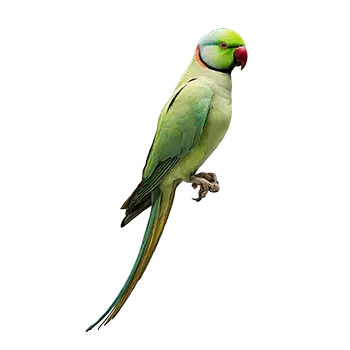

Play Style & Intelligence

Indian Ringneck Parakeets are among the most intellectually curious parrots in the medium-sized category, and their play preferences reflect that intelligence. They are problem solvers by nature, drawn to toys that offer a challenge, a reward, or both. A Ringneck that lacks adequate mental stimulation will often develop behavioral issues like excessive screaming, feather plucking, or cage aggression — all signs that the bird's cognitive needs are not being met.

Their play style tends to be manipulative and exploratory. Ringnecks love to pick things apart, unscrew bolts, untie knots, and investigate any object with moving components. They are less inclined toward passive comfort toys and more attracted to items they can actively engage with using their beaks and feet. This makes them ideal candidates for puzzle feeders, mechanical toys, and multi-step foraging devices.

Ringnecks also have a pronounced preference for variety. A toy that captivates them for a week may be completely ignored the following week once its novelty has worn off. Rotating toys on a regular schedule — swapping out three or four items every week or two — keeps the environment feeling fresh and maintains the bird's interest without requiring a massive toy inventory.

Social play is another dimension worth considering. Many Ringnecks enjoy interactive play sessions with their owners, including games of peek-a-boo, fetch with small objects, and vocalization mimicry. Toys that facilitate these shared activities strengthen the bond between bird and owner while providing enrichment that solitary cage toys cannot replicate.

Foraging & Puzzle Toys

Foraging toys are arguably the single most important enrichment category for Indian Ringneck Parakeets. In the wild, these birds spend a significant portion of their day searching for food, manipulating seed pods, and working to access hidden nutrition sources. Foraging toys replicate that natural behavior by requiring the bird to solve a problem — opening a lid, pulling a string, shredding a wrapper — before accessing the treat inside.

Entry-level foraging toys include paper cups filled with treats and folded shut, small cardboard boxes with food tucked inside, and skewered fruit hidden behind wooden blocks. As the bird becomes proficient, more complex devices with sliding panels, rotating chambers, and multi-stage access points provide an appropriate escalation of difficulty.

Puzzle toys designed specifically for parrots often feature acrylic or wooden compartments with lids, drawers, or levers that the bird must manipulate to reveal hidden rewards. These toys are excellent for Ringnecks because they engage both problem-solving intelligence and fine motor dexterity. Start with puzzles rated for beginner-level parrots and progress to intermediate and advanced models as the bird demonstrates mastery.

The key to effective foraging enrichment is unpredictability. If the bird always knows exactly where the treat is and how to get it, the challenge disappears. Vary the hiding locations, switch between different foraging devices, and occasionally leave some compartments empty so the bird has to search rather than rely on a predictable pattern.

Chew Toys & Destructible Items

Chewing is a natural and necessary behavior for Indian Ringneck Parakeets. Their beaks grow continuously and need regular wear to maintain proper shape and length. Providing an assortment of chewable toys satisfies this biological need while also serving as stress relief and entertainment. A bird without adequate chewing opportunities will often redirect that drive toward cage bars, perches, or household items during out-of-cage time.

Wood is the classic chew toy material for parrots, and Ringnecks do well with soft to medium-density woods like balsa, pine, yucca, and sola. These materials give satisfying resistance without being so hard that the bird loses interest or risks beak damage. Avoid any wood that has been treated, painted, stained, or chemically preserved, and steer clear of toxic wood species including cedar, redwood, and pressure-treated lumber.

Leather strips, woven palm leaves, loofah, cork, and untreated willow branches all make excellent supplementary chew materials. Toys that combine multiple textures — wood blocks strung with leather strips and interspersed with coconut shell pieces, for example — tend to hold a Ringneck's attention longer than single-material items.

Destructible toys are meant to be destroyed, and that is perfectly fine. Owners sometimes hesitate to provide expensive chew toys that will be shredded within days, but the shredding itself is the enrichment. Budget-friendly alternatives like clean popsicle sticks, untreated wicker balls, and cardboard tubes from paper towel rolls can supplement purchased toys without straining the budget.

Climbing & Physical Activity Toys

Ringnecks are agile climbers and active movers that benefit greatly from toys and structures that encourage physical exercise. Rope ladders, wooden climbing walls, chain-link bridges, and multi-tiered playgyms all provide opportunities for the kind of full-body movement that keeps muscles toned and joints flexible. Physical activity toys are especially important for birds that spend extended periods in their cage.

Swings are a staple enrichment item that most Ringnecks enjoy. A swing encourages balance and coordination while providing a gently stimulating rocking motion that many birds find calming. Choose swings sized appropriately for a medium parakeet, with perch diameters between half an inch and three-quarters of an inch. Boings — coiled spiral perches that bounce when the bird lands on them — are another popular option that combines physical challenge with play.

Out-of-cage playgyms and tabletop stands extend the enrichment environment beyond the cage walls. A good playgym includes multiple perches at varying heights, cup holders for food and water, and attachment points for hanging toys. Placing the playgym in a common area of the home allows the bird to participate in household activity while exercising and playing in a safe, designated space.

When selecting climbing and activity toys, inspect all hardware carefully. Quick-link connectors, chain links, and metal rings should be made from stainless steel or nickel-plated steel. Avoid zinc, brass, or lead-containing components, as these metals are toxic to birds. Cotton rope elements should be tightly woven with no frayed ends that could catch and trap toes or toenails.

Sound & Sensory Toys

Indian Ringneck Parakeets are vocal, expressive birds that respond enthusiastically to auditory stimulation. Toys that produce sound — bells, rattles, clackers, and musical elements — can provide hours of engagement as the bird experiments with creating noise through different types of interaction. Small stainless steel bells are a classic favorite, and many Ringnecks develop a habit of ringing them deliberately to attract attention or express excitement.

Mirrors are a polarizing topic in avian enrichment. Some Ringnecks enjoy brief interactions with reflective surfaces, while others become obsessively attached to their reflection, leading to behavioral problems including regurgitation, aggression, and refusal to interact with humans. If you choose to offer a mirror, monitor the bird's reaction closely and remove it at the first sign of obsessive behavior. For most Ringnecks, mirrors are best avoided or used only during supervised play sessions.

Color and texture also play roles in toy selection. Ringnecks are visually oriented birds that tend to be attracted to bright colors, particularly red, orange, and yellow. Toys that combine vivid colors with varied textures — smooth acrylic beads alternating with rough wooden blocks and soft cotton knots, for instance — create a multisensory experience that engages the bird on several levels simultaneously.

Some owners supplement physical toys with ambient enrichment like nature sounds, gentle music, or recordings of other birds. These auditory backgrounds can reduce boredom and loneliness for Ringnecks that spend time alone during the day. Classical music and nature soundscapes tend to be better received than loud or bass-heavy genres, though individual preferences vary.

DIY & Budget-Friendly Options

Building homemade toys for an Indian Ringneck Parakeet is a practical way to provide continuous enrichment without a significant financial investment. Many of the most effective foraging and chew toys can be constructed from common household materials that would otherwise be discarded. The key requirement is ensuring that every material used is non-toxic, uncoated, and free from adhesives, dyes, or chemical treatments.

Cardboard boxes, toilet paper rolls, and brown paper bags are the foundation of countless DIY bird toys. Fill a small box with shredded paper and hide treats inside for an instant foraging challenge. Thread a piece of sisal rope through a series of cardboard rings and hang it from the cage top for a swing-and-shred combination. Crumple a sheet of plain paper around a few pellets and let the bird work to unwrap its reward.

Natural materials gathered from safe outdoor sources also make excellent toy components. Untreated willow, apple, and birch branches can be cut to size, baked at a low temperature to eliminate parasites, and offered as perches or chew sticks. Pinecones gathered from pesticide-free areas can be scrubbed clean, dried, and stuffed with small treats for a visually interesting foraging toy.

Popsicle sticks, wooden clothespins, untreated wicker baskets, and plain raffia all serve as affordable building blocks for custom toys. String them together with vegetable-tanned leather strips or natural cotton cord to create hanging toys that offer multiple textures and chewing surfaces. Rotating homemade toys in and out of the cage on a weekly basis keeps costs low while maintaining the novelty factor that Ringnecks crave.

Always consult a qualified professional before making any health-related decisions. This content is provided for informational reference only and should not replace professional guidance specific to your animal.