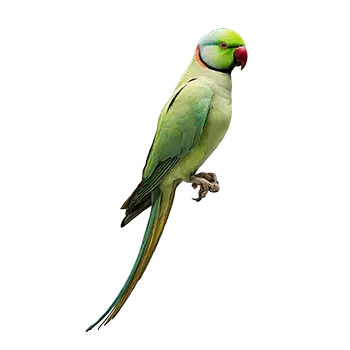

Space Requirements

Indian Ringneck Parakeets are long-tailed, active flyers that need significantly more cage space than their body size alone might suggest. The minimum recommended cage dimensions for a single Ringneck are 24 inches wide by 24 inches deep by 36 inches tall, but larger is always better. A cage measuring 36 by 24 by 48 inches or greater will provide the space these birds need to spread their wings, climb, and move freely without damaging their elegant tail feathers.

Horizontal space is just as important as vertical height for Ringnecks. While they do enjoy climbing to high perches, they are also enthusiastic horizontal flyers that benefit from the ability to glide short distances within their enclosure. Flight cages or wide rectangular designs tend to serve them better than tall, narrow towers that restrict lateral movement.

Bar spacing is a critical safety consideration. Bars should be spaced no wider than half an inch to three-quarters of an inch apart. Wider gaps create the risk of a Ringneck wedging its head between the bars, which can result in serious injury or strangulation. The bars themselves should be thick enough to resist bending, as Ringnecks have strong beaks and will test the structural integrity of their enclosure.

Placement within the home matters as well. Position the cage in a well-lit room with natural daylight but away from direct, unfiltered sunlight that could cause overheating. Avoid locations near the kitchen, where cooking fumes — particularly from nonstick cookware — can be lethal to birds. A spot against a wall gives the bird a sense of security while still allowing it to observe household activity.

Cage Types & Designs

The most practical cage style for an Indian Ringneck is a powder-coated wrought iron or stainless steel flight cage with a flat or dome top. Dome-top cages offer a bit of additional headroom and visual appeal, while flat-top cages provide a usable surface for a playgym or out-of-cage perching area. Either design works well as long as the interior dimensions meet the minimum requirements.

Flight cages, which prioritize horizontal length over height, are an excellent investment for Ringneck owners who want to give their bird room to exercise even when unsupervised. These cages often measure four feet or longer and can accommodate multiple perches, toy stations, and foraging setups without feeling cramped. Some models include divider panels that allow the cage to be sectioned off when needed.

Avoid ornate cages with decorative scrollwork or sharp interior edges. These decorative elements can trap toes, catch on feathers, and create crevices that are difficult to clean. Round cages should also be avoided entirely, as they offer poor spatial orientation for birds and can contribute to anxiety and repetitive behaviors.

Door design deserves attention during the selection process. Large front-opening doors make it easier to interact with the bird, clean the interior, and rearrange perches and toys. Multiple feeding doors positioned at different heights allow you to service food and water bowls without reaching past a nervous or territorial bird. Secure latch mechanisms are essential, as Ringnecks are clever enough to learn how to open simple slide bolts and spring clips.

Perches & Interior Setup

A well-furnished cage should include a variety of perch types positioned at different heights and angles. Natural wood perches made from bird-safe species like manzanita, java wood, or dragonwood provide irregular surfaces that exercise the feet and help keep nails naturally trimmed. Avoid perches made from cedar, cherry, or pressure-treated lumber, as these can be toxic to birds.

Perch diameter should vary between roughly half an inch and one inch to prevent foot problems caused by gripping the same width constantly. At least one perch should be a flat platform style, which gives the bird a resting surface where it can relax its feet completely. Rope perches made from natural cotton or sisal add textural variety but should be inspected regularly for fraying, as loose threads can entangle toes.

Positioning perches at different levels creates a sense of territory and allows the bird to choose its preferred height based on mood and time of day. Place the highest perch near the back or side of the cage as the primary sleeping spot, and position lower perches near food and water stations for convenient access during meals. Avoid placing perches directly above food bowls, where droppings can contaminate the contents below.

The cage floor should be lined with a disposable substrate that simplifies daily cleaning. Plain newspaper, butcher paper, or cage liner paper are the most practical choices. Avoid corn cob bedding, walnut shell litter, or cedar shavings, which can harbor bacteria, promote fungal growth, or release harmful volatile compounds.

Outdoor Aviaries & Flight Enclosures

For owners with suitable outdoor space, an aviary offers Indian Ringnecks an unmatched quality of life. Outdoor aviaries allow full flight, natural sunlight exposure for vitamin D synthesis, and sensory stimulation from wind, ambient sounds, and seasonal changes. A well-designed aviary should measure at least six feet long, three feet wide, and six feet tall for a single bird, with proportionally more space for pairs or small groups.

Construction materials should prioritize durability and safety. Welded wire mesh with half-inch spacing is the standard for aviary panels, and the wire gauge should be heavy enough that the bird cannot chew through it over time. Galvanized wire is common but should be scrubbed with vinegar and left to weather outdoors for several weeks before housing a bird, as fresh galvanization can leach zinc, which is toxic.

Predator protection is a non-negotiable element of outdoor aviary design. The enclosure must be fully enclosed on all sides, including the top and bottom, to prevent access from cats, raccoons, hawks, snakes, and rodents. A concrete or hardware cloth floor prevents digging predators from tunneling in, while double-door entry systems reduce the risk of escape during cleaning and feeding.

Weather protection within the aviary should include a sheltered section with solid roofing that shields the bird from rain, wind, and direct midday sun. In regions with cold winters, an outdoor aviary may need to connect to an indoor space where the bird can retreat when temperatures drop below what is safe for tropical species. Ringnecks can tolerate brief cool spells but are not equipped for sustained cold exposure.

Climate & Environmental Considerations

Indian Ringneck Parakeets are native to tropical and subtropical regions of Asia and Africa, which means they thrive in warm, stable environments. The ideal ambient temperature range for indoor housing is between 65 and 80 degrees Fahrenheit, with humidity levels between 40 and 60 percent. Sudden temperature fluctuations, cold drafts, and proximity to heating vents or air conditioning units should all be avoided.

Lighting is an often-overlooked aspect of housing that significantly affects a Ringneck's health and behavior. These birds need 10 to 12 hours of full-spectrum light per day to support proper vitamin D metabolism, hormonal regulation, and feather condition. If the cage does not receive adequate natural daylight, a full-spectrum avian lamp positioned above the cage on a timer can replicate the photoperiod they need.

Equally important is a consistent dark period for sleep. Ringnecks need 10 to 12 hours of uninterrupted darkness each night to maintain healthy sleep cycles. A cage cover made from breathable, opaque fabric can block ambient light from screens and household lighting, creating the restful environment needed for adequate rest.

Air quality is a health consideration that cage placement alone cannot fully address. Birds have extremely efficient respiratory systems that make them highly sensitive to airborne toxins. Scented candles, air fresheners, aerosol sprays, nonstick cookware fumes, cigarette smoke, and volatile cleaning chemicals all pose real dangers. An air purifier with a HEPA filter placed near the bird's living area can help reduce particulate matter and improve the overall air quality in the room.

Multi-Bird Households

Housing multiple Indian Ringnecks together requires careful planning around space, compatibility, and resource access. While Ringnecks can coexist peacefully — particularly if raised together from a young age — individual temperaments vary widely, and some birds simply prefer solitary housing. Introducing a second bird should always begin with a quarantine period of at least 30 days in a separate room to screen for illness before any shared airspace is established.

If two Ringnecks will share a cage, the enclosure needs to be substantially larger than what a single bird requires. A minimum of double the single-bird dimensions is a reasonable starting point, with additional perches, food stations, and toy areas to reduce competition and territorial disputes. Multiple food and water bowls placed at different locations prevent dominant birds from monopolizing resources.

Mixed-species housing is generally not recommended for Ringnecks. Their strong beaks and sometimes assertive personalities can intimidate or injure smaller species like budgies, cockatiels, or finches. Conversely, housing them alongside larger parrots like Amazons or cockatoos puts the Ringneck at risk. If multiple species share a bird room, separate cages with supervised out-of-cage time are the safest arrangement.

Even in single-bird households, a travel cage or secondary enclosure is a practical investment. A smaller portable cage serves as a safe space during cage cleaning, a temporary home during veterinary visits, and an emergency carrier in case of evacuation. Choose a travel cage with secure latches, a comfortable perch, and enough space for the bird to turn around without bending its tail feathers.

Always consult a qualified professional before making any health-related decisions. This content is provided for informational reference only and should not replace professional guidance specific to your animal.