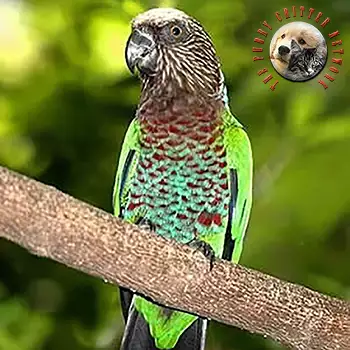

Play Style & Drive

Hawk-headed Parrots are intensely playful birds with a strong chewing drive and a curiosity that borders on relentless. Their play style is physical and destructive in the best sense — they attack toys with their beaks, shake and wrestle objects, and seem to derive genuine satisfaction from disassembling anything within reach. This destructive tendency is not a behavioral problem but a natural expression of their intelligence and beak strength, and it should be accommodated rather than discouraged.

These parrots also display a notable preference for tactile variety. They respond strongly to different textures — the crunch of balsa wood, the yield of leather strips, the rattle of wooden beads on a chain — and quickly lose interest in toys that offer only one type of sensory feedback. Rotating toys frequently and offering a mix of textures keeps engagement high and prevents the boredom that leads to feather plucking, excessive screaming, or other stress behaviors.

Hawk-headed Parrots tend to play in bursts of intense activity followed by rest periods. Unlike some parrot species that will methodically work on a puzzle toy for extended periods, a Hawk-headed Parrot may attack a toy vigorously for ten minutes, then move on to preening or vocalizing before returning for another round. Providing multiple toy options at different locations in the cage accommodates this play pattern and ensures the bird always has an appealing option when the urge to play strikes.

Social play is also important for this species. Many Hawk-headed Parrots enjoy interactive play sessions with their owners, including games of peek-a-boo, gentle tug-of-war with rope toys, and fetch-like activities where the bird drops an object and waits for it to be returned. These shared play experiences strengthen the human-bird bond and provide enrichment that solitary toys cannot replicate.

Foraging & Puzzle Toys

Foraging toys are arguably the single most important enrichment category for Hawk-headed Parrots. In the wild, these birds spend a significant portion of their day searching for, extracting, and processing food. Captive parrots that receive all their food in open dishes are deprived of this natural behavior, and the resulting idle time is a primary contributor to behavioral problems.

Entry-level foraging toys include simple designs where treats are visible but require manipulation to access — clear acrylic boxes with sliding lids, paper cups stuffed with shredded paper and hidden pellets, or vine balls with treats tucked inside. These teach the bird that effort produces reward and build the foundation for more complex foraging challenges. Hawk-headed Parrots generally take to foraging toys quickly due to their natural curiosity and food motivation.

Intermediate and advanced foraging toys introduce progressively more complex mechanisms — pull-chain drawers, rotating compartments, multi-step puzzles that require the bird to complete one action before the next becomes accessible. These toys hold a Hawk-headed Parrot's attention longer and provide genuine cognitive exercise. The key is matching the difficulty to the individual bird's experience level — a toy that is too easy will be ignored after the first use, while one that is impossibly difficult can cause frustration.

DIY foraging setups are easy to create and can be refreshed constantly. Wrapping treats in plain newsprint, threading food onto stainless steel skewers with wooden blocks as obstacles, or hiding food inside clean cardboard tubes with the ends folded shut are all effective and essentially free. The disposable nature of these homemade options means a fresh foraging challenge can be offered daily without significant expense.

Chew Toys & Destructible Options

A steady supply of chewable, destructible toys is non-negotiable for Hawk-headed Parrots. Their moderate-to-strong beaks need regular exercise to maintain proper condition, and the act of shredding, splintering, and demolishing toys provides both physical satisfaction and stress relief. Owners who view destroyed toys as wasted money should reframe their thinking — a toy that has been thoroughly demolished is a toy that has done its job.

Softwood toys made from balsa, yucca, pine, or sola are ideal chewing targets for this species. These materials offer satisfying resistance without being so hard that the bird becomes frustrated or risks beak damage. Many commercially available chew toys string these wood pieces onto stainless steel wire or vegetable-tanned leather with wooden beads, knots, and other components that add textural variety to the chewing experience.

Palm leaf and corn husk toys provide a different shredding experience — lighter, more fibrous, and often quieter than wood destruction. These natural fiber toys are excellent for birds that enjoy pulling apart layers of material, and they tend to be inexpensive enough that frequent replacement is easy on the budget. Seagrass mats and woven palm leaf rings can also be hung in the cage for casual shredding throughout the day.

Safety is paramount when selecting chew toys. Avoid toys with small metal components like jingle bells that could trap the tongue or beak, toys with chains that have open links where toes could catch, and any toy colored with dyes that are not certified bird-safe. Leather components should be vegetable-tanned only — chrome-tanned leather contains toxic heavy metals. When in doubt about a toy's materials, contact the manufacturer directly or choose a different option.

Climbing & Physical Activity Toys

Hawk-headed Parrots are agile climbers that use their strong feet and beaks to navigate complex three-dimensional environments. Toys and structures that encourage climbing, swinging, and acrobatic movement support their physical fitness and help prevent the muscle atrophy that sedentary cage life can produce. Rope ladders, cargo nets made from bird-safe cotton or hemp, and multi-level hanging platforms all create vertical movement opportunities within the cage.

Swings are particularly popular with many Hawk-headed Parrots. A well-sized swing made from natural wood or stainless steel provides a perching spot that requires active balance engagement, strengthening foot and core muscles in ways that static perches do not. Some birds develop a rhythmic swinging motion that appears to be genuinely enjoyable — a form of self-stimulation that is healthy and normal.

Boings — coiled rope perches that spiral vertically — are another physical activity option that many Hawk-headed Parrots use enthusiastically. The bouncing, flexible nature of a boing encourages the bird to climb, hang upside down, and navigate an unstable surface, all of which develop coordination and strength. These should be sized appropriately for a medium parrot and inspected regularly for fraying or unraveling.

Out-of-cage play structures such as tabletop play gyms, hanging play stands, and freestanding tree perches extend the bird's active territory and provide exercise opportunities during supervised time outside the cage. A play gym positioned near a window — away from direct sun and draft — gives the bird a stimulating vantage point and a dedicated space for interaction and toy rotation that keeps the cage itself from becoming overcrowded.

Comfort & Companion Toys

While Hawk-headed Parrots are bold and energetic during active periods, they also have a softer side that benefits from comfort-oriented toys. Some individuals develop attachments to specific objects — a small stuffed toy, a knotted rope, or a soft fabric pouch — that serve as security items during rest periods. These companion objects can be particularly valuable for birds that are left alone during work hours, providing a sense of companionship in their owner's absence.

Preening toys mimic the social grooming behavior that parrots engage in with flock mates. These typically consist of bundles of cotton fibers, leather strips, or soft rope strands that the bird can preen, nibble, and run through its beak. For single-bird households, preening toys partially fill the social grooming gap and give the bird an appropriate outlet for this instinctive behavior.

However, comfort toys require monitoring for two potential issues. First, some birds — particularly hormonal individuals — may develop an overly sexual attachment to certain toys, treating them as mates and exhibiting excessive regurgitation, territorial aggression around the toy, or chronic egg-laying in females. If these behaviors emerge, the triggering toy should be removed. Second, soft fabric and fiber toys can become bacterial breeding grounds if soiled with food or droppings, so they should be washed or replaced regularly.

Music and auditory enrichment also fall under the comfort category. Many Hawk-headed Parrots respond positively to music, radio programming, or recorded natural sounds played at moderate volume during the day. Some owners leave nature soundscapes playing when they leave the house, which can reduce separation anxiety and provide ambient stimulation. The bird's reaction should guide the selection — enthusiastic vocalizing and relaxed body language indicate enjoyment, while stressed postures or alarm calls mean the audio is not welcome.

DIY & Budget Options

Given that Hawk-headed Parrots can demolish commercial toys in a matter of days, building a sustainable enrichment program on purchased toys alone becomes expensive quickly. DIY toys made from safe household materials offer a cost-effective way to maintain a constant rotation of fresh enrichment without straining the budget.

Cardboard is one of the most versatile DIY toy materials. Clean cardboard boxes, toilet paper rolls, egg cartons, and shipping tubes can all be repurposed into chewing and foraging toys. Stuff a cardboard tube with crinkled paper and a few treats, fold the ends shut, and hang it in the cage for an instant foraging toy that costs nothing. Stacking small boxes inside larger ones with treats between layers creates a multi-step destruction puzzle that can occupy a Hawk-headed Parrot for an extended session.

Plain wooden clothespins, popsicle sticks, and untreated wooden beads strung on vegetable-tanned leather or stainless steel wire make effective chew toys. Wooden spoons, wooden block offcuts, and small wooden dowels are also suitable, provided they are made from untreated, bird-safe wood species. Always avoid pressure-treated lumber, plywood, particleboard, and any wood that has been painted, stained, or varnished.

Natural materials gathered from the outdoors can supplement store-bought and handmade options. Branches from bird-safe trees — cleaned and baked at a low temperature to eliminate parasites and bacteria — provide excellent perching and chewing material. Pine cones, also cleaned and baked, make engaging foot toys that many parrots enjoy manipulating and shredding. Dried coconut shell halves can serve as foraging bowls or hanging chew toys. The key to any natural material is positive identification of the species to confirm it is non-toxic, and thorough cleaning before introduction to the bird's environment.

Always consult a qualified professional before making any health-related decisions. This content is provided for informational reference only and should not replace professional guidance specific to your animal.