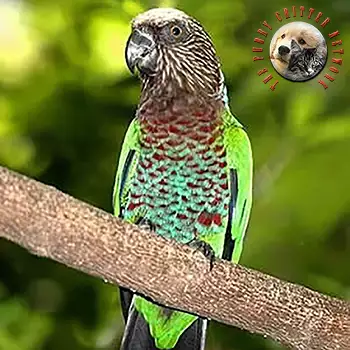

Health & Weight Monitors

Tracking the weight of a Hawk-headed Parrot is one of the most reliable indicators of overall health, as birds instinctively hide signs of illness and weight loss is often the first detectable symptom of a developing problem. A precision digital scale capable of measuring in one-gram increments is an indispensable tool for any parrot owner. Perch-style scales designed specifically for birds allow the parrot to step onto a familiar perching surface for weigh-ins, reducing stress compared to placing the bird on a flat platform.

Establishing a daily weighing routine — ideally first thing in the morning before the bird has eaten — creates a baseline from which meaningful fluctuations can be identified. A healthy Hawk-headed Parrot typically weighs between 190 and 280 grams depending on the individual, and a sustained loss of even five to ten percent of body weight warrants veterinary attention. Recording weights in a spreadsheet or dedicated pet health tracking application creates a long-term data record that is invaluable during veterinary consultations.

Some advanced digital scales now connect to smartphone applications via wireless protocols, allowing automatic logging and trend visualization. These connected scales can generate alerts when weight drops below a user-defined threshold, adding a layer of passive monitoring that catches gradual declines the owner might not notice day to day. For a species as long-lived as the Hawk-headed Parrot, years of weight data can reveal seasonal patterns, age-related changes, and early warning signs of chronic conditions.

Beyond weight, observational monitoring tools such as dropping analysis charts help owners track digestive health. While no consumer device currently automates this for birds, maintaining a photographic record of droppings — normal for the individual, color changes, consistency shifts — provides useful diagnostic information that an avian veterinarian can reference when evaluating a sick bird.

Environmental Sensors

The environmental sensitivity of Hawk-headed Parrots makes digital monitoring of their living space conditions particularly valuable. Smart temperature and humidity sensors placed near the cage provide continuous readings and can alert owners via smartphone notifications when conditions drift outside the recommended ranges of 65 to 80 degrees Fahrenheit and 50 to 70 percent relative humidity.

Many smart home environmental sensors log historical data, enabling owners to identify patterns — perhaps the room temperature drops significantly at night, or humidity plummets when the furnace runs — and address them proactively. A sensor that reveals overnight temperature swings, for example, might prompt the installation of a thermostat-controlled ceramic heat emitter. This kind of data-driven adjustment is far more precise than guessing based on how the room feels to a human.

Air quality monitors represent a newer category of environmental sensor that is highly relevant to avian care. Devices that measure particulate matter, volatile organic compounds, and carbon dioxide levels can alert owners to air quality problems that might not be perceptible to humans but could be dangerous to a bird's sensitive respiratory system. Elevated VOC readings might indicate that a new piece of furniture is off-gassing, that cleaning products are leaving residual fumes, or that cooking activities are affecting air quality in the bird's room.

Integrating environmental sensors into a smart home system allows automated responses — a humidity sensor triggering a connected humidifier, a temperature sensor activating a space heater, or an air quality alert triggering an air purifier to increase its fan speed. This level of automation provides consistent environmental management even when the owner is away from home or asleep, which is particularly valuable for a species that requires stable tropical conditions.

Smart Feeders & Water Systems

Automated feeding technology designed for birds is still a developing category, but several products can simplify the daily feeding routine for Hawk-headed Parrot owners. Timed feeders that dispense measured portions of pellets at scheduled intervals can ensure the bird has access to food during the owner's work hours without overfilling dishes in the morning. These are most useful for the dry food component of the diet — fresh produce still requires manual preparation and timely removal.

Smart water fountains designed for pets — adapted for avian use with appropriate sizing and materials — provide continuously filtered and circulated water that stays cleaner than a static dish. Moving water can also encourage drinking in birds that are otherwise poor water consumers. Any water device used for a parrot must be constructed entirely of bird-safe materials, with no exposed electrical components, zinc hardware, or small removable parts that could be ingested.

Some owners repurpose small aquarium or reptile water systems for their bird rooms, using food-grade tubing and stainless steel dispensing nozzles to create gravity-fed or pump-driven water stations. While these DIY setups require more maintenance than commercial products, they can be customized to fit specific cage configurations and scaled to serve multiple birds in a breeding or multi-bird setup.

The primary limitation of any automated feeding or watering system is that it cannot replace daily hands-on monitoring. A smart feeder dispensing pellets reliably does not detect a bird that has stopped eating, and a water fountain circulating clean water does not notice a bird that is drinking excessively or not at all. Technology in this category should be viewed as a convenience supplement to attentive daily care, not a substitute for it.

Cameras & Remote Monitoring

Pet cameras have become one of the most popular technology products among parrot owners, and for good reason. Hawk-headed Parrots are active, vocal, and occasionally unpredictable, and the ability to observe the bird remotely during work hours provides both peace of mind and valuable behavioral data. A camera positioned to cover the cage and surrounding area allows the owner to check on the bird's activity level, food consumption, and general demeanor throughout the day.

Key features to look for in a bird-room camera include high-definition video resolution for clear detail at distance, wide-angle lens coverage to capture the full cage area, night vision or infrared capability for monitoring during dark sleep hours, and two-way audio that allows the owner to speak to the bird remotely. The two-way audio feature deserves special consideration for Hawk-headed Parrots — hearing their owner's voice can be reassuring for a bonded bird, but unexpected sounds from a speaker can also startle a nervous individual. Owners should test their bird's reaction to the camera's speaker at low volume before relying on it during absences.

Motion detection and sound detection alerts can notify the owner of unusual activity — extended silence from a normally vocal bird, frantic movement that might indicate a night fright, or sounds suggesting the bird has become entangled in a toy or cage component. Some camera systems allow the creation of activity zones, so alerts are only triggered by motion in specific areas rather than every minor movement within the frame.

Cloud storage or local storage of recorded footage creates a video archive that can be useful for tracking behavioral patterns over time, documenting symptoms for a veterinarian, or simply capturing entertaining moments. Privacy considerations are minimal for bird-only monitoring, but owners should be aware that cameras in living spaces also capture human activity and should position them accordingly if privacy is a concern for household members.

Lighting & Timer Technology

Programmable lighting systems offer precise control over the photoperiod that profoundly influences a Hawk-headed Parrot's hormonal cycles, mood, sleep quality, and overall health. Smart light timers connected to full-spectrum avian lamps allow owners to set consistent dawn and dusk schedules that the system executes automatically, eliminating the variability that comes with manual on-off switching.

The most sophisticated lighting setups use gradual dimming schedules that simulate natural sunrise and sunset rather than abruptly switching between full brightness and darkness. A 15-to-30-minute fade-in at morning and fade-out at evening gives the bird a transition period that more closely resembles natural light patterns and reduces the startling effect of sudden illumination changes. Some smart bulb systems offer this functionality natively, while others require integration with a smart home controller to program gradual transitions.

Seasonal photoperiod adjustment is an important consideration for managing hormonal behavior. Hawk-headed Parrots, like most parrots, can enter prolonged breeding condition when exposed to long day lengths — 14 or more hours of light. Keeping the light period to 10 to 12 hours year-round helps moderate hormonal surges that can lead to aggression, territoriality, and chronic egg-laying in females. Smart timers make these adjustments simple and consistent.

UV index meters are a specialized monitoring tool that helps verify full-spectrum bulb output. Avian UVB bulbs degrade over time, losing their UV output well before the visible light dims noticeably. A UV meter allows the owner to check actual output periodically and replace bulbs at the appropriate time rather than relying on manufacturer estimates, which may not account for variations in fixture height, reflector condition, and ambient temperature.

Veterinary Telehealth & Digital Records

Avian veterinary telehealth services have expanded significantly, offering Hawk-headed Parrot owners access to specialist avian veterinary advice without the stress and logistics of transporting the bird to a clinic for every concern. Video consultations allow the veterinarian to observe the bird's behavior, posture, and visible symptoms in real time, and many routine questions — dietary adjustments, behavioral concerns, minor feather issues — can be addressed effectively through a virtual appointment.

The quality of a telehealth consultation depends heavily on the owner's ability to present clear visual information. A high-quality camera, good lighting, and the ability to capture close-up footage of the area of concern all improve the veterinarian's ability to assess the situation remotely. Preparing a summary of the bird's recent behavior, weight trend, diet, and any changes in environment before the appointment maximizes the value of the consultation time.

Telehealth has clear limitations — it cannot replace hands-on physical examination, diagnostic bloodwork, imaging, or emergency intervention. Owners should view telehealth as a complement to regular in-person veterinary care, not a replacement. For a long-lived species like the Hawk-headed Parrot, annual or biannual wellness exams with a qualified avian veterinarian remain essential for detecting subclinical conditions through blood panels, crop cultures, and physical palpation.

Digital health record keeping ties all of these monitoring threads together. Maintaining a comprehensive digital file for the bird — including weight logs, dietary records, veterinary reports, lab results, vaccination history, medication schedules, and behavioral notes — creates a longitudinal health profile that becomes increasingly valuable as the bird ages. Cloud-based pet health platforms, dedicated spreadsheets, or even well-organized document folders all serve this purpose. Over the 30-to-40-year lifespan of a Hawk-headed Parrot, this record may span multiple veterinarians, multiple homes, and potentially multiple owners, making thorough documentation an act of long-term care that benefits the bird regardless of circumstances.

Always consult a qualified professional before making any health-related decisions. This content is provided for informational reference only and should not replace professional guidance specific to your animal.