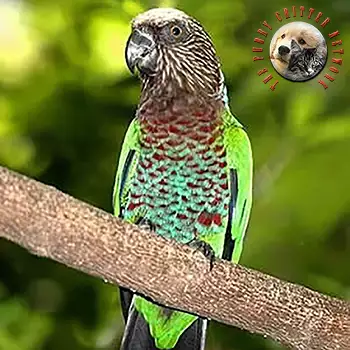

Taking a Hawk-headed Parrot outdoors safely requires either a secure carrier or a properly fitted avian harness. Harness training is possible with this species, though their strong personalities and sensitivity to restraint mean the process requires more patience and gentleness than with some other parrot species. A well-fitted harness allows the bird to accompany its owner outdoors, providing valuable exposure to natural sunlight, fresh air, and novel stimulation.
Avian harnesses consist of a body loop, wing straps, and a tether leash. The fit must be snug enough that the bird cannot wriggle free but not so tight that it restricts breathing or wing movement. Hawk-headed Parrots fall into the medium parrot size range for harness sizing, but their unique body proportions — a relatively broad chest and the distinctive elongated nape feathers — may require trying multiple models to find the right fit. Adjustable designs with multiple sizing points tend to accommodate their build best.
Harness training should begin gradually indoors, starting with simply allowing the bird to investigate the harness without any attempt to put it on. Over the course of days or weeks, progress to touching the bird with the harness, draping it over the body, and eventually fastening it for brief periods with immediate positive reinforcement. Rushing this process with a Hawk-headed Parrot is counterproductive — a negative experience can create a lasting aversion that makes future attempts extremely difficult.
Flight lines — long tethers attached to an ankle band — are sometimes used as an alternative to harnesses, particularly for birds that resist harness fitting. However, flight lines carry significant injury risk, as a bird that takes flight and reaches the end of the line abruptly can suffer leg fractures, joint damage, or worse. Most avian veterinarians and experienced parrot owners recommend harnesses over flight lines for general outdoor use.