
Hawk Headed Parrot Species Guide - Furry Critter Network

Hawk Headed Parrot

Quick Facts

πŸ”¬ Scientific Name
Deroptyus accipitrinus
🦜 Breed Group
Parrot
πŸ“ Adult Size
30-35 cm (12-14 inches)
πŸͺ½ Wingspan
56-61 cm (22-24 inches)
⏱️ Lifespan
30-40 years
😊 Temperament
Bold, Intense, Loyal, Unpredictable, Territorial
πŸ”Š Noise Level
Moderate to High
πŸ—£οΈ Talking Ability
Moderate
🍽️ Diet Type
Frugivore-granivore (fruits, seeds, nuts, flowers)
🌍 Origin
Northern South America (Amazon Basin)

Hawk Headed Parrot - Names & Recognition

The Hawk Headed Parrot (Deroptyus accipitrinus) is one of the most visually and behaviorally distinctive parrots in the Neotropics, immediately recognizable by the elongated nape feathers it can erect into a spectacular fan-like crest when aroused. The common name references the superficial resemblance of this feathered ruff to the mantled appearance of a hawk, an impression reinforced by the bird's intense, predatory gaze and boldly streaked head plumage. In aviculture and the pet trade, it is frequently referred to simply as the Hawk Head, while in ornithological literature and across much of its South American range it is more commonly known as the Red-fan Parrot, a name that directly describes the vivid crimson and blue fan of elongated feathers that erupts from the nape during display.

The species occupies a unique taxonomic position within the Psittacidae. Deroptyus is a monotypic genus, meaning the Hawk Headed Parrot is its sole living member, with no close relatives sharing its distinctive morphological traits. The genus name derives from the Greek dere (neck) and ptyon (fan), a precise description of the species' most remarkable physical feature. The specific epithet accipitrinus comes from the Latin accipiter (hawk), reinforcing the raptor-like impression that so struck early European naturalists encountering the species. Two subspecies are generally recognized: the nominate D. a. accipitrinus from the Guianas and northeastern Brazil, and D. a. fuscifrons from the south bank of the Amazon in central Brazil, distinguished primarily by a darker forehead and slightly different facial streaking.

Indigenous peoples across the Amazon Basin have long recognized and named this parrot. Among the Wayana people of Suriname and French Guiana, the species features in traditional ornamentation and cultural narratives, its striking feathers valued for ceremonial headdresses and its fierce temperament noted in oral tradition. Portuguese-speaking Brazilians know it as anacΓ£ or curica-de-bochecha-parda, while in the Spanish-speaking portions of its range it may be called loro de abanico rojo. These diverse vernacular names across multiple languages and cultures underscore the bird's conspicuous presence and cultural significance throughout its extensive range.

Recognition by avicultural societies reflects the Hawk Headed Parrot's status as an uncommon but established species in captive collections worldwide. The species has been bred in captivity since the latter decades of the twentieth century, though it has never achieved the widespread popularity of Amazons, macaws, or cockatoos. Its demanding temperament, specialized care requirements, and relatively limited availability have kept it firmly in the domain of experienced aviculturists and dedicated parrot enthusiasts rather than the general pet market.

Aviculture Registry Recognition

  • American Federation of Aviculture (AFA): Recognized, Psittacidae
  • Avicultural Society (ACS): Recognized, Parrots

Hawk Headed Parrot Physical Description

The Hawk Headed Parrot is a medium-sized parrot measuring approximately 30 to 35 centimeters in total length and weighing between 190 and 280 grams, with most adults settling in the 215 to 260 gram range. The body is compact and solidly built with a relatively short, squared tail and broad, rounded wings adapted for maneuvering through dense forest canopy rather than sustained open-air flight. The overall silhouette when perched is stocky and upright, with a proportionally large head that contributes to the hawk-like impression embedded in the common name.

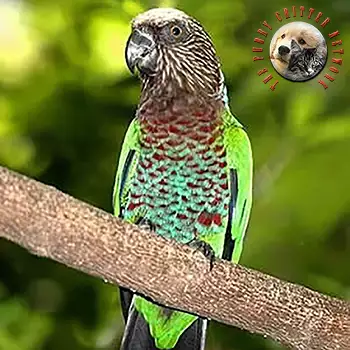
The defining physical feature of the species is the elongated nape and hindcrown feathers that form the erectile fan or ruff. At rest, these feathers lie flat against the back of the neck, giving the bird a smooth-headed profile. When the bird is excited, alarmed, aggressive, or displaying, these feathers are raised into a dramatic circular fan that frames the face and nearly doubles the apparent head size. Each individual feather in the ruff is deep crimson at the base, transitioning to a broad band of blue at the tip, creating a striking bicolored display that is among the most dramatic in the entire parrot order. The underside of these feathers, visible only when fully erected, reveals the full intensity of the red and blue coloring.

The head plumage is brown with prominent cream or buff streaking, creating a distinctly hawk-like facial pattern that is unique among parrots. The forehead and crown range from dark brown in the subspecies fuscifrons to a paler buff-brown in the nominate form. The breast and belly are deep red edged with blue, matching the ruff feathers and creating a continuous visual field of crimson when the fan is raised. The back, wings, and tail are bright green, typical of many neotropical parrots, with darker green flight feathers and a green tail that shows reddish tones on the inner webs when spread. The underwing coverts are red, flashing conspicuously during flight.

The bill is dark gray to black, robust, and hooked in the typical psittacine fashion, though proportionally somewhat smaller than that of comparably sized Amazon parrots. The cere is feathered and dark. The eye is surrounded by a prominent patch of bare, whitish periorbital skin that contrasts sharply with the streaked head plumage, and the iris is orange to yellow in adults. Juveniles can be distinguished by a duller overall plumage, a darker iris that lightens with age, shorter ruff feathers, and less defined streaking on the head. Sexual dimorphism is minimal, with males and females virtually identical in external appearance, requiring DNA testing or surgical sexing for reliable gender determination.

Affection Level
Hawk Headed Parrots form deep, intensely personal bonds with their chosen human, displaying affection through head-bowing for scratches, gentle beak nibbling, and soft murmuring vocalizations directed exclusively at their bonded person. This devotion, however, is sharply selective. They frequently become rigidly one-person birds, lavishing adoration on their favorite while treating all others with suspicion or outright hostility. Earning and maintaining the trust of a Hawk Head requires daily, patient interaction, and even well-bonded birds can cycle unpredictably between cuddly sweetness and defensive bristling.
Sociability
In the wild, Hawk Headed Parrots are typically observed in pairs or small family groups rather than large flocks, and this preference for selective social bonds carries over strongly into captivity. They are not naturally gregarious birds and tend to be deeply suspicious of strangers, new objects, and changes to their environment. Multi-bird households present a particular challenge, as Hawk Heads are territorial and often aggressive toward other parrots. Their social circle is deliberately small and fiercely defended.
Vocalization
The vocal repertoire of the Hawk Headed Parrot is distinctive and often startling to the uninitiated. Their primary call is a harsh, raspy, almost reptilian shriek that carries considerable distance and bears little resemblance to the melodic whistles of cockatoos or the chattering of Amazons. When alarmed or excited, they produce a rapid series of shrill, staccato notes while simultaneously raising their neck feathers into the full fan display. Quieter moments yield a repertoire of clicks, growls, and surprisingly soft whistling that they share with bonded companions.
Intelligence
Hawk Headed Parrots are perceptive, observant birds that demonstrate strong problem-solving abilities and environmental awareness. They quickly learn the routines of their household, anticipate daily events with precision, and manipulate cage latches and toy mechanisms with dexterous determination. Their intelligence is coupled with an intense emotional sensitivity that allows them to read their owner's body language and mood with uncanny accuracy. This cognitive-emotional combination makes them deeply rewarding but also demanding companions who notice and react to subtleties that less perceptive species would ignore entirely.
Exercise Needs
Despite their medium size, Hawk Headed Parrots are active birds that require substantial physical engagement to maintain their health and psychological equilibrium. In the wild, they range across considerable distances through dense canopy forest, climbing, foraging, and engaging in aerial play with their mates. Captive birds need multiple hours of supervised out-of-cage time daily, a spacious enclosure that allows climbing and wing exercise, and a constant supply of destructible enrichment items. Without adequate physical outlets, their considerable energy is redirected into screaming, aggression, and feather-destructive behavior.
Maintenance Level
The Hawk Headed Parrot is unequivocally an advanced-level companion bird that demands experienced, dedicated ownership. Their complex temperament requires an owner who can read subtle behavioral cues, manage hormonal mood shifts, and maintain consistent boundaries without resorting to forceful handling that would destroy the trust relationship. Dietary needs are specific, cage requirements are substantial, and their sensitivity to environmental stress means that household disruptions, schedule changes, and social upheavals affect them profoundly. This is not a species that tolerates neglect or adapts easily to casual ownership.
Trainability
Training a Hawk Headed Parrot requires patience, creativity, and a deep understanding of avian body language. They are intelligent enough to learn a wide range of behaviors and commands, but their independent, sometimes defiant temperament means they will only cooperate when they perceive the interaction as mutually beneficial. Positive reinforcement with high-value food rewards works well, but sessions must be kept short and terminated at the first sign of irritation. Forceful or repetitive training approaches backfire dramatically with this species, producing lasting distrust rather than compliance.
Independence
Hawk Headed Parrots occupy an unusual middle ground between clingy dependence and aloof self-sufficiency. They demand significant daily interaction with their bonded person and protest vocally when ignored, but they also value periods of autonomous activity during which they forage, explore, and entertain themselves with toys and environmental enrichment. The balance point varies by individual and can shift with hormonal cycles, making it essential for owners to remain attentive to daily fluctuations in their bird's social appetite.

Natural Habitat & Range

The Hawk Headed Parrot inhabits the lowland tropical rainforests of northern South America, with a range extending across a vast arc from southeastern Colombia and southern Venezuela eastward through the Guianas and southward into the Amazon Basin of Brazil, reaching as far west as eastern Ecuador and northeastern Peru. This distribution encompasses some of the most extensive and least disturbed tracts of continuous tropical forest remaining on Earth, and the species' stronghold lies deep within the interior of the Amazon drainage where human population density remains low and forest cover intact.

Within this broad range, the Hawk Headed Parrot shows a strong preference for undisturbed terra firme forest, the well-drained upland rainforest that sits above the seasonal floodplain. It is typically found below 400 meters elevation, though occasional records extend to higher elevations in the foothills of the Andes and the tepuis of the Guiana Shield. The species avoids heavily disturbed or fragmented forest, open habitats, and pure varzea floodplain forest, though it may utilize forest edges, riverine gallery forest, and transitional zones between forest types for foraging. Its reliance on tall, mature forest with complex canopy structure makes it a useful indicator species for forest integrity across its range.

Population density varies considerably across the range and tends to be low even in optimal habitat. The Hawk Headed Parrot is generally described as uncommon to locally fairly common, with the highest densities reported from the interior forests of Suriname, French Guiana, and Amapa state in Brazil. The species is patchily distributed and often absent from apparently suitable habitat for reasons that are not fully understood, suggesting that factors beyond simple forest cover, possibly fruiting phenology, nest site availability, or interspecific competition, influence local abundance. Within occupied territories, pairs or small family groups maintain relatively large home ranges that they traverse daily in search of fruiting trees.

Current conservation status classifications list the Hawk Headed Parrot as a species of Least Concern globally, reflecting its broad distribution and the vast extent of remaining Amazonian forest cover. However, this assessment masks regional declines driven by deforestation, particularly along the southern and eastern margins of the Amazon where agricultural expansion continues to fragment and reduce forest cover. The international pet trade, while now regulated under CITES Appendix II, historically extracted significant numbers of wild birds from Guyana, Suriname, and Brazil. Continued habitat protection across the Amazon Basin remains the most important long-term conservation measure for this species.

Temperament

The temperament of the Hawk Headed Parrot is frequently described as complex, intense, and not for the faint of heart, a characterization that, while occasionally overstated, captures a genuine truth about the species. These are emotionally volatile birds that experience and express their moods with a directness and physical drama that few other parrot species can match. The fan display, in which the nape feathers are raised into a full crimson-and-blue ruff while the bird sways, hisses, and fixes its target with dilated pupils, is simultaneously one of the most spectacular and most intimidating behaviors in aviculture. It can signal excitement, territorial defense, fear, or sexual arousal, and learning to distinguish between these motivations is an essential skill for any Hawk Head owner.

Bonded Hawk Headed Parrots are capable of extraordinary tenderness and devotion. They seek head scratches with gentle beak nudges, vocalize softly to their favored person in a private murmuring dialect, and display visible excitement at their owner's return after even brief absences. The depth of the bond they form is comparable to that of cockatoos, with many of the same attendant risks. They become jealously possessive of their chosen person, often viewing other household members as rivals to be driven away rather than companions to be tolerated. Managing this possessiveness requires deliberate socialization with multiple people from an early age and a willingness to rotate primary caretaking duties.

The reputation for unpredictable aggression that follows the Hawk Headed Parrot through avicultural literature is partially deserved and partially a consequence of mishandled birds being generalized to the species as a whole. Hormonal periods intensify territorial behavior and reduce the bird's threshold for aggression, and poorly socialized individuals can become genuinely dangerous biters capable of inflicting deep lacerations. However, well-socialized Hawk Heads raised by experienced owners who respect the bird's boundaries and read its extensive vocabulary of body language signals can be manageable, affectionate companions. The key distinction is that this species demands a higher baseline of avicultural competence than most popular companion parrots.

One often-overlooked aspect of the Hawk Headed Parrot's temperament is its intense curiosity and playfulness. Between the dramatic displays and the cautionary warnings, the fact that these birds are genuinely entertaining, inventive, and often hilariously clownish can get lost. They invent games with household objects, engage in acrobatic play on climbing structures, and develop elaborate personal rituals around feeding, bathing, and social interaction. Their intelligence, emotional range, and physical expressiveness combine to produce a companion that is never boring, even if it is occasionally overwhelming.

Care Requirements

Housing a Hawk Headed Parrot requires a cage that exceeds what its moderate body size might suggest, because these birds are active, territorial, and need room to move, climb, and display without feeling confined. The minimum recommended cage size is 90 centimeters wide by 60 centimeters deep by 120 centimeters tall, constructed of heavy-gauge powder-coated or stainless steel with bar spacing of approximately 2 centimeters. Hawk Heads are strong chewers with powerful bills relative to their size, and lightweight cages with thin bars will be dismantled over time. The cage should be positioned against a wall or in a corner to provide a sense of security, elevated to chest height so the bird can observe household activity without feeling vulnerable from above.

Perching must accommodate the species' active climbing behavior and foot health. Natural hardwood branches of varying diameters provide the best combination of grip exercise, beak conditioning, and environmental enrichment. Rope perches, platform perches for resting, and a high sleeping perch positioned near the top of the cage complete the arrangement. Avoid placing perches directly above food and water containers, as contamination from droppings is a constant concern in any parrot cage but is particularly problematic with species that are sensitive to bacterial infections.

Environmental conditions should approximate the warm, humid tropical forests the species evolved in, while avoiding the stagnant conditions that promote respiratory pathogens. Ambient temperatures between 18 and 28 degrees Celsius suit most captive Hawk Heads, with the lower end of this range tolerated as long as drafts are absent and the bird has adequate feathering. Humidity levels of 50 to 70 percent support feather condition and respiratory health, and a dedicated room humidifier may be necessary in climates with dry winters or air-conditioned interiors. Full-spectrum lighting on a timer provides consistent day length and supports vitamin D metabolism, particularly for birds without access to natural sunlight.

Out-of-cage time is not optional for this species. A minimum of three to four hours daily of supervised interaction, exploration, and flight or climbing exercise is essential for physical conditioning and psychological stability. A dedicated play stand or hanging gym positioned in the primary living space allows the bird to participate in household life while maintaining its own territory. Bird-proofing the room is critical, as Hawk Heads are fearless explorers that will investigate electrical cords, toxic houseplants, open water sources, and other hazards with equal enthusiasm. Ceiling fans, mirrors, and open windows represent lethal threats and must be secured before any out-of-cage session.

Feeding & Nutrition

The Hawk Headed Parrot is a frugivore-granivore in the wild, with a diet centered on a diverse array of tropical fruits, seeds, nuts, flowers, and leaf buds gathered from the upper and middle canopy of lowland rainforest. Seasonal availability drives considerable dietary flexibility, and wild birds adjust their foraging patterns and food preferences throughout the year in response to fruiting cycles. This natural dietary breadth provides a useful framework for captive nutrition, which should prioritize variety, freshness, and nutritional density over any single food category.

The foundation of the captive diet should be a high-quality formulated pellet designed for medium-sized parrots, comprising approximately 40 to 50 percent of total intake. Pellets provide consistent baseline nutrition and help prevent the selective feeding behavior that plagues seed-based diets, in which birds pick out fatty favorites and discard nutritionally essential but less palatable items. Several reputable manufacturers produce organic or naturally preserved pellets suitable for neotropical species, and the specific brand matters less than consistency of offering and the bird's willingness to consume them. Converting a seed-addicted Hawk Head to a pellet-based diet requires patience and graduated transition methods.

Fresh fruits and vegetables should constitute 30 to 40 percent of the daily diet, offered in generous variety and rotated regularly. Preferred fruits include apple, pear, grapes, mango, papaya, pomegranate, berries, banana, and melon. Vegetables and greens such as broccoli, carrots, sweet potato, bell peppers of all colors, dark leafy greens, snap peas, and cooked corn provide essential vitamins and minerals. Foods rich in beta-carotene are particularly valuable for neotropical species, which are susceptible to vitamin A deficiency. All fresh produce should be thoroughly washed to remove pesticide residues and offered at room temperature for maximum acceptance.

Seeds and nuts serve as supplemental treats and training rewards rather than dietary staples. Sunflower seeds, safflower, and pumpkin seeds can be offered in small quantities, while shelled walnuts, almonds, and Brazil nuts provide healthy fats and foraging enrichment. Sprouted seeds and legumes are an excellent bridge between the nutritional profiles of fresh produce and dry seeds, offering enhanced vitamin and protein content in a form most Hawk Heads find highly palatable. Clean, fresh water must be available at all times, changed at least twice daily, and provided in a container that resists tipping and contamination from food debris or droppings.

Hawk Headed Parrot Health & Lifespan

A well-managed Hawk Headed Parrot can live 30 to 40 years in captivity, with anecdotal reports of individuals exceeding this range under exceptional care. Wild lifespan is presumed to be somewhat shorter due to predation, disease, and environmental hazards, though reliable longevity data from free-ranging populations is limited. Achieving the upper end of the captive lifespan range requires a combination of excellent nutrition, appropriate housing, consistent veterinary oversight, and the kind of stable, enriching social environment that keeps the species' considerable psychological needs met throughout the decades of its life.

The Hawk Headed Parrot's greatest health vulnerability in captivity is arguably psychological rather than strictly physical. The species' intense emotional sensitivity, deep bonding instincts, and low tolerance for disruption create a pronounced susceptibility to stress-related disorders that manifest across both behavioral and physical domains. Feather destructive behavior is the most visible expression of chronic stress, but underlying immunosuppression, gastrointestinal dysfunction, and reproductive abnormalities can accompany the psychological deterioration that drives feather-picking. Addressing the root causes of stress, rather than treating symptoms in isolation, is the cornerstone of preventive health management for this species.

Infectious disease risks for captive Hawk Headed Parrots parallel those of other neotropical psittacines, with Psittacine Beak and Feather Disease, aspergillosis, proventricular dilatation disease, and bacterial gastrointestinal infections constituting the most serious threats. The species' preference for warm, humid environmental conditions overlaps uncomfortably with the conditions that promote fungal and bacterial proliferation, making hygiene and air quality management critically important. Any bird showing signs of respiratory distress, appetite loss, lethargy, or changes in droppings should receive veterinary attention within twenty-four hours, as the compact body size and high metabolic rate of medium-sized parrots means that clinical deterioration can progress rapidly.

Reproductive health considerations are relevant for both breeding pairs and pet birds. Females housed without mates can still develop chronic egg-laying behavior, which depletes calcium reserves and can lead to egg binding, a life-threatening emergency. Hormonal management through light cycle control, dietary adjustment, and environmental modification is preferable to allowing repeated, futile clutch production. Males in breeding condition can become dangerously aggressive, and even established pairs require careful monitoring during the breeding season to prevent mate aggression, a documented concern in this species that has resulted in the death of female birds in both avicultural and zoological settings.

Common Health Issues

  • Psittacine Beak and Feather Disease (PBFD) - A circovirus-driven disease that attacks feather follicles, beak keratin, and the immune system. Hawk Headed Parrots are susceptible to PBFD, and infection can manifest as progressive feather dystrophy, beak malformation, and immunosuppression that leaves the bird vulnerable to fatal secondary infections. Young birds are particularly at risk, and testing of all new acquisitions is strongly recommended before introduction to existing collections.
  • Aspergillosis - This fungal respiratory disease caused by Aspergillus fumigatus and related species is a significant threat to Hawk Headed Parrots, particularly those housed in poorly ventilated environments or subjected to chronic stress. The species' Amazonian origins mean they are adapted to humid conditions, but stagnant, damp air combined with organic substrate creates ideal conditions for fungal proliferation. Clinical signs include respiratory distress, voice changes, tail-bobbing, and progressive weight loss.
  • Feather destructive behavior - Hawk Headed Parrots are particularly prone to stress-related feather plucking and self-mutilation. Their intense emotional sensitivity, strong bonding instincts, and low tolerance for environmental disruption create a perfect storm of risk factors. Triggers include owner absence, schedule changes, loss of a bonded companion, hormonal surges, and inadequate enrichment. Once established, feather destructive behavior can become a deeply entrenched habit that persists long after the initial trigger is resolved.
  • Proventricular Dilatation Disease (PDD) - Also known as avian ganglioneuritis, PDD is caused by avian bornavirus and affects the nerves controlling the gastrointestinal tract. Hawk Headed Parrots are among the species susceptible to this devastating condition, which causes progressive weight loss despite maintained appetite, passage of undigested food in droppings, crop stasis, and neurological symptoms. Diagnosis requires a combination of blood testing, imaging, and sometimes crop biopsy, and treatment options remain limited.
  • Bacterial infections - The warm, humid conditions preferred by Hawk Headed Parrots can also promote bacterial growth in food dishes, water sources, and cage substrates. Gram-negative bacterial infections, particularly those caused by E. coli, Klebsiella, and Pseudomonas species, can cause gastrointestinal disease, respiratory infections, and septicemia. Regular crop gram stains and cultures are valuable diagnostic tools for detecting subclinical infections before they progress to systemic illness.
  • Hormonal aggression and related injuries - While not a disease in the traditional sense, hormonal behavioral changes in Hawk Headed Parrots frequently result in physical injuries to both the bird and its handler. During breeding season, even well-bonded birds can become unpredictably aggressive, delivering deep bite wounds that require medical attention. The bird itself may sustain injuries from thrashing against cage bars, night frights triggered by hormonal restlessness, or self-inflicted wounds during episodes of intense frustration.

Preventive Care & Health Monitoring

  • Specialized avian veterinary relationship - Establishing a relationship with an avian veterinarian experienced with uncommon neotropical species is essential before acquiring a Hawk Headed Parrot. Annual wellness examinations should include a complete blood count, biochemistry panel, crop gram stain, fecal parasite screening, and choanal culture. Baseline blood work established when the bird is healthy provides invaluable comparison data when illness is suspected later.
  • Environmental enrichment program - Preventing feather destructive behavior and psychological deterioration requires a structured, rotating enrichment program that engages the bird's foraging instincts, problem-solving abilities, and physical capabilities daily. This includes puzzle feeders, destructible wood and leather toys, foraging trays with hidden food items, and regular introduction of novel safe objects. Enrichment should challenge without frustrating, and the program should be adjusted based on the individual bird's responses and preferences.
  • Air quality and ventilation management - Hawk Headed Parrots require warm, humid conditions that can simultaneously promote respiratory pathogens if air circulation is inadequate. HEPA filtration, regular air exchange, and avoidance of aerosol chemicals, scented candles, nonstick cookware fumes, and cigarette smoke are critical. Humidity levels between 50 and 70 percent are appropriate, but the air must move. Stagnant warm humidity is the precise environment in which Aspergillus thrives, making ventilation a non-negotiable aspect of responsible Hawk Head husbandry.
  • Quarantine protocols for new birds - Any new bird entering a household with an existing Hawk Headed Parrot must undergo a minimum thirty-day quarantine in a completely separate airspace, during which comprehensive veterinary screening including PBFD, polyomavirus, avian bornavirus, and chlamydiosis testing is completed. Hawk Headed Parrots are not resilient to immune challenges the way some hardier parrot species are, and introducing an asymptomatic carrier can have catastrophic consequences.
  • Behavioral monitoring and hormonal management - Owners should maintain daily behavioral logs noting food intake, vocalization patterns, feather condition, and social behavior. Subtle changes in these parameters often precede overt illness or behavioral crises by days or weeks. During hormonal periods, typically spring and autumn, light cycle management using timers to maintain ten to twelve hours of complete darkness, removal of perceived nesting sites, and reduced physical contact with the bird's back and vent area help moderate the intensity of breeding behavior.
  • Dietary variety and nutritional monitoring - Preventing nutritional deficiencies requires offering a diverse diet that rotates through a wide variety of fresh fruits, vegetables, sprouted seeds, and high-quality pellets. Body weight should be monitored weekly using a gram scale, as weight fluctuations of more than ten percent warrant veterinary investigation. Vitamin A status is particularly important for neotropical species, and the diet should emphasize beta-carotene-rich foods including sweet potato, dark leafy greens, and red and orange peppers.

Training & Vocalization

Training a Hawk Headed Parrot is an exercise in negotiation rather than instruction. Unlike species such as the African Grey or the Budgerigar, which often seem to enjoy the structured rhythm of training sessions for their own sake, the Hawk Head approaches training as a transaction in which the offered reward must clearly justify the requested effort. This is not a reflection of limited intelligence but rather of a temperament that resists subordination and insists on agency. The most successful Hawk Head trainers are those who frame desired behaviors as the bird's own idea, using careful environmental arrangement and high-value reinforcement to shape behavior incrementally.

Target training remains the most effective foundation behavior for Hawk Headed Parrots, as it establishes a clear communication framework between bird and handler without requiring physical contact that the bird may not yet be ready to accept. A chopstick or short dowel serves as the target, and small pieces of favorite fruit or nut function as reinforcers. Sessions should be limited to five minutes or less, conducted at consistent times when the bird is alert and moderately hungry, and terminated immediately if the bird shows signs of agitation, including pupil pinning, feather raising, or tail fanning. Building a training relationship with a Hawk Head is measured in weeks and months, not days.

The vocal capabilities of the Hawk Headed Parrot are moderate by psittacine standards. Many individuals develop a working vocabulary of ten to thirty recognizable words and short phrases, delivered in a distinctive raspy, slightly metallic voice that lacks the crystal clarity of an African Grey or the booming projection of an Amazon. Some individuals prove more talented mimics than others, and the species shows a particular aptitude for reproducing environmental sounds, including door chimes, microwave signals, telephone ringtones, and the calls of other household birds. Their talking ability, while not the species' primary selling point, adds an additional layer of engagement to the companion relationship.

The natural call repertoire of the Hawk Headed Parrot is distinctive and polarizing. Their primary contact call is a harsh, strident shriek that carries well through dense forest but can be jarring in a domestic setting, particularly in enclosed spaces with reflective surfaces that amplify the sound. Alarm calls are delivered in rapid-fire bursts accompanied by full fan display, creating a dramatic audiovisual performance that is impressive but profoundly startling to unprepared visitors. Quieter vocalizations include an engaging repertoire of clicks, growls, whistles, and a purring murmur that bonded birds direct at their favored person during close social interaction. Noise levels are generally moderate by parrot standards, with most vocal activity concentrated at dawn, dusk, and during periods of household commotion.

Children & Other Pets

The Hawk Headed Parrot is generally not recommended for households with young children. The species' sharp, powerful bite, its tendency toward territorial aggression, and its low tolerance for the sudden movements, loud noises, and unpredictable behavior that characterize young children create a combination of risk factors that responsible aviculturists consistently flag. A defensive Hawk Head in full fan display, hissing and lunging, can terrify a child, and the resulting bite can cause injuries requiring medical attention. Even well-socialized individuals may react defensively to a child's innocent but abrupt approach, and the resulting negative experience can damage both the child's confidence around animals and the bird's willingness to tolerate future interactions.

Older children and teenagers who demonstrate calm, consistent behavior and a genuine interest in understanding avian body language can develop rewarding relationships with a household Hawk Head under close adult supervision. The educational value of living with such an intelligent, emotionally complex animal is considerable, and young people who learn to read the subtle behavioral cues that precede aggression, including pupil dilation, feather posture changes, and shifts in vocalization, develop an appreciation for animal communication that extends far beyond the specific species. The key requirement is that all interactions remain supervised, that the child understands and respects the bird's signals of discomfort, and that the bird always has the option to retreat to its cage when social pressure exceeds its tolerance.

Cohabitation with other companion animals demands permanent physical barriers and constant vigilance. Cats are an absolute threat to Hawk Headed Parrots regardless of the cat's temperament. A single bite or scratch from a cat can introduce Pasteurella bacteria that cause fatal septicemia in birds within hours, and the predatory instincts of even the most docile house cat cannot be reliably suppressed around a small, brightly colored, rapidly moving target. Dogs present variable risk depending on breed, individual temperament, and prey drive, but no dog should be trusted unsupervised with a loose Hawk Head. The bird's own fearlessness around larger animals can contribute to dangerous encounters, as Hawk Heads may confront rather than flee from approaching dogs or cats.

Relationships with other parrot species are frequently problematic. The Hawk Headed Parrot's intense territoriality, willingness to initiate conflict, and powerful bite for its body size make it a dangerous cage neighbor for species both larger and smaller than itself. Mixed-species aviaries are inadvisable, and even visual contact with other parrots in adjacent cages can provoke sustained stress and aggression in some individuals. A second Hawk Head can serve as a compatible companion if the pair is properly introduced, compatibility is confirmed, and the enclosure provides sufficient space for both birds to maintain individual territories within the shared space. However, pair dynamics in this species can shift abruptly, particularly during breeding season, and owners must be prepared to separate birds at the first sign of escalating aggression.