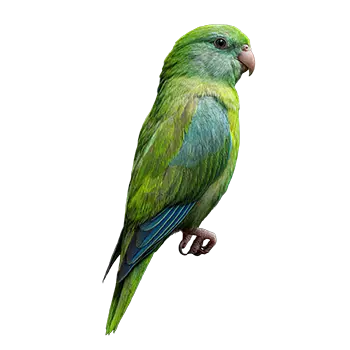

Green-Rumped Parrotlets possess an intellectual intensity that belies their diminutive stature. In the wild, these birds spend the majority of their active hours engaged in complex foraging behavior, social interaction with flock mates, and environmental exploration across diverse forest canopy habitats. Captivity eliminates most of these natural behavioral outlets, and the responsibility falls on the owner to replace them with appropriate enrichment that keeps the bird's mind and body engaged. A parrotlet without adequate enrichment is a parrotlet heading toward behavioral problems.
The consequences of insufficient enrichment in parrotlets manifest in predictable patterns. Feather-destructive behavior, excessive screaming, repetitive pacing or head-bobbing, aggression toward the owner, and a general withdrawal from interaction are all symptoms of a bird that is under-stimulated. These behaviors are not defects of temperament but responses to an environment that fails to meet the bird's cognitive and physical needs. Once established, these behavioral patterns can be difficult to reverse, making preventive enrichment far more effective than reactive intervention.
Effective enrichment for parrotlets operates on multiple dimensions simultaneously. Physical enrichment addresses the bird's need for movement, climbing, and beak exercise. Cognitive enrichment challenges the bird to solve problems, manipulate objects, and make choices. Social enrichment provides interaction with humans or compatible bird companions. Sensory enrichment introduces varied textures, sounds, and visual stimuli. The best toys and enrichment products address more than one of these dimensions at once, creating layered experiences that sustain the bird's interest over longer periods.
The scale of enrichment products must be appropriate for a bird that weighs approximately thirty grams. Toys designed for cockatiels and larger parrots are often too heavy, too large, or constructed with components that a parrotlet cannot manipulate effectively. A toy that hangs motionless when a parrotlet pulls on it provides less feedback and satisfaction than a smaller, lighter toy that responds to the bird's efforts. Size-appropriate enrichment ensures that the bird can interact meaningfully with its toys rather than simply coexisting with objects it cannot influence.