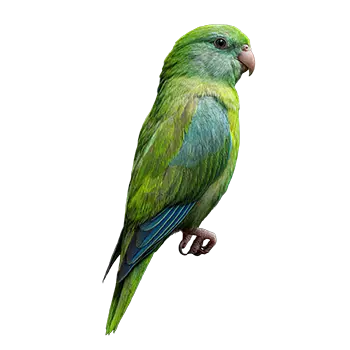

Essential Accessories Overview

Outfitting a Green-Rumped Parrotlet's living space extends well beyond selecting the cage itself. The accessories that fill and surround the enclosure determine the bird's daily comfort, physical health, and emotional wellbeing in ways that are easy to underestimate. A cage with the right dimensions but the wrong accessories can be just as problematic as one that is too small, because the bird's interaction with its environment happens through the objects within it, not through the walls that contain it.

The accessory market for companion birds is extensive, ranging from genuinely essential items to novelty products of questionable value. For parrotlet owners, navigating this market requires an understanding of what their specific bird actually needs versus what marketing suggests it wants. Parrotlets have different requirements than the budgerigars and cockatiels that dominate the small-bird market, and products designed generically for small hookbills may not address the specific behavioral and physical characteristics of parrotlets.

Durability and safety standards for parrotlet accessories follow the same principles that govern cage selection. Every item placed in or near the cage becomes a potential chewing target, perching surface, and source of environmental exposure. Materials must be non-toxic, construction must be secure enough to withstand persistent manipulation by a strong small beak, and sizing must account for the bird's diminutive feet and body. Products that pass muster for finches may be too flimsy, while those designed for larger parrots may be oversized or excessively heavy.

Investing in quality accessories from the outset is more economical than replacing cheap alternatives repeatedly. A stainless steel food cup will serve for the bird's entire life, while a plastic one may crack and need replacement every few months. A well-made natural wood perch lasts years, while a low-quality dowel splinters or accumulates bacteria in its porous grain within weeks. The initial cost difference between budget and quality accessories is modest for the small sizes that parrotlets require, making the argument for quality even more compelling.

Feeding and Watering Equipment

The dishes and dispensers used to deliver food and water have a direct impact on dietary intake, hygiene, and the owner's ability to monitor consumption patterns. Stainless steel cups are the standard recommendation for parrotlet food and water vessels. Stainless steel does not harbor bacteria in surface scratches the way plastic does, it is non-reactive and will not leach chemicals, and it withstands daily washing and periodic disinfection without degradation. Cups that attach to the cage bars with integrated brackets or screw-mount hardware are preferable to those that sit on the cage floor, where they collect droppings and debris.

Cup sizing for parrotlets should be small enough that food does not sit uneaten for extended periods, accumulating moisture and bacteria, but large enough that the bird can reach in comfortably without contorting its body. A cup diameter of approximately two inches and a depth of one to one and a half inches works well for pellets and fresh food. Some owners use even smaller cups for treats and supplements, keeping these offerings visually and physically distinct from the main food supply.

Water delivery systems present a choice between open dishes and bottle-style dispensers. Open water dishes are intuitive for the bird and easy to monitor for consumption and cleanliness, but they are vulnerable to contamination from food debris, feathers, and droppings, requiring multiple changes per day. Bottle dispensers with ball-bearing or tube-style sippers keep water clean for longer periods but require the bird to learn a new drinking technique, and they must be checked daily to ensure the mechanism is functioning and water is actually flowing.

Seed guards and splash shields are practical accessories that address the inevitable mess that accompanies parrotlet feeding. These wrap-around acrylic or fabric barriers attach to the lower portion of the cage and catch seed husks, pellet fragments, and water splashes that would otherwise scatter across the surrounding floor. For parrotlets, which are enthusiastic and messy eaters relative to their size, seed guards can significantly reduce daily cleanup time. Clear acrylic versions maintain visibility while containing debris.

Foraging-specific feeding equipment extends beyond the toy category into functional daily-use accessories. Skewer holders that allow fruits and vegetables to be impaled on a stainless steel rod, clip-mounted holders for leafy greens, and small platforms that present food in a way that requires the bird to work for it all serve the dual purpose of feeding and enrichment. These accessories encourage natural feeding behaviors and reduce the amount of food that falls to the cage floor uneaten.

Perches and Platforms

Perch selection is one of the most impactful accessory decisions for a parrotlet's long-term physical health. The feet of a captive bird spend virtually every moment gripping a perch surface, and the diameter, texture, and material of that surface directly determine whether the bird develops healthy, flexible feet or suffers from bumblefoot, arthritis, and pressure sores. A well-planned perch assortment prevents these problems through variety that exercises different foot muscles and distributes pressure across changing grip surfaces.

Natural wood branches are the gold standard for parrotlet perching because their irregular diameters, textured bark surfaces, and slight flexibility mimic the branches these birds would use in the wild. Java wood, manzanita, and dragonwood are popular commercially available options that are dense enough to resist rapid destruction while offering the surface variation that feet need. The ideal natural perch for a parrotlet varies in diameter from roughly three-eighths of an inch to three-quarters of an inch along its length, forcing the bird to adjust its grip as it moves along the branch.

Textured conditioning perches, often made from concrete, pumite, or a sandy composite, serve the dual purpose of providing a perching surface and gently filing the bird's nails and beak. These perches should be positioned as a secondary resting spot rather than a primary perch, as extended contact with abrasive surfaces can cause irritation to the foot pads. One conditioning perch per cage, placed near a food station where the bird will spend moderate but not extended periods, provides grooming benefit without overexposure.

Flat platforms and corner shelves offer a change of posture that perch-only setups do not provide. Parrotlets can rest on flat surfaces with their feet extended, which relieves the constant gripping pressure of round perches. Small wooden platforms that attach to the cage bars with wing nuts or bolts give the bird a place to sit, eat, and play with foot toys in a comfortable flat-footed stance. Some parrotlets prefer sleeping on a platform rather than a round perch, particularly older birds or those with foot sensitivity.

Rope perches made from cotton or sisal offer a flexible, slightly yielding surface that many parrotlets find comfortable. These perches can be bent into curved shapes, spirals, or angled configurations that add dimensional variety to the cage layout. The inherent flexibility of rope perches also provides mild foot exercise, as the bird must continuously adjust its grip on a surface that gives slightly underfoot. As with all rope products, these perches must be monitored for fraying and replaced before loose fibers create entanglement hazards.

Bathing Accessories

Bathing is an essential aspect of feather maintenance and behavioral wellbeing for Green-Rumped Parrotlets. In the wild, these birds bathe regularly in rain, dewdrops on leaves, and shallow water sources, and captive parrotlets retain a strong instinct to wet and preen their plumage. Regular bathing keeps feathers clean, supports the natural distribution of preening oils, reduces feather dust, and provides sensory enrichment that most parrotlets visibly enjoy.

Bath dishes designed for small birds attach to the cage door opening and provide a shallow pool of water at a convenient height. The best models have a hooded or high-backed design that contains splashing within the bath rather than spraying water across the room. For parrotlets, the bath should be shallow enough that the bird can stand comfortably in the water without its body being submerged, as forced submersion creates panic rather than pleasure. A water depth of half an inch to one inch is typically appropriate.

Misting is an alternative or supplementary bathing method that many parrotlets prefer, particularly those that are hesitant about entering standing water. A clean spray bottle set to a fine mist and aimed above the bird, allowing the droplets to settle like rain, closely replicates the natural bathing experience of a tropical forest bird. The water should be lukewarm and the misting gentle, not a direct stream aimed at the bird. Pump-action misters designed for plant care work well for this purpose, provided they have never been used with chemicals or fertilizers.

Bathing frequency depends on the individual bird's preferences and the ambient humidity of the home. Most parrotlets benefit from bathing opportunities at least three to four times per week, with daily access being ideal. In dry climates or during winter months when indoor heating reduces humidity, more frequent bathing helps prevent the dry, itchy skin that leads to feather-picking behavior. Some parrotlets self-regulate their bathing frequency when given continuous access to a bath dish, while others need gentle encouragement through misting or the sound of running water to initiate bathing behavior.

Humidity management is a related accessory category that supports feather and respiratory health. Room humidifiers placed near but not directly adjacent to the cage can maintain ambient humidity in the forty-to-sixty-percent range that tropical bird species prefer. Hygrometers, either standalone or integrated into the humidifier, allow accurate monitoring of humidity levels. For parrotlets housed in particularly dry environments, a combination of regular misting, bath access, and ambient humidity control provides comprehensive support for skin and feather health.

Lighting and Heating

Lighting is among the most underappreciated accessories in parrotlet care, despite its profound influence on hormonal regulation, vitamin D synthesis, psychological wellbeing, and visual perception. Birds perceive light differently than humans, and the standard indoor lighting that serves human needs is spectrally incomplete from an avian perspective. Full-spectrum lighting that includes UVA and UVB wavelengths addresses this gap and provides measurable health benefits for captive parrotlets.

Full-spectrum avian bulbs are specifically engineered to produce the light wavelength profile that birds require. UVB light enables the synthesis of vitamin D3 in the skin, which is essential for calcium metabolism and bone health. UVA light, which is invisible to humans but visible to birds, affects color perception, social signaling, and food recognition. A parrotlet under standard household lighting is effectively color-blind to an entire dimension of its visual world. Mounting a full-spectrum bulb above the cage, positioned so the bird can move in and out of direct exposure, transforms its visual and physiological experience.

Bulb selection and placement require attention to specifications and safety. Avian full-spectrum bulbs should produce UVB output in the range of two to five percent, similar to shade-dwelling tropical conditions. The bulb should be mounted twelve to eighteen inches from the highest perch, close enough to deliver effective UV radiation but far enough to prevent overexposure or thermal discomfort. UV output diminishes over time even if the bulb still produces visible light, so bulbs should be replaced every six to twelve months according to the manufacturer's specifications.

Photoperiod management, the regulation of how many hours of light and darkness the bird experiences each day, is critical for hormonal health. Green-Rumped Parrotlets do best with ten to twelve hours of full light followed by twelve to fourteen hours of complete darkness. Extended light exposure triggers reproductive hormone production, which can lead to chronic egg laying in hens, territorial aggression in both sexes, and general behavioral disruption. Timers on both the avian bulb and any room lighting near the cage ensure consistent photoperiods regardless of the household's daily schedule.

Supplemental heating is rarely necessary for parrotlets housed indoors in climate-controlled environments, but specific situations may call for it. Birds that are ill, very young, or elderly may benefit from a ceramic heat emitter or an infrared heat panel positioned outside the cage to provide a warm zone the bird can move toward or away from as needed. These heating elements must be thermostat-controlled to prevent overheating and positioned so the bird cannot make direct contact. Standard household space heaters with coated elements or fans that distribute dust are generally unsuitable for rooms housing birds.

Grooming Tools

Routine grooming for a Green-Rumped Parrotlet is minimal compared to many other companion animals, but the tools required for occasional maintenance should be on hand before they are needed. Nail trimming is the most common grooming task, as even birds with conditioning perches may require periodic nail maintenance if their nails grow faster than perch contact can manage. Small bird nail clippers or human nail clippers designed for infant nails are appropriately sized for the tiny nails of a parrotlet.

Styptic powder or gel is an essential first-aid supply that should be within arm's reach during any nail trimming session. Parrotlet nails are small and the quick, which contains the blood vessel, is close to the nail tip, making accidental cuts during trimming a realistic possibility. Styptic powder stops bleeding quickly by promoting coagulation at the nail tip. Cornstarch can serve as an emergency substitute but is less effective than purpose-formulated styptic products. Owners who are uncomfortable trimming nails at home can have the procedure performed by an avian veterinarian or experienced bird groomer.

Wing clipping is a personal decision that divides the avian community. Some owners clip flight feathers to prevent escape and reduce the risk of collision injuries in the home, while others maintain full flight to promote exercise, confidence, and natural behavior. If clipping is chosen, it should be performed by an experienced professional who understands the specific feather geometry of parrotlets. Improper clipping can cause the bird to fall heavily rather than glide safely, and cutting too many feathers or cutting blood feathers can cause injury and pain.

Beak maintenance is almost never required for a parrotlet with adequate chewing opportunities and a healthy diet. A bird that consistently wears down its beak through normal chewing activity should not need manual beak trimming. An overgrown or misaligned beak is typically a sign of underlying health issues such as liver disease, nutritional deficiency, or mite infestation, and the appropriate response is a veterinary evaluation rather than cosmetic trimming. Conditioning perches and cuttlebone provide ongoing passive beak maintenance that keeps the beak naturally shaped.

A gram scale accurate to one-tenth of a gram is arguably the single most important monitoring tool in a parrotlet owner's kit. Daily weigh-ins provide the earliest possible detection of health changes, as weight loss is often the first measurable sign of illness in birds that instinctively hide symptoms. A healthy Green-Rumped Parrotlet typically weighs between twenty-eight and thirty-six grams, and a loss of even two to three grams warrants close observation and potentially a veterinary consultation. Training the bird to step onto the scale voluntarily makes weighing a stress-free daily ritual.

Cleaning and Maintenance Supplies

Maintaining a hygienic environment for a Green-Rumped Parrotlet requires a dedicated set of cleaning supplies that are both effective and bird-safe. The avian respiratory system is extraordinarily sensitive to chemical vapors, making many common household cleaning products dangerous to use in the same room as a bird. Building a cleaning kit specifically for bird care ensures that the owner always has appropriate products available without needing to evaluate safety on a case-by-case basis.

Bird-safe cage cleaners are formulated to remove organic waste, food residue, and droppings without leaving toxic residues or producing harmful fumes. Enzymatic cleaners designed for avian use break down organic material at a molecular level and are particularly effective on dried droppings and food stains. White vinegar diluted to a fifty-percent solution with water serves as a versatile, inexpensive, and bird-safe general-purpose cleaner that cuts through grease and mineral deposits. Regardless of the product used, thorough rinsing and drying before the bird contacts any cleaned surface is essential.

Scrub brushes in multiple sizes are indispensable tools for cage maintenance. A large stiff-bristled brush handles cage bar scrubbing and tray cleaning, while smaller bottle brushes and detail brushes reach into cup holders, tube feeders, and cage joints where debris accumulates. Dedicated brushes that are used only for bird cage cleaning prevent cross-contamination from other household cleaning tasks. Replacing brushes when bristles become splayed or stained beyond cleaning maintains their effectiveness.

Air quality management supplies address the ongoing challenge of feather dust, dander, and airborne particles that bird keeping introduces to the home environment. HEPA air purifiers designed for rooms housing birds capture fine particulates that settle on surfaces and enter human and avian respiratory systems. These purifiers should use true HEPA filtration rather than ionization, as some ionic purifiers produce trace ozone that is harmful to birds. Positioning the purifier in the same room as the cage but not directly adjacent prevents drafts while maintaining effective air cleaning.

Cage liners and substrate supplies should be purchased in quantity to ensure they are always available for daily changes. Rolls of plain newsprint, unprinted butcher paper, or parchment paper cut to tray size provide clean, disposable liners that make daily tray changes a thirty-second task. Pre-cut cage liner pads are available for standard tray sizes and offer additional convenience at a higher per-unit cost. Whichever liner is chosen, maintaining a ready supply prevents the temptation to skip daily changes when supplies run low, which is a common shortcut that quickly compromises cage hygiene.

Always consult a qualified professional before making any health-related decisions. This content is provided for informational reference only and should not replace professional guidance specific to your animal.