
Housing Requirements

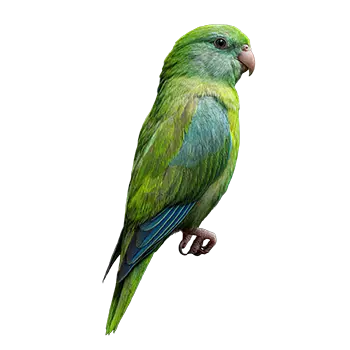
Green-Rumped Parrotlets may be among the smallest parrots in the world, but their housing needs reflect the energy and personality of a much larger bird. These parrotlets are highly active, spending much of their waking hours climbing, hopping between perches, and investigating every reachable surface within their enclosure. A cage that merely contains the bird without allowing room for meaningful movement and exploration will lead to frustration, feather-destructive behavior, and a diminished quality of life that no amount of out-of-cage time can fully compensate for.

The misconception that small birds need small cages is one of the most persistent and damaging ideas in avian husbandry. A Green-Rumped Parrotlet confined to a cage designed for a single finch or canary will quickly demonstrate its dissatisfaction through repetitive pacing, bar chewing, and territorial aggression. These behaviors are not personality flaws but direct responses to inadequate space. The cage should be thought of as the bird's home territory, and it should be large enough for the bird to fly short distances between perches, forage at multiple stations, and retreat to a quiet corner when it wants privacy.

Beyond size, the overall design philosophy of the cage matters. Parrotlets are horizontal flyers rather than vertical climbers like some larger parrots, so cages that emphasize width and depth over extreme height are generally more functional. A tall, narrow cage may look impressive but provides less usable flight space than a wider, moderately tall enclosure. The best cages for parrotlets offer generous horizontal dimensions while still providing enough vertical space for varied perch heights and climbing opportunities.

Durability is a practical consideration that many new parrotlet owners underestimate. Despite their tiny size, parrotlets have remarkably strong beaks relative to their body mass, and they will test every joint, latch, and weld in their cage with persistent determination. Flimsy construction that might contain a finch will not hold up to a parrotlet's exploratory chewing, and poorly secured doors and feeding ports become escape routes for these clever, mechanically curious birds.

Cage Size and Bar Spacing

The minimum recommended cage dimensions for a single Green-Rumped Parrotlet are twenty-four inches wide by eighteen inches deep by twenty-four inches tall, though larger is always preferable when space permits. For a pair of parrotlets, the minimum footprint should increase to at least thirty inches wide by eighteen inches deep by thirty inches tall. These minimums assume the bird receives substantial daily out-of-cage time. For parrotlets that spend the majority of their day in the enclosure, larger dimensions, approaching those recommended for cockatiels, will significantly improve the bird's quality of life.

Bar spacing is arguably the most critical safety specification when selecting a cage for a parrotlet. The recommended bar spacing for Green-Rumped Parrotlets is three-eighths of an inch to no more than half an inch. Bars spaced wider than half an inch create a genuine entrapment hazard, as the bird's head can fit through the gap but the body cannot follow, potentially resulting in injury or strangulation. This narrow spacing requirement immediately eliminates many cages marketed for medium parrots, even if their overall dimensions would otherwise be appropriate.

Bar orientation affects the cage's functionality for climbing and exercise. Horizontal bars on at least two sides of the cage allow the parrotlet to climb the walls easily, which is a natural and important form of exercise for these birds. Cages with exclusively vertical bars make climbing difficult and limit the bird's ability to move around the cage in three dimensions. Many quality small-parrot cages feature horizontal bars on the sides with vertical bars on the front and back, which provides a good balance.

Bar gauge, meaning the thickness of the wire itself, should be sufficient to resist bending and chewing damage. Parrotlets cannot bend heavy-gauge wire, but thin wire designed for finches or canaries may deform under persistent beak pressure, eventually creating sharp edges or gaps. A bar gauge of approximately two to three millimeters provides adequate strength without making the cage excessively heavy. Welded construction is preferable to bars joined with clips or crimps, which can loosen over time and create potential injury points.

Cage Materials and Construction

The material composition of a bird cage directly impacts both the safety and longevity of the enclosure. Powder-coated steel is the standard material for quality bird cages and is generally the best choice for parrotlets. The powder coating provides a durable, non-toxic finish that resists rust and is easy to clean. When evaluating powder-coated cages, look for even, chip-free coating on all surfaces including welds and joints, as exposed metal can rust and chipped coating can be ingested during chewing.

Stainless steel cages represent the premium end of the market and offer superior durability, corrosion resistance, and safety. These cages will outlast the bird and require minimal maintenance beyond regular cleaning. The primary drawback is cost, as stainless steel cages typically command prices three to five times higher than comparable powder-coated models. For owners who plan to keep parrotlets for many years, the long-term value proposition of stainless steel is strong, as replacement costs for lower-quality cages can accumulate over the bird's fifteen-to-twenty-year lifespan.

Certain materials must be avoided entirely. Zinc-coated wire, sometimes called galvanized wire, poses a serious toxicity risk. Birds that chew on zinc-coated bars can develop zinc poisoning, a condition that causes lethargy, digestive disturbance, and potentially organ damage. Older cages and hardware-store wire are particularly likely to be zinc-coated. Lead-containing solders, paints, and plating materials are similarly dangerous. Any cage of unknown origin or vintage should be tested for zinc and lead before housing a bird.

The cage base and tray system deserves careful evaluation. A removable tray that slides out for cleaning without requiring the bird to be disturbed is a near-essential feature for daily maintenance. The tray should be deep enough to contain substrate material and prevent seed husks and feather debris from scattering across the floor. A grate above the tray keeps the bird separated from its droppings and discarded food, which is important for hygiene, though some owners prefer to remove the grate and use a flat-bottomed setup with appropriate substrate for more natural foraging behavior.

Door design is a frequently overlooked construction detail that significantly affects daily usability. The main door should be large enough to allow hands-in access for retrieving the bird, changing perches, and cleaning interior surfaces without contorting through a small opening. Guillotine-style doors that slide upward can fall and injure the bird if the mechanism fails, making swing-open or drop-down doors preferable. All doors should have secure latches that the bird cannot open independently, as parrotlets are adept at figuring out simple hook and slide mechanisms.

Interior Layout and Perching

The interior arrangement of a parrotlet cage is as important as the cage itself. A well-designed interior provides varied perching options at multiple heights, clear flight paths between perches, and designated areas for food, water, and rest. Cluttering the cage with too many accessories impedes movement and negates the benefit of having chosen a spacious enclosure. The goal is a thoughtfully organized space that encourages natural behaviors without creating obstacles.

Perch variety is essential for foot health. Parrotlets that spend all their time gripping a single perch diameter develop pressure sores and joint stiffness. The cage should contain at least three to four perches of different diameters and materials. Natural wood branches with irregular shapes and varying thickness are ideal primary perches, as they exercise different foot muscles with each grip adjustment. Manzanita, dragonwood, and java wood are popular choices that are safe for birds and resistant to chewing damage. Dowel perches can be included as supplementary options but should not be the only perch type available.

Perch placement requires strategic thinking. Perches should be positioned at different heights to encourage climbing and short flights, but not so close together that the bird can step from one to the next without any physical effort. At least one perch should be placed high in the cage as a sleeping and security roost, while lower perches can be positioned near food and water stations for convenient access during feeding. Avoid placing perches directly above food or water dishes, as droppings will contaminate the contents below.

The sleeping arrangement deserves specific attention. Many parrotlets prefer to sleep in a covered, semi-enclosed space rather than on an open perch. Small bird huts, coconut shell hideaways, or fabric snuggle tents provide the sense of security that these cavity-nesting birds instinctively seek. However, some parrotlets, particularly hens, may become hormonally stimulated by enclosed sleeping spaces, leading to chronic egg laying. Owners should monitor their bird's behavior and remove the sleep enclosure if hormonal signs develop, substituting a high corner perch with a cage cover for nighttime darkness.

Food and water station placement affects both hygiene and the bird's willingness to eat and drink regularly. Dishes should be positioned at a comfortable height where the bird does not need to descend to the cage floor to access them, as floor feeding can feel insecure. Stainless steel cups that attach to the cage bars are preferable to plastic dishes, which harbor bacteria in scratches and may be chewed apart. Separate stations for pellets, fresh food, and water prevent cross-contamination and make it easier to monitor intake of each dietary component.

Substrate and Cleaning

The choice of cage substrate, or cage liner, affects both daily maintenance burden and the bird's respiratory health. Paper-based substrates are the safest and most practical option for parrotlet cages. Plain newsprint, unprinted butcher paper, or paper towels laid flat on the cage tray provide a clean surface that is easy to inspect for abnormal droppings, which is an important daily health monitoring practice. These materials can be changed daily with minimal effort and cost.

Certain substrate materials commonly sold for birds should be avoided. Corn cob bedding, while absorbent, conceals droppings that make health monitoring difficult and promotes fungal and bacterial growth when wet. Cedar and pine shavings release aromatic phenols that are irritating to avian respiratory systems and have been associated with chronic respiratory problems in birds housed over them long-term. Walnut shell substrate poses an ingestion hazard and, like corn cob, obscures droppings from visual inspection.

A structured daily cleaning routine is the foundation of cage hygiene. Food and water dishes should be washed with hot water and mild dish soap every day, with a thorough scrubbing to remove biofilm that accumulates on stainless steel and ceramic surfaces. The cage tray liner should be replaced daily, and any food debris or droppings that have accumulated on cage bars, perches, or toys should be wiped down. This daily routine takes only a few minutes but dramatically reduces bacterial and fungal loads within the enclosure.

Weekly deep cleaning involves removing all accessories, perches, and dishes from the cage and scrubbing the cage itself with a bird-safe disinfectant or a solution of white vinegar and water. All perches and toys should be inspected for damage and cleaned individually. Natural wood perches can be scrubbed with a stiff brush and allowed to dry completely before returning them to the cage, as damp wood promotes mold growth. Rope and fabric accessories should be checked for fraying and loose threads that could entangle toes.

Monthly or quarterly deep sanitization of the entire cage, including disassembly of removable components, helps address buildup in joints, corners, and crevices that daily and weekly cleaning may miss. Some owners rotate between two sets of accessories, allowing one set to be thoroughly cleaned and dried while the other is in use. This approach ensures that every item in the cage is regularly maintained without leaving the bird without essential furnishings during cleaning.

Placement and Environment

Where a parrotlet cage is placed within the home has profound effects on the bird's sense of security, social engagement, and physical health. The ideal location provides visual access to household activity without placing the bird in the center of high-traffic chaos. A position against a wall or in a corner gives the bird a sense of security on at least one or two sides while still allowing it to observe and interact with family members. Placing the cage in an isolated room defeats the social nature of these birds, while putting it in the busiest intersection of the home creates stress.

Temperature stability is a fundamental environmental requirement. Green-Rumped Parrotlets are tropical birds that thrive in ambient temperatures between sixty-five and eighty degrees Fahrenheit. The cage should never be positioned near heating vents, radiators, or fireplaces where temperature fluctuations can be extreme, nor near exterior doors or single-pane windows where cold drafts occur. Air conditioning vents that blow directly onto the cage can cause chilling even when the room temperature is appropriate. The goal is a location with consistent, moderate temperatures throughout the day and night.

Light exposure influences the bird's hormonal cycles, sleep quality, and overall wellbeing. Natural daylight is beneficial but direct, unfiltered sunlight through a window can overheat a caged bird that cannot move to shade. The cage should receive indirect natural light for several hours daily, supplemented by full-spectrum lighting if the room does not receive adequate daylight. A consistent photoperiod of ten to twelve hours of light and twelve to fourteen hours of darkness supports normal hormonal regulation and prevents the chronic egg-laying problems that extended light exposure can trigger in hens.

Airborne hazards in the home environment deserve careful consideration when choosing a cage location. Kitchens are dangerous locations for bird cages due to cooking fumes, overheated nonstick cookware that releases polytetrafluoroethylene gas, aerosol sprays, and temperature swings. Rooms where candles, incense, or air fresheners are regularly used expose the bird to volatile organic compounds that can damage their highly efficient respiratory systems. The avian respiratory tract is extraordinarily sensitive to airborne irritants, and chronic low-level exposure to household chemicals can cause cumulative lung damage that may not become apparent until serious disease has developed.

Travel Carriers and Secondary Enclosures

Every parrotlet owner needs a dedicated travel carrier for veterinary visits, emergencies, and transport situations. A carrier designed for small birds should be lightweight, well-ventilated, and secure enough to prevent escape during the stress of travel. Hard-sided carriers with transparent fronts allow the bird to see its surroundings while providing physical protection, and they are easier to clean than soft-sided alternatives. The carrier should have a secure latch mechanism and a removable perch positioned low enough that the bird can grip it without being jostled against the ceiling during vehicle movement.

Carrier sizing for parrotlets follows a different logic than cage sizing. While the cage should be as spacious as possible, the travel carrier should be compact enough to feel secure without being so cramped that the bird cannot turn around or adjust its position. A carrier approximately twelve inches long by eight inches wide by ten inches tall is appropriate for a single parrotlet. Larger carriers designed for cockatiels or small conures can leave a parrotlet feeling exposed and insecure, and the extra space allows more movement during transport, which increases the risk of injury during sudden stops or turns.

Secondary enclosures serve important functions beyond travel. A smaller cage or playpen in a different room provides variety during daily out-of-cage time and gives the bird a safe retreat when the primary cage is being cleaned. Some owners maintain a sleep cage in a quieter room separate from the daytime living cage, which can be beneficial for ensuring the bird receives adequate, undisturbed rest in households with late-evening activity. The secondary enclosure need not be as elaborately equipped as the primary cage but should include basic perching, food, and water access.

Emergency preparedness should include a carrier that can be grabbed and packed quickly during evacuations. The carrier should be stored in an accessible location with a small emergency supply kit that includes a water bottle, a few days' worth of pellets, a lightweight cage cover, and basic first-aid supplies. Parrotlet owners in areas prone to natural disasters, power outages, or extreme weather events should have a plan for maintaining appropriate temperatures during extended power failures, which may include chemical hand warmers that can be placed near but not inside the carrier.

Outdoor enclosures and aviaries offer parrotlets access to fresh air and natural sunlight but require careful design for safety. The enclosure must be predator-proof, with secure mesh that prevents access by cats, hawks, snakes, and other predators. Bar spacing must meet the same standards as indoor cages. The enclosure should include shaded areas where the bird can escape direct sun, and it should never be used unsupervised. Even in temperate climates, Green-Rumped Parrotlets should not be left outdoors overnight due to temperature drops and nocturnal predator activity.

Always consult a qualified professional before making any health-related decisions. This content is provided for informational reference only and should not replace professional guidance specific to your animal.