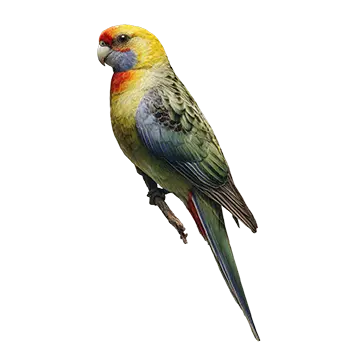

The Role of Technology in Avian Care

Technology has transformed the landscape of companion bird care over the past decade, offering tools that allow keepers to monitor, manage, and optimize their Green Rosella's environment with a precision that was previously impossible outside of professional aviculture and veterinary facilities. For a species like the Green Rosella, which is adapted to the specific climate conditions of Tasmania and whose health depends on environmental consistency, technology provides an objective layer of oversight that supplements the keeper's observational skills.

The value of tech in bird care lies not in replacing attentive ownership but in filling the gaps that human attention cannot cover. No keeper can watch their bird continuously, maintain awareness of ambient temperature and humidity around the clock, or detect gradual changes in behavior or weight that develop over weeks. Well-chosen monitoring devices capture data continuously, alert to threshold breaches, and create records that reveal trends invisible to day-to-day observation. This is particularly relevant for Green Rosellas, whose instinct to conceal illness means that by the time symptoms become visually obvious, a health problem may have been developing for days or weeks.

The tech products most relevant to Green Rosella care fall into several functional categories: visual monitoring through cameras, environmental sensing through temperature and humidity monitors, air quality management, digital health tracking through scales and record-keeping tools, and automated lighting and environmental control. Not every keeper needs every category, and the decision about what to adopt should be guided by the specific care challenges of the individual setup rather than a desire to acquire technology for its own sake.

Cost-effectiveness varies widely across the avian tech market. Some of the most useful devices, such as digital thermometer-hygrometers and basic gram scales, are inexpensive and deliver immediate practical value. Others, including networked camera systems and smart home environmental controllers, represent larger investments that are more justified for keepers with complex setups, multiple birds, or work schedules that keep them away from home for extended periods.

Cameras and Visual Monitoring

Pet cameras have become one of the most widely adopted tech tools among bird owners, and for good reason. A camera positioned to observe the Green Rosella's cage or aviary provides real-time visual access to the bird's behavior, activity level, and general condition from anywhere with an internet connection. For keepers who work outside the home, travel occasionally, or simply want to check on their bird during the day, a camera delivers peace of mind and early warning capability that no other tool can replicate.

When selecting a camera for bird monitoring, resolution and frame rate matter more than for typical home security applications. Bird behavior includes rapid movements, subtle postural changes, and fine details like feather condition and eye brightness that low-resolution cameras cannot capture adequately. A camera offering at least 1080p resolution with a smooth frame rate provides sufficient detail to assess the bird's behavior and physical appearance remotely. Night vision capability is valuable for monitoring the bird during its dark rest period without introducing light that disrupts sleep.

Two-way audio is a feature that requires careful consideration for bird monitoring. While some keepers use the speaker function to talk to their bird remotely, unexpected audio from a camera speaker can startle a nervous rosella and create stress associations with the device. If two-way audio is used, it should be introduced gradually and reserved for calm, reassuring communication rather than sudden attempts to interact with a visibly distressed bird. The microphone function, which allows the keeper to hear the bird, is more universally useful, as it captures vocalization patterns, alarm calls, and environmental sounds that provide context for observed behavior.

Camera placement should provide a clear view of the primary living area, including food and water stations, favorite perches, and the cage floor. A wide-angle lens or a camera with pan-and-tilt capability reduces blind spots. The camera should be mounted securely outside the bird's reach, as a curious Green Rosella will investigate and chew any device within beak range. Wireless cameras simplify placement but require reliable connectivity; a camera that frequently drops its connection defeats the monitoring purpose. Wired cameras offer more consistent connectivity but may require creative cable routing to keep wiring away from the bird.

Environmental Sensors

Temperature and humidity are the two environmental parameters most critical to Green Rosella health, and digital sensors that track these values continuously provide data that occasional manual checks with a household thermometer cannot match. Green Rosellas evolved in Tasmania's temperate climate, where temperatures range widely but rarely reach the sustained heat that tropical environments produce. The species thrives in ambient temperatures between 55 and 78 degrees Fahrenheit and is more tolerant of cool conditions than most parrots kept in captivity, but sustained temperatures above 85 degrees or rapid temperature fluctuations can cause heat stress and respiratory distress.

Digital thermometer-hygrometer units designed for use in reptile and bird enclosures are inexpensive, widely available, and accurate enough for practical avian husbandry. Basic models display current temperature and humidity readings, while more advanced units record minimum and maximum values over a set period, providing a snapshot of the environmental range the bird experiences. Units with remote probes allow the sensor to be placed inside or immediately adjacent to the cage while the display unit is positioned for easy reading elsewhere in the room.

Smart environmental sensors connected to home Wi-Fi networks represent the next tier of monitoring capability. These devices log temperature and humidity data continuously, transmit it to a smartphone app, and generate alerts when readings exceed user-defined thresholds. For keepers who leave their Green Rosella alone during work hours or who maintain outdoor aviaries subject to weather variability, these alerts can provide critical early warning of conditions that require intervention, such as a heating system failure during winter or a heat spike during summer.

Humidity management is often underappreciated in avian care. Indoor environments, particularly those heated during winter, can drop to humidity levels well below the 40 to 60 percent range that supports healthy respiratory mucosa and feather condition. A hygrometer reading consistently below 30 percent indicates a need for humidity supplementation, whether through a room humidifier, increased bathing frequency, or misting. Conversely, consistently high humidity above 70 percent promotes mold and bacterial growth on cage surfaces, substrates, and food, requiring improved ventilation or dehumidification. Continuous sensor data reveals these patterns far more reliably than occasional spot checks.

Air Quality Monitors

Air quality is a dimension of avian care that has gained attention as awareness of avian respiratory sensitivity has grown. Birds have a uniquely efficient respiratory system featuring air sacs that process air in a unidirectional flow, extracting oxygen more completely than mammalian lungs. This efficiency, while advantageous for flight, also means that airborne toxins, particulates, and irritants are delivered to the gas exchange surfaces with ruthless thoroughness. Substances that cause mild irritation in humans can cause severe illness or rapid death in birds, making air quality monitoring a genuinely valuable investment for Green Rosella keepers.

Consumer-grade air quality monitors capable of detecting particulate matter, volatile organic compounds, and carbon dioxide levels are now available at price points accessible to most bird owners. These devices provide real-time readings of the air the bird is breathing and can reveal pollution sources that the keeper is unaware of. Common household sources of avian air pollution include nonstick cookware fumes, scented candles, aerosol sprays, cleaning product vapors, wood-burning fireplaces, and even new furniture and carpet that off-gas formaldehyde and other volatile compounds.

Particulate matter monitoring is particularly relevant in homes with birds. Feather dust, dander, and dried droppings particles contribute to the ambient particulate load in any room housing a bird, and this background dust can compound the impact of other airborne irritants. An air quality monitor that tracks PM2.5 levels, the fine particle fraction most relevant to respiratory health, helps the keeper assess whether ventilation and air filtration are adequate. Sustained PM2.5 readings above 25 micrograms per cubic meter in the bird room suggest that additional air purification is advisable.

Air purifiers equipped with HEPA filtration are the primary tool for managing airborne particulates in bird rooms. A purifier rated for the room size, running continuously during waking hours, captures feather dust, dander, and household particulates before they accumulate. Ionizer-based purifiers and ozone-generating units should be strictly avoided in rooms housing birds, as ozone is a powerful respiratory irritant at concentrations that some consumer devices produce. Activated carbon filtration, often included in combination HEPA-carbon units, addresses volatile organic compounds that particulate filters do not capture.

Digital Scales and Health Tracking

A digital gram scale is arguably the single most important piece of technology in the Green Rosella keeper's toolkit, and its value far exceeds its modest cost. Regular weighing provides the most sensitive and objective indicator of a bird's health status, detecting changes in body condition well before they become visible to the eye. A Green Rosella that has lost even five percent of its body weight is potentially in the early stages of illness, and catching that signal early enough to seek veterinary care can be the difference between a routine treatment and a critical intervention.

The scale should be accurate to at least one gram and have a capacity sufficient for the bird's weight plus the perch or container used during weighing. A healthy adult Green Rosella typically weighs between 120 and 170 grams, so a kitchen scale with a one-gram resolution and a capacity of at least 500 grams is entirely adequate. The weighing platform should be large enough to accommodate a T-perch or small flat perch that the bird can stand on comfortably, and the tare function should zero out the weight of the perch so that only the bird's weight is displayed.

Establishing a weighing routine takes patience but pays dividends over the bird's entire life. Weighing at the same time each day, ideally first thing in the morning before the bird eats, produces the most consistent and comparable data. Training the bird to step onto the scale perch voluntarily, using positive reinforcement, makes the process quick and stress-free for both bird and keeper. Most Green Rosellas can be trained to step onto a scale perch within a few sessions if the process is introduced gently and associated with treats.

Recording weight data over time transforms individual readings into a meaningful health narrative. A simple spreadsheet, a dedicated notebook, or one of several avian health tracking apps designed for this purpose allows the keeper to track weight trends, correlate changes with molt cycles, dietary adjustments, or behavioral shifts, and present objective data to the veterinarian during health check visits. A weight record that shows a gradual downward trend over two or three weeks conveys information that no single-day reading or visual assessment can match.

Smart Lighting and Automation

Automated lighting systems offer a practical solution to one of the most common environmental management challenges in indoor bird keeping: maintaining a consistent photoperiod. Green Rosellas require a stable light-dark cycle of approximately ten to twelve hours of light and twelve to fourteen hours of darkness for proper circadian regulation, hormonal balance, and behavioral stability. Manual light management, where the keeper turns lights on and off at appropriate times, inevitably introduces inconsistency due to schedule variations, forgetfulness, and the practical difficulties of maintaining identical timing seven days a week.

Smart plugs and programmable outlet timers convert any lamp or lighting fixture into an automated system. A full-spectrum avian light fixture connected to a timer can be programmed to turn on and off at the same times every day, providing the bird with the predictable light cycle it needs regardless of the keeper's schedule. Basic mechanical timers are inexpensive and reliable. Smart plugs that connect to home Wi-Fi networks offer additional capabilities, including remote schedule adjustment, gradual dimming programs that simulate dawn and dusk transitions, and integration with broader home automation ecosystems.

Gradual light transitions are more than a luxury feature. In the wild, light levels change progressively at dawn and dusk, giving the bird's visual and hormonal systems time to adjust. An abrupt transition from full darkness to bright light, as happens with a standard on-off timer, can startle a sleeping rosella and trigger a stress response. Smart lighting products that support programmable ramp-up and ramp-down periods of fifteen to thirty minutes create a more naturalistic and less disruptive transition that many birds visibly prefer.

Seasonal adjustment of the light schedule is possible with smart lighting but should be approached conservatively. Mild variation that approximates natural seasonal photoperiod changes, perhaps shifting by thirty to sixty minutes between summer and winter schedules, can support natural hormonal cycling. However, dramatic photoperiod manipulation can trigger unwanted breeding behavior, hormonal aggression, or chronic egg-laying in female birds. Most keepers of pet Green Rosellas are best served by a stable year-round schedule with only minor seasonal variation.

Connectivity and Data Integration

As the number of tech devices in a bird room grows, the question of how these tools communicate with each other and with the keeper becomes increasingly relevant. A camera, an environmental sensor, an air quality monitor, and a smart lighting system each generate useful data independently, but the real power of a connected system emerges when these data streams can be viewed together and when devices can trigger each other based on conditions.

Home automation platforms provide the integration layer that connects individual devices into a coordinated system. A temperature sensor that detects a rise above 82 degrees can trigger a notification to the keeper's phone and simultaneously activate a fan or adjust a thermostat. A lighting timer can synchronize with a camera's night vision mode so that the camera switches automatically when the lights turn off. These automated responses ensure that environmental conditions are managed even when the keeper is not actively monitoring.

Data logging across devices creates a comprehensive picture of the bird's environment over time. Reviewing a week or month of synchronized temperature, humidity, and lighting data alongside notes on the bird's behavior, appetite, and weight can reveal correlations that are impossible to detect from daily observation alone. A bird that becomes irritable every afternoon might be responding to a temperature spike when the sun hits a particular window. A bird whose appetite drops in winter might be affected by humidity levels that the keeper had not thought to check.

Privacy and security considerations apply to any internet-connected device in the home. Cameras with cloud-based storage and remote access transmit video over the internet, and poorly secured devices can be accessed by unauthorized parties. Basic security practices, including changing default passwords, enabling two-factor authentication where available, and keeping device firmware updated, reduce these risks to manageable levels. For keepers who prefer to avoid cloud-connected cameras entirely, local-storage camera systems that record to an on-premises memory card offer monitoring and recording capability without transmitting data externally.

The temptation to over-engineer a bird room with technology should be tempered by practical judgment. Every device requires setup, maintenance, firmware updates, and eventual replacement. A system so complex that it demands constant attention from the keeper diverts time and energy from the direct interaction and hands-on care that remain the foundation of good bird keeping. Technology should simplify care routines and extend the keeper's awareness, not replace the attentive, engaged relationship between human and bird that no device can replicate.

Always consult a qualified professional before making any health-related decisions. This content is provided for informational reference only and should not replace professional guidance specific to your animal.