
Housing Requirements

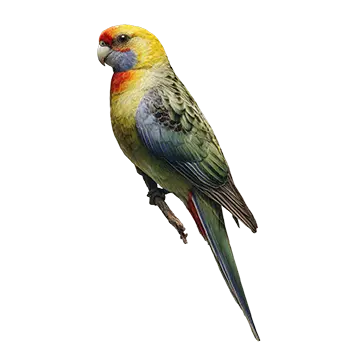
The Green Rosella is the largest member of the rosella genus, measuring fourteen to fifteen inches from head to tail tip, and it is among the most active and flight-oriented parrots commonly kept in aviculture. These two characteristics together establish the fundamental housing requirement: this species needs significantly more space than its body size alone might suggest. A cage that would comfortably house a similarly sized but more sedentary parrot will leave a Green Rosella cramped, frustrated, and prone to the behavioral and health problems that arise from confinement stress.

In their native Tasmanian habitat, Green Rosellas range across considerable distances daily, flying between foraging sites in open woodland, forest edges, orchards, and alpine scrubland. Their flight style is fast, direct, and undulating, requiring open space to execute. This natural movement pattern means that horizontal flight distance within the enclosure is more important than vertical height, though height should not be neglected entirely. An enclosure that permits at least short sustained flights rather than merely hopping between perches will produce a markedly healthier and calmer bird.

Temperature tolerance is another factor that shapes housing decisions for this species. Green Rosellas evolved in one of the cooler climates occupied by any parrot, with their range extending into Tasmanian alpine zones where snowfall occurs. They are considerably more cold-hardy than most parrots kept in captivity and actually fare worse in persistently warm environments than in cool ones. Housing that allows access to cooler air, whether through outdoor aviary placement in temperate climates or through temperature management in indoor settings, aligns with the species' physiological preferences.

Ventilation deserves careful attention regardless of enclosure type. Respiratory problems are a leading cause of illness in captive parrots, and stagnant air laden with dust, dander, and volatile compounds from cleaning products or nearby kitchens compounds this risk significantly. The enclosure location should allow for regular air exchange without exposing the bird to direct drafts, and the cage or aviary design should not impede natural airflow around the bird's living space.

Indoor Cage Sizing and Selection

For keepers who house their Green Rosella indoors, the minimum recommended cage dimensions are approximately 36 inches long by 24 inches deep by 36 inches high, though larger is always better and a flight cage measuring 48 to 60 inches in length is strongly preferred. The critical dimension is horizontal length, as this provides the flight path that rosellas need for basic exercise. A tall, narrow cage that prioritizes height over length is a poor fit for this species regardless of its total cubic volume.

Bar spacing should fall between half an inch and five-eighths of an inch. This range is wide enough to provide good visibility and ventilation while narrow enough to prevent the bird from wedging its head between bars, which can cause injury or death. Bar orientation matters less than spacing, but horizontal bars on at least two sides of the cage give the bird climbing surfaces that vertical bars do not. Cage wire should be constructed from powder-coated steel, stainless steel, or wrought iron, avoiding zinc-coated or galvanized wire that can cause heavy metal poisoning when chewed.

Cage shape should be rectangular. Round and domed cages, while sometimes marketed as attractive, eliminate usable corner space where birds naturally feel secure and create visual distortion that can disorient the occupant. A straightforward rectangular cage with a flat or gently peaked top maximizes usable interior volume and simplifies the placement of perches, toys, and food stations.

Door design influences daily management significantly. A cage with multiple large access doors simplifies cleaning, food and water changes, and the placement of enrichment items. A large front door that doubles as a landing platform when opened can serve as a supervised exit point for out-of-cage time. Seed guards, slide-out trays, and grate floors all contribute to easier maintenance, and their presence or absence can make the difference between a cage that encourages consistent cleaning and one that makes upkeep burdensome enough to be neglected.

Outdoor Aviaries

An outdoor aviary represents the gold standard in Green Rosella housing and aligns most closely with the species' behavioral and physiological needs. The ideal aviary for a pair of Green Rosellas measures at least ten feet in length, four feet in width, and six feet in height, providing genuine flight space and room for environmental complexity. Larger aviaries permit more naturalistic behavior and reduce the territorial tension that can arise between paired birds or between a rosella and other aviary inhabitants.

Construction materials must balance durability, safety, and weather resistance. Welded wire mesh with half-inch to five-eighths-inch spacing, galvanized after welding to ensure full joint coverage, is the standard aviary cladding material. However, new galvanized wire should be weathered or treated with a vinegar wash before bird exposure to reduce the surface zinc that can flake off and be ingested during the first months of use. Alternatively, stainless steel mesh eliminates the zinc concern entirely but at substantially higher cost. The frame structure can be constructed from treated timber, aluminum, or powder-coated steel, provided that the bird cannot access any treated wood surfaces for chewing.

Shelter is a non-negotiable component of any outdoor aviary. At least one-third of the aviary's roof should be solid, providing protection from rain, direct sun, and aerial predators. An enclosed section at one end of the aviary, often called a night shelter or sleeping quarters, gives the bird a retreat from weather extremes, wind, and nighttime disturbances. This sheltered area is typically where nest boxes, primary perches, and food stations are located, ensuring the bird can access essentials without exposure to adverse conditions.

Predator protection is critical in outdoor aviary design. The aviary should be constructed on a solid base, whether a concrete slab, paving stones, or heavy-gauge wire mesh buried beneath a substrate layer, to prevent digging predators from accessing the enclosure from below. Wire mesh must be robust enough to resist the claws and teeth of local predators, and double-wiring, where a second layer of mesh is installed with a small gap between layers, provides additional security by preventing predators from reaching through to contact the bird. Padlocked access doors deter both predators and theft.

Green Rosellas' cold tolerance makes them well-suited to outdoor aviary life in temperate and even cool climates, but they still require protection from sustained wind chill, driving rain, and temperature extremes below freezing. Aviaries in colder regions benefit from insulated night shelters and, in some cases, low-wattage ceramic heat emitters positioned to warm the sleeping area without creating fire risk. In warmer climates, shade provision and misting systems during hot weather are more important, as the species is less tolerant of sustained heat than many tropical parrots.

Perches and Interior Layout

The internal layout of the Green Rosella's enclosure determines how effectively the bird can use the available space. Perch placement is the single most influential factor in interior design, as perches define the bird's travel routes, resting spots, and activity stations. A well-perched enclosure encourages movement, exercise, and natural postural variety, while a poorly designed layout can render even a large cage functionally cramped.

Natural wood branches are the preferred perch material for Green Rosellas. Branches from bird-safe trees such as eucalyptus, apple, willow, and manzanita provide varying diameters, irregular surfaces, and bark texture that promote healthy foot condition and prevent the pressure sores that develop from standing on uniform dowel perches. The diameter of primary perches should vary between half an inch and one and a quarter inches, requiring the bird's foot to adjust its grip as it moves from one perch to another. This variation exercises the foot muscles and tendons in a way that single-diameter perches cannot.

Perch placement should create clear flight paths through the longest axis of the enclosure. Avoid cluttering the interior with so many perches, toys, and accessories that the bird cannot spread its wings and fly or glide from one end to the other. Two or three primary perches positioned at different heights and orientations, supplemented by a few secondary perches near food and water stations, typically provides sufficient resting and activity options without obstructing movement.

Concrete and mineral perches can serve a specific maintenance function by gently filing the nails and beak as the bird walks and grips, reducing the frequency of manual grooming. These should be placed as secondary perches near food dishes rather than as primary resting spots, since their hard, uniform surfaces are uncomfortable for extended standing. Rope perches offer a flexible alternative that some rosellas enjoy, though fraying rope fibers must be trimmed regularly to prevent toe entanglement. Dowel perches that come standard with most commercial cages should be replaced with natural branches, as their uniform diameter and smooth surface contribute to foot problems over time.

Substrate and Cleaning Systems

The floor of the Green Rosella's enclosure requires a substrate or liner system that facilitates hygiene, allows for health monitoring through droppings observation, and is safe if the bird comes into contact with it. For indoor cages with grate floors, simple paper liners placed beneath the grate provide the easiest system for daily monitoring and cleaning. Plain newsprint, butcher paper, or purpose-made cage liner paper are all suitable, as they display droppings clearly and can be changed quickly. Paper towels work for smaller cages but become costly for larger enclosures.

Aviary floors offer more options and require a different approach. A concrete or paved base is the most hygienic foundation, as it can be scrubbed, disinfected, and dried thoroughly. Many aviculturists cover a concrete base with a replaceable substrate layer such as coarse river sand, pea gravel, or hardwood mulch, which provides a more naturalistic surface, aids drainage, and can be raked clean between full replacements. Sand has the added benefit of providing grit, which some rosellas ingest to aid digestion.

Substrate materials to avoid include cedar and pine shavings, which release aromatic oils that irritate avian respiratory tissue, and corn cob bedding, which promotes mold growth when wet and poses an impaction risk if consumed. Cat litter, whether clay or clumping, is dangerous in bird enclosures due to dust generation and the risk of gastrointestinal blockage if ingested. Newspaper printed with soy-based inks is safe, but glossy magazine pages and receipts printed with thermal ink should be excluded.

Cleaning frequency depends on the enclosure type and number of birds. Indoor cage papers should be changed daily, with a full cage disinfection performed weekly. Food and water dishes should be washed with hot soapy water and rinsed thoroughly every day. Aviary substrates can typically be spot-cleaned daily and fully replaced on a weekly to monthly schedule depending on the material and bird density. Disinfectants used in the cleaning process should be bird-safe, as many standard household cleaners release fumes or leave residues that are toxic to birds. Veterinary-grade avian disinfectants or a dilute solution of white vinegar are the safest options.

Placement and Environment

Where the enclosure is positioned within the home or property influences the Green Rosella's health, behavior, and emotional wellbeing as much as the enclosure's construction. Indoor cages should be placed in a room where the family spends time, as rosellas are social birds that benefit from visual contact with their human flock, but the location should not be the busiest or loudest room in the house. A living room or family room corner that provides social engagement without overwhelming activity is typically ideal.

Light exposure is a critical environmental factor. Green Rosellas, like all parrots, require exposure to natural light or full-spectrum artificial lighting to metabolize vitamin D3, which is essential for calcium absorption and overall metabolic health. Windows provide natural light but also introduce risks: direct sunlight through glass can create dangerous heat buildup in an enclosed cage, and glass filters out the ultraviolet wavelengths that birds need for vitamin D synthesis. Full-spectrum avian lighting fixtures mounted above or adjacent to the cage, set on timers to provide ten to twelve hours of light daily, offer a controlled solution that supplements or replaces natural light exposure.

Noise and fume exposure are environmental hazards that many owners underestimate. The enclosure must be positioned away from the kitchen, where overheated nonstick cookware releases polytetrafluoroethylene fumes that are rapidly fatal to birds. Scented candles, air fresheners, aerosol sprays, and cigarette smoke are all respiratory irritants that compromise avian health over time. The ideal room has good natural ventilation, is free of airborne chemical hazards, and maintains stable temperatures between 60 and 80 degrees Fahrenheit.

Nighttime environment is equally important. Green Rosellas need ten to twelve hours of uninterrupted darkness for proper sleep, hormonal regulation, and behavioral stability. A cage cover or a dedicated sleeping cage in a quiet, dark room achieves this. Irregular light exposure from television screens, household lighting, or streetlights shining through windows disrupts the bird's circadian rhythm and can contribute to hormonal imbalances, chronic stress, and behavioral problems including feather-destructive behavior and excessive vocalization.

Multi-Bird Housing Considerations

Housing multiple Green Rosellas together or combining them with other species introduces social dynamics that require careful management through enclosure design. Rosellas as a genus are known for assertive and sometimes aggressive temperament, particularly during breeding season, and the Green Rosella is no exception. While bonded pairs can live harmoniously in a shared aviary, introducing unfamiliar birds or housing rosellas with unrelated species demands extra space, visual barriers, and close behavioral monitoring.

For a bonded pair of Green Rosellas, the aviary should be large enough that both birds can fly, forage, and rest without constant proximity if they choose. Multiple food and water stations positioned at different locations within the enclosure prevent one bird from monopolizing resources and reduce conflict around feeding times. During breeding season, even established pairs may become more territorial, and having enough space that the less dominant bird can retreat reduces the risk of injury.

Mixed-species aviaries containing Green Rosellas require particular caution. Rosellas tend to be dominant and can be aggressive toward smaller or less assertive species, especially in confined quarters. If a mixed aviary is attempted, the enclosure must be spacious enough that each species can establish its own territory, and the companion species should be of similar size and temperament. Combining rosellas with finches, budgerigars, or other small birds in anything less than a very large planted aviary is generally inadvisable due to the risk of the rosella injuring or killing smaller cage mates.

Visual barriers within the aviary, such as live or artificial plants, branches, and solid partitions, provide retreat options and reduce line-of-sight confrontations that can escalate into physical conflict. Multiple nest boxes, even outside of breeding season, give individual birds a sense of ownership over a space without having to defend the entire enclosure. Monitoring new introductions closely for the first several weeks, with a separation plan ready if aggression develops, is essential to safe multi-bird housing.

Always consult a qualified professional before making any health-related decisions. This content is provided for informational reference only and should not replace professional guidance specific to your animal.