
Essential Accessories Overview

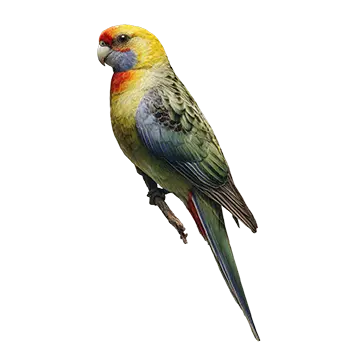
Equipping a Green Rosella's living space goes well beyond the cage or aviary itself. The accessories that surround and support the bird's daily life determine how efficiently care routines function, how effectively health is maintained, and how comfortably the bird navigates its captive environment. For a species as active and environmentally sensitive as the Green Rosella, the right accessories transform basic husbandry from a series of chores into a streamlined system that serves both bird and keeper.

The accessories landscape for medium-sized parrots has expanded considerably in recent years, and not every product marketed for birds is necessary, well-designed, or safe. Some items are essential from day one, including appropriate food and water dishes, bathing provisions, and a travel carrier. Others, such as specialized lighting, grooming tools, and cage covers, become important as the keeper refines their care routine and responds to the individual bird's needs. A third category consists of convenience items that simplify daily management, and while these are not strictly necessary, they can make the difference between a care routine that is sustainable over decades and one that feels burdensome.

Green Rosellas present a few accessory considerations that differ from those of more commonly kept parrot species. Their active nature means accessories must be durable and securely mounted. Their tendency to forage on the cage floor means that ground-level accessories need to be easy to clean and resistant to contamination. Their Tasmanian origin and tolerance for cooler temperatures means that heating accessories are less frequently needed than for tropical species, but lighting for vitamin D synthesis remains essential for indoor birds.

Quality should take precedence over quantity when building an accessory collection. A few well-chosen, durable items will serve better and last longer than a large assortment of cheap products that break, rust, or become unsafe within months. Stainless steel, food-grade plastics, and natural materials from reputable avian product manufacturers are worth the premium they carry over bargain alternatives of uncertain provenance.

Food and Water Dishes

The dishes used to deliver food and water are among the most frequently handled items in the Green Rosella's environment, and their design, material, and placement have a direct impact on hygiene, food acceptance, and daily management efficiency. Poor dish selection creates problems that range from bacterial contamination of food to water fouling to the frustrating tendency of lightweight dishes to be tipped, flung, or used as toys rather than feeding stations.

Stainless steel dishes are the gold standard for avian feeding and watering. They are nonporous, resistant to bacterial colonization, easy to sanitize in hot water or a dishwasher, and virtually indestructible under normal use. Stainless steel does not leach chemicals, does not absorb odors or stains, and withstands the daily scrubbing that is essential for avian hygiene. Dishes should be heavy-gauge stainless with rolled or hemmed edges to eliminate sharp rims, and they should fit securely into cage-mounted holders or lock-in-place brackets that prevent the bird from displacing them.

Ceramic and stoneware dishes offer an alternative that some keepers prefer for fresh food presentation. Their weight makes them stable on flat surfaces such as aviary floors or play gym platforms, and they do not affect the taste or smell of food the way some plastic dishes can. However, ceramic dishes require careful inspection for cracks, chips, and crazing in the glaze, as these imperfections harbor bacteria and can expose the bird to potentially toxic glazing compounds. Only dishes certified food-safe and lead-free should be used.

Water delivery deserves particular attention. Open water dishes are fouled quickly by food debris, droppings, and substrate material, especially in enclosures where the Green Rosella forages on the cage floor. Some keepers use water bottle systems to reduce contamination, though not all rosellas adapt readily to drinking from a bottle, and bottles themselves require daily cleaning of the sipper tube to prevent biofilm buildup. A practical compromise is to offer a securely mounted stainless steel water dish positioned away from food dishes and perches, changed at least twice daily, supplemented by a water bottle for birds that will use one.

The number and placement of dishes matters in multi-bird enclosures. Each bird should have access to its own food and water station, positioned at different locations within the cage or aviary, to prevent resource guarding and ensure that subordinate birds can eat and drink without competition stress. In single-bird cages, separating the seed dish, pellet dish, fresh food dish, and water dish prevents cross-contamination and makes it easier to monitor how much of each food type the bird consumes daily.

Bathing and Misting Equipment

Bathing is a natural and important behavior for Green Rosellas that serves practical functions in feather maintenance, skin health, and thermoregulation, as well as providing significant enrichment value. In the wild, rosellas bathe opportunistically in rain, dew-laden foliage, and shallow water sources. Captive birds need regular bathing access to maintain the condition of their plumage, which is essential for insulation, waterproofing, and the structural integrity of flight feathers.

A shallow bath dish is the simplest bathing provision. Heavy ceramic or stoneware dishes between two and four inches deep and wide enough for the bird to stand and splash comfortably are effective for rosellas that enjoy standing water. The dish should be placed on a stable surface where splashing will not damage surrounding materials, and the water should be lukewarm and free of any additives. Many Green Rosellas will bathe enthusiastically in a dish placed on the cage floor or on a play gym platform, though the resulting mess means bath time is best conducted during a designated period rather than leaving a bath dish permanently in place.

Misting with a spray bottle or pump sprayer is an alternative for birds that prefer aerial water contact over immersion. A clean spray bottle set to produce a fine mist, using plain lukewarm water, can be directed above the bird to create a gentle rain effect that triggers preening and feather maintenance behaviors. Most rosellas either enjoy misting or tolerate it readily, though some individuals require a gradual introduction if they have not been exposed previously. Spraying should be done early enough in the day that the bird's feathers dry completely before the temperature drops in the evening.

Dedicated shower perches that attach to a bathtub or shower wall via suction cups allow owners to bring their bird into the human shower for bathing under a gentle stream of water. This approach works well for birds that enjoy the sensation of running water and can be combined with supervised social time. The water temperature must be carefully controlled, as water comfortable for a human shower is often too hot for a bird. A separate, lower-temperature stream or a handheld showerhead adjusted to a gentle, lukewarm spray is the safest method.

Bathing frequency depends on the individual bird's preference, the ambient humidity of the environment, and the season. Most Green Rosellas benefit from bathing opportunities at least two to three times per week, with daily access offered during dry winter months when indoor heating reduces ambient humidity and accelerates feather drying and skin dehydration. Birds approaching or undergoing molt may benefit from increased bathing frequency, as moisture helps loosen feather sheaths and supports the growth of incoming feathers.

Travel Carriers

A secure, appropriately sized travel carrier is a non-negotiable accessory for every Green Rosella owner, even those who do not anticipate regular travel with their bird. Veterinary visits, emergency evacuations, and occasional transport needs arise unpredictably, and having a carrier ready, with the bird accustomed to entering it, eliminates dangerous last-minute improvisation. A panicked bird captured and stuffed into an unfamiliar container is at risk of injury, extreme stress, and the kind of negative association that makes future carrier use exponentially more difficult.

The ideal carrier for a Green Rosella is a rigid-walled enclosure made from high-impact plastic or reinforced fabric with mesh ventilation panels on at least two sides. It should be large enough for the bird to turn around, perch comfortably, and access a small food and water dish, but compact enough to limit the bird's ability to build dangerous momentum during sudden vehicle movements. Interior dimensions of approximately 14 inches long, 10 inches wide, and 12 inches high accommodate a single Green Rosella comfortably for short to moderate transport durations.

Carrier design features that improve safety and convenience include a secure latch or closure system that the bird cannot manipulate open, a door large enough to admit the bird without forcing it through a tight opening, and a solid floor that prevents foot and toe injuries from wire grating. A removable perch set low inside the carrier gives the bird a stable gripping surface during transport, and a clip-on water dish or fruit piece provides hydration on longer journeys. Some carriers include covers or privacy panels that reduce visual stimulation and help keep the bird calm during travel.

Acclimating the bird to the carrier before it is needed transforms a stressful necessity into a manageable routine. Leaving the carrier open near the cage with treats inside encourages voluntary exploration. Progressing to short periods with the door closed, then brief car rides, builds the bird's confidence in increments. A Green Rosella that enters its carrier willingly and settles quickly once inside is dramatically easier to transport safely and arrives at the destination in far better condition than one that required capture and forced confinement.

Lighting and Environmental Control

Appropriate lighting is one of the most impactful accessories for indoor Green Rosellas, yet it is frequently overlooked by owners who assume that household lighting and window proximity provide adequate illumination. Birds perceive light differently than humans, with visual sensitivity extending into the ultraviolet spectrum. Full-spectrum lighting that includes UVA and UVB wavelengths supports vitamin D3 synthesis, enhances color perception, regulates circadian rhythm, and has been associated with improved mood, reduced stress behaviors, and better reproductive health in captive parrots.

Full-spectrum avian lighting fixtures are available as compact fluorescent, linear fluorescent, and LED units specifically designed for bird use. The fixture should produce output in the 5000K to 6500K color temperature range and include UVB output at levels appropriate for indoor avian use, typically between two and five percent of total output. The fixture should be mounted above or to the side of the cage at a distance recommended by the manufacturer, as UVB intensity decreases rapidly with distance and glass or plastic barriers filter it out entirely. Bulbs must be replaced according to the manufacturer's schedule, as UV output degrades well before visible light output diminishes.

Lighting timers are essential for maintaining a consistent photoperiod. Green Rosellas require approximately ten to twelve hours of light and twelve to fourteen hours of darkness daily, and this schedule should remain relatively stable throughout the year, though slight seasonal variation can be introduced to support natural hormonal cycling. Automated timers eliminate the inconsistency that comes with manual light management and ensure the bird's circadian rhythm is not disrupted by household schedule variations.

Cage covers serve the darkness half of the light equation. A cover made from opaque, breathable fabric creates the dark, quiet sleeping environment that supports healthy rest and hormonal regulation. The cover should be large enough to drape over the entire cage without leaving gaps that admit light, and its material should allow adequate airflow to prevent heat and humidity buildup. Dark-colored cotton or cotton-blend fabrics are commonly used. For keepers whose living spaces do not allow early-evening cage covering, relocating the bird to a dedicated sleeping cage in a quiet, dark room achieves the same result.

Grooming Tools

While Green Rosellas handle most of their own grooming through preening and bathing, keepers need a basic grooming toolkit for the occasional maintenance tasks that the bird cannot perform itself. Nail trimming is the most frequently required human-assisted grooming task, as captive birds' nails grow continuously and may not wear down sufficiently on cage perches alone. Overgrown nails snag on fabrics, cage bars, and toy components, causing discomfort and potential injury.

Small, sharp nail clippers designed for birds or small animals are the standard tool for nail maintenance. Guillotine-style clippers provide clean cuts with minimal pressure, reducing the risk of crushing the nail and causing discomfort. A styptic powder or gel should always be within arm's reach during nail trimming, as accidentally cutting into the quick, the vascularized core of the nail, causes bleeding that styptic agents control rapidly. For keepers uncomfortable performing nail trims at home, avian veterinarians and experienced bird groomers offer this service at reasonable cost.

Beak maintenance is normally accomplished by the bird itself through chewing on wood, cuttlebone, and other hard materials. A healthy beak on a Green Rosella that has adequate chewing opportunities should not require human intervention. If the beak becomes overgrown, misaligned, or develops an unusual texture, this is typically a sign of nutritional deficiency, liver dysfunction, or infection that requires veterinary assessment rather than cosmetic trimming. Filing or trimming a beak without veterinary guidance risks removing too much material, altering the bite alignment, and causing pain.

A gram-accurate digital scale is an essential grooming-adjacent tool that belongs in every bird keeper's kit. Regular weigh-ins provide the earliest and most objective indicator of health changes in a bird that instinctively conceals illness. Weighing the bird at the same time each day, ideally in the morning before feeding, and recording the results allows the keeper to detect gradual weight loss or gain that might be invisible to visual observation. A sudden weight drop of more than ten percent warrants veterinary consultation, as it can indicate illness, parasitic infection, or dietary inadequacy that needs prompt attention.

First Aid and Emergency Supplies

A well-stocked avian first aid kit is an accessory that every Green Rosella owner should prepare and maintain, even in the expectation that it will rarely be needed. Avian emergencies develop rapidly, and the interval between an injury or illness becoming apparent and veterinary care being accessible can be critical. Having basic supplies immediately available allows the keeper to stabilize the bird, control bleeding, and provide supportive care during transport to the veterinarian.

Styptic powder is the single most important first aid item for bird owners. Broken blood feathers and nail trims that cut too deep can produce alarming bleeding that styptic powder stops within seconds when applied with direct pressure to the bleeding site. Cornstarch serves as a substitute in emergencies but is less effective than purpose-made styptic agents. A small container of styptic powder should be stored near the cage and in the travel carrier.

Additional first aid supplies include gauze pads and self-adhesive bandage wrap for wound management, blunt-tipped scissors for cutting away material entangled around toes or feet, needle-nose pliers or hemostats for removing broken blood feathers in an emergency, a penlight for oral examination, and a small towel for safely restraining the bird during treatment. An instant-read thermometer designed for veterinary use can help assess whether the bird is hypothermic, which is common during shock and illness.

A hospital cage or brooder setup provides warmth and a quiet recovery environment for sick or injured birds. This can be a small enclosure, such as a travel carrier or small aquarium fitted with a screen top, positioned beside a ceramic heat emitter or under a heat lamp that maintains the interior temperature at approximately 85 to 90 degrees Fahrenheit. Elevated ambient temperature reduces the metabolic energy a sick bird must expend on thermoregulation, directing those resources toward recovery instead. The hospital cage should be kept in a quiet, dimly lit location and provisioned with easily accessible food and water placed at the bird's level.

The first aid kit should also include the contact information for the nearest avian veterinarian, an after-hours emergency avian clinic, and a poison control hotline. In an emergency, the stress of searching for these numbers wastes precious time. Keeping this information physically with the first aid supplies ensures it is available exactly when it is needed, even if electronic devices are unavailable.

Always consult a qualified professional before making any health-related decisions. This content is provided for informational reference only and should not replace professional guidance specific to your animal.