
Why Enrichment Matters

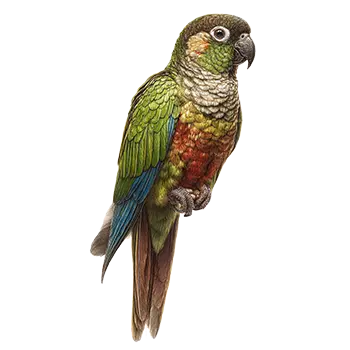
Green-Cheeked Conures are among the most playful and physically active of the small parrot species, and their need for mental and physical stimulation is not optional. In the wild, Pyrrhura conures spend the majority of their waking hours foraging through forest canopy, manipulating food items, interacting socially with flock members, and navigating complex three-dimensional environments. Captivity eliminates most of these natural outlets, and without adequate substitutes, the result is predictable: feather destructive behavior, excessive screaming, repetitive movements, aggression, and apathy.

Toys and enrichment devices serve as the primary replacement for the environmental complexity that captivity removes. A well-stocked toy rotation does not merely keep the bird entertained; it exercises cognitive function, maintains beak and foot condition, provides appropriate outlets for the chewing instinct, and gives the bird a sense of agency and control over its environment. The psychological benefit of being able to choose which toy to interact with, how to approach it, and when to move on is significant for an intelligent animal that would otherwise have no choices available.

The enrichment needs of Green-Cheeked Conures are distinct from those of larger parrots in important ways. Their smaller beaks and feet require toys scaled appropriately, and their play style tends toward acrobatic physicality rather than the deliberate, methodical destruction favored by species like cockatoos or macaws. Green-Cheeked Conures are wrestlers, swingers, and shredders. They hang upside down from toys, toss small objects with their beaks, burrow into fabric pouches, and attack shredable materials with focused intensity. Understanding these play preferences is essential for selecting toys that will actually be used rather than ignored.

A minimum of three to five toys should be in the cage at any given time, with additional toys rotated in every one to two weeks. Rotation is critical because conures, like most parrots, habituate to familiar objects and lose interest over time. Reintroducing a toy after a few weeks of absence often restores its novelty value, effectively doubling or tripling the practical lifespan of each toy purchase. Keep a reserve of toys stored outside the cage and swap them on a schedule to maintain consistent engagement.

Foraging Toys

Foraging toys are arguably the single most important category of enrichment for captive Green-Cheeked Conures because they directly replicate the activity that dominates a wild parrot's day: searching for and extracting food. In their natural habitat, Green-Cheeked Conures may spend four to six hours daily locating, accessing, and consuming food. In captivity, the same caloric intake is available in an open dish and consumed in minutes, leaving the bird with vast stretches of empty time that would otherwise be filled with purposeful activity.

Entry-level foraging toys include simple devices that require the bird to lift a lid, pull out a drawer, or push aside a barrier to access a treat. These are ideal for birds new to the concept of foraging, as the reward is easily accessible and the learning curve is gentle. Acrylic foraging boxes with removable lids, small stainless steel cups with hinged covers, and paper cups stuffed with treats and crinkled shut all serve as effective introductory foraging challenges.

Intermediate foraging toys increase the complexity by requiring multiple steps or more refined manipulation. Wheel-based foragers that the bird must turn to align openings, puzzle boxes with sliding panels, and stacked ring toys where treats are hidden between layers all demand sustained problem-solving. Green-Cheeked Conures are clever enough to master these mid-range challenges within a few sessions, so it is important to increase difficulty gradually and rotate different puzzle types to prevent the bird from solving each one reflexively.

Advanced foraging setups integrate foraging into the cage environment itself rather than relying on a single device. Wrapping pellets in small paper packets and tucking them into cage bars, threading treats onto skewers between chunks of vegetable, and hiding food inside shredable toys so the bird must destroy the toy to reach the reward all create foraging opportunities that require planning and effort. The goal is to make the bird work for a meaningful portion of its daily food intake, transforming feeding from a passive event into an engaging activity that occupies time and stimulates cognition.

Shredding and Chewing Toys

The chewing instinct in Green-Cheeked Conures is strong, persistent, and utterly non-negotiable. In the wild, beak work on bark, branches, seed pods, and woody plant material keeps the beak trimmed, exercises the jaw muscles, and provides sensory stimulation. In captivity, if appropriate chewing materials are not provided, the bird will redirect this instinct toward cage bars, perch surfaces, furniture, clothing, and anything else within beak reach. Providing a steady supply of chewable and shredable toys is not indulgent; it is a fundamental requirement.

Paper-based shredders are among the most popular and economical toy options for Green-Cheeked Conures. Toys made from crinkle paper, cardboard strips, paper rope, and layered paper sheets satisfy the urge to rip and shred, producing satisfying textural feedback and visible results that many conures find deeply rewarding. The best paper toys for this species are compact enough for small beaks to grip and tear, with multiple layers or components that extend the shredding experience over hours rather than minutes.

Wood toys provide a harder chewing substrate that exercises the beak differently than paper. Balsa wood, pine, birch, and yucca are soft enough for a Green-Cheeked Conure's relatively small beak to splinter and chip, which is the point. Hardwoods like manzanita and java wood are too dense for small conures to destroy and serve better as perch materials than as chew toys. When selecting wood toys, ensure that the wood is untreated, unstained, and free of chemical preservatives. Vegetable-based dyes used to color some bird toy components are generally considered safe, though uncolored wood is the most conservative choice.

Leather strips, palm frond pieces, coconut shell fragments, and vine balls round out the natural material options for chewing and shredding. Vegetable-tanned leather is safe for birds, while chrome-tanned leather contains chromium salts and must be avoided. Seagrass mats and woven palm leaf toys offer a combination of chewing and shredding in a single item, and many Green-Cheeked Conures enjoy methodically dismantling woven structures fiber by fiber. Budget-conscious owners can supplement purchased toys with safe household items like plain paper towel rolls, unbleached coffee filters, and small cardboard boxes to extend the variety available to the bird.

Swings, Boings, and Physical Toys

Green-Cheeked Conures are acrobatic parrots that derive enormous pleasure from physical movement, and toys that swing, bounce, or require the bird to maintain balance while playing address this need directly. A cage without at least one swinging or bouncing element is missing a fundamental enrichment category for this species. The physical exertion involved in riding a swing, climbing a spiral boing, or hanging from a trapeze provides cardiovascular exercise and muscle conditioning that static perches cannot.

Swings come in a range of materials and designs. Simple wooden dowel swings hung from chains provide a basic motion platform, while more elaborate designs incorporate shredable elements, beads, or bells to add sensory interest. Cotton rope swings offer a softer, more flexible ride and are often preferred by birds that enjoy curling up in snug positions. When sizing a swing for a Green-Cheeked Conure, the perch width should be roughly eight to ten inches, giving the bird enough room to sit comfortably and shift its weight to generate motion.

Boings are spiral rope perches that bounce and sway when the bird climbs or hangs from them. Available in various lengths and gauges, they can be mounted vertically, diagonally, or horizontally within the cage to create dynamic climbing paths. Green-Cheeked Conures frequently use boings as jungle-gym-style exercise equipment, climbing to the top and riding the bounce back down repeatedly. Choose a boing gauge appropriate for small to medium parrots, as overly thick boings designed for macaws are difficult for small conure feet to grip.

Ladders, bridges, and climbing nets add horizontal and angled movement opportunities to the cage. Wooden and rope ladders encourage the bird to traverse the cage at different angles, and flexible rope bridges suspended between perch points create an unstable surface that challenges the bird's balance and coordination. Climbing nets made from cotton or hemp rope serve a similar purpose and can be draped across a cage wall or suspended from the ceiling. All rope and fabric toys should be inspected regularly for fraying or loose threads that could entangle toes, and worn items should be replaced promptly.

Puzzle Toys and Cognitive Enrichment

Green-Cheeked Conures are intelligent enough to engage with genuine puzzle toys, not merely manipulate objects through repetition. Their problem-solving abilities, while not at the level of larger parrots like African Greys or cockatoos, are sufficient to tackle multi-step challenges and learn new manipulation sequences. Cognitive enrichment through puzzle toys exercises neural pathways, reduces boredom-driven behavior problems, and builds confidence as the bird masters progressively harder challenges.

Acrylic puzzle toys designed for small to medium parrots offer transparent visibility of the reward inside, which motivates the bird to figure out the unlocking mechanism. These typically require the bird to turn a dial, slide a panel, unscrew a nut, or lift a series of covers in sequence to access a treat. The transparency is not a design afterthought; it is a learning tool, because a bird that can see the treat understands the goal immediately and can focus its problem-solving effort on the mechanism rather than wondering whether the toy contains anything worth pursuing.

Teaching toys represent a subset of cognitive enrichment that involves shape sorting, color matching, or object stacking. While Green-Cheeked Conures are not as naturally inclined toward these structured learning tasks as some larger parrot species, many individuals can learn to sort objects by color, stack rings on a peg, or place shapes into corresponding holes with patient positive reinforcement training. The training process itself, regardless of the end result, provides valuable mental stimulation and strengthens the bond between bird and owner.

DIY cognitive enrichment is a cost-effective way to provide varied challenges without constantly purchasing new commercial toys. Wrapping treats in progressively more complex paper packages, hiding food under small cups that must be flipped or dragged aside, and creating multi-chamber foraging boxes from small cardboard containers all provide mental exercise at minimal cost. The advantage of DIY puzzles is that they can be customized to the individual bird's current skill level and adjusted upward in difficulty as the bird improves, creating a natural progression that keeps the challenges engaging without becoming frustratingly difficult.

Safety Considerations

Toy safety is a non-negotiable priority, and the small size of Green-Cheeked Conures makes them vulnerable to hazards that larger parrots might easily avoid. The most common toy-related injuries in small conures involve entanglement, ingestion of unsafe materials, and entrapment in hardware components. Every toy should be evaluated for these risks before being placed in the cage, and ongoing inspection during use is equally important because a safe toy can become dangerous as it wears.

Thread and fiber entanglement is the leading toy safety concern for small parrots. Cotton rope, fabric strips, and frayed fibers can wrap around toes, legs, or the neck, potentially causing loss of circulation, tissue necrosis, or strangulation. Rope toys should be checked at least daily and trimmed or replaced when they begin to fray. Some owners prefer to avoid cotton rope toys entirely, substituting leather, paper, or stainless steel chain as hanging and connecting materials. Fabric huts and tents, often marketed as cozy sleeping accessories, are a particular entanglement risk and are also associated with hormonal behavior in some conures.

Hardware components such as split rings, key rings, and spring-loaded clips can trap toes and beaks. Quick links, which are C-shaped connectors that screw shut, are the safest attachment hardware for bird toys because they eliminate small gaps where body parts can become wedged. Jingle bells with narrow slits can trap a conure's toenail or tongue and should be replaced with larger, open-bottom liberty bells. Snap hooks with spring-loaded gates pose a pinching hazard and are best avoided in favor of pear links or quick links.

Material safety requires attention to both the materials themselves and any treatments or coatings applied to them. Zinc, lead, and copper are all toxic to birds and can be present in chains, hooks, bells, and other metal toy components. Nickel-plated and stainless steel hardware are the safest metal options. Wood should be untreated and free of pesticide residue. Acrylic components should be food-grade and free of BPA. Rubber and soft plastic pose choking risks if a bird chews off small pieces, and should be avoided in toys intended for unsupervised cage use. When in doubt about a toy's material safety, contact the manufacturer or choose a different product from a company that provides transparent material sourcing information.

Toy Rotation and Budget Strategies

Maintaining an adequate toy supply for a Green-Cheeked Conure requires both a rotation strategy and a realistic budget approach, because this species destroys toys with enthusiasm and a single conure can go through several shredable toys per week. Rotation is the single most effective strategy for maximizing toy value. Keep at least twice as many toys as are in the cage at any time, and swap two or three toys every week to ten days. A toy that has been out of the cage for two weeks feels new again to the bird, and this novelty restoration dramatically extends the effective lifespan of durable toys.

Budget management starts with understanding which toys are consumable and which are durable. Shredable toys made from paper, soft wood, and natural fibers are designed to be destroyed and must be replaced regularly; these represent the ongoing cost of conure ownership. Acrylic puzzle toys, stainless steel foraging devices, and hardwood swings are durable items that last for years with proper care and represent a one-time investment. Allocating budget toward a core collection of quality durable toys, supplemented by a steady supply of inexpensive shredables, is the most cost-effective approach.

DIY toys offer substantial savings without sacrificing enrichment quality. Untreated pine wood pieces, leather strips, paper straws, small cardboard boxes, unbleached paper cups, popsicle sticks, and wooden clothespins can be combined with stainless steel or nickel-plated hardware to create effective toys at a fraction of the cost of commercial equivalents. Many bird toy component suppliers sell bulk packs of wood blocks, beads, and hardware specifically for DIY toy builders, making it possible to assemble dozens of toys for the price of a few pre-made ones.

Subscription toy services have emerged as a convenient option for owners who want regular toy variety without the planning effort. These services ship curated selections of bird toys monthly, typically sized for the subscriber's specific bird species. While per-toy costs are often higher than bulk purchasing or DIY construction, the convenience and variety can justify the premium for owners with limited time or crafting inclination. Evaluate these services based on material quality and safety standards rather than price alone, as some budget subscription boxes include toys with questionable hardware or untested imported materials.

Always consult a qualified professional before making any health-related decisions. This content is provided for informational reference only and should not replace professional guidance specific to your animal.