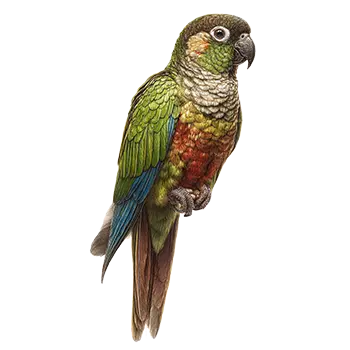

Green-Cheeked Conures are small but metabolically active parrots that require a nutrient-dense diet to sustain their energetic lifestyles. Weighing between sixty and eighty grams, these birds burn calories quickly relative to their body size, and nutritional gaps show up faster in small species than in larger parrots. A diet that delivers balanced proteins, moderate fats, complex carbohydrates, and a full spectrum of vitamins and minerals is the foundation of a long and healthy life for a Green-Cheeked Conure.
Protein requirements for this species are moderate but consistent. Green-Cheeked Conures are not heavy seed crackers in the wild; their natural diet in the forests of South America includes fruits, flowers, leaf buds, and some seeds, meaning their digestive systems are adapted to a varied intake rather than a fat-heavy seed regimen. In captivity, protein should come primarily from high-quality pellets, supplemented by cooked legumes and occasional egg food during molting or breeding periods when protein demand increases.
Vitamin A is a critical nutrient for Green-Cheeked Conures, as it is for most parrot species. Deficiency leads to changes in the mucous membranes of the respiratory and digestive tracts, increasing vulnerability to bacterial and fungal infections. Because many owners default to seed-heavy diets that are inherently low in vitamin A precursors, this deficiency is one of the most commonly diagnosed nutritional problems in captive conures. Providing regular servings of beta-carotene-rich vegetables such as sweet potato, carrot, and dark leafy greens addresses this need through whole-food sources.
Calcium and phosphorus balance also warrants attention. While Green-Cheeked Conures are not as prone to hypocalcemia as African Grey Parrots, an all-seed diet still delivers far too little calcium and too much phosphorus, creating an inverted ratio that undermines bone density and egg production in hens. A pellet-based diet supplemented with calcium-rich vegetables and access to a cuttlebone or mineral block maintains the proper ratio without the need for aggressive supplementation in most healthy birds.