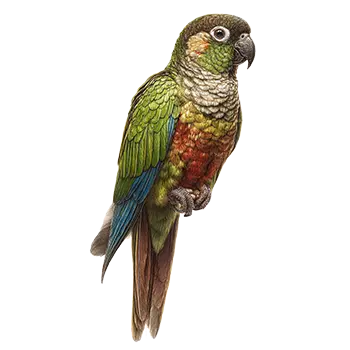

Proper lighting is one of the most overlooked aspects of Green-Cheeked Conure care, yet it affects everything from calcium metabolism and feather quality to mood regulation and hormonal balance. Birds perceive a broader spectrum of light than humans, including ultraviolet wavelengths that are filtered out by window glass. A conure living indoors under standard household lighting is effectively in a state of chronic UV deprivation, which has measurable physiological consequences over time.
Full-spectrum avian lighting fixtures produce light that includes UVA and UVB wavelengths in proportions appropriate for captive birds. UVB exposure enables the bird's skin to synthesize vitamin D3, which is essential for calcium absorption. Without adequate UVB, even a calcium-rich diet may not prevent deficiency because the bird cannot metabolize the calcium it consumes. UVA light affects visual perception and may influence mood, appetite, and social behavior, as birds use UVA reflectance patterns for species and individual recognition that are invisible to the human eye.
When selecting a full-spectrum bulb for a Green-Cheeked Conure, look for products specifically designed for avian use with a color rendering index above ninety and a color temperature between 5000K and 6500K, which approximates natural daylight. The bulb should be positioned twelve to eighteen inches from the nearest perch to deliver effective UV exposure without risk of overheating or UV burn. Compact fluorescent and LED full-spectrum bulbs are available, with LED models offering longer lifespan and lower energy consumption, though the UV output of LED avian bulbs varies considerably between manufacturers.
Lighting duration should follow a consistent photoperiod that approximates a natural day-night cycle. Most avian behaviorists recommend twelve hours of light and twelve hours of darkness for Green-Cheeked Conures outside of breeding season. Consistent light cycles help regulate the bird's circadian rhythm, promote restful sleep, and reduce the hormonal stimulation that extended light exposure can trigger. A simple plug-in timer automates the photoperiod and prevents the disruption caused by irregular household lighting schedules.