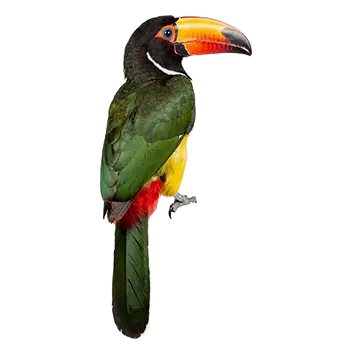

The Green Aracari's tropical origins make environmental monitoring one of the most consequential technology investments for its keeper. Temperature and humidity are not just comfort factors for this species but directly impact respiratory health, feather condition, and disease resistance. Digital hygrometer-thermometer combos that display both current readings and recent highs and lows provide the baseline data needed to evaluate whether the bird's environment stays within acceptable ranges throughout the day and night cycle.
Wireless sensor systems offer significant advantages over basic standalone units by enabling remote monitoring and data logging. A wireless temperature and humidity sensor placed near the enclosure transmits readings to a base station, smartphone app, or home automation hub, allowing the keeper to check conditions without being in the same room. Many systems retain historical data as graphs or logs, revealing patterns that spot readings miss. A room that feels comfortable at noon may drop to dangerously cold temperatures at three in the morning, and only a logging sensor will capture that information.
Alert-capable sensors add a critical safety layer by notifying the keeper when readings fall outside preset thresholds. A temperature alert set to trigger below 60 degrees Fahrenheit or above 90 degrees, combined with a humidity alert below 50 percent, provides early warning of conditions that could harm a Green Aracari before the bird shows visible distress. These alerts are especially valuable when the keeper is away from home, traveling, or asleep. Many smart sensor platforms support alerts via push notification, text message, or email, ensuring the warning reaches the keeper regardless of their location.
Air quality monitoring represents a more advanced but increasingly accessible technology layer. Sensors that measure volatile organic compounds, carbon dioxide, and particulate matter can detect airborne hazards invisible to human senses. Birds are extraordinarily sensitive to respiratory irritants because of their highly efficient respiratory system, which extracts oxygen far more effectively than mammalian lungs but also absorbs toxins with the same efficiency. An air quality monitor near the bird's enclosure can flag cooking fumes, cleaning product off-gassing, or other pollutant spikes before they reach concentrations harmful to the bird.