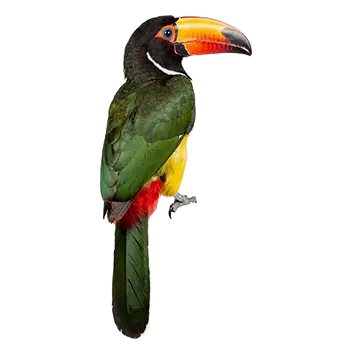

Dish selection for a Green Aracari is shaped by the practical realities of a fruit-based diet that produces sticky residue, rapid bacterial growth, and significant mess. The ideal dishes are wide, shallow, and made from stainless steel. Wide bowls allow the aracari to see and select individual fruit pieces without digging, which aligns with the bird's visually guided feeding style. Shallow depth prevents fruit pieces from accumulating in layers where lower items go uneaten and spoil beneath the visible surface. Stainless steel resists the staining, scratching, and bacterial colonization that plague plastic and porous ceramic dishes.
Crock-style dishes that mount to the cage bars offer stability that prevents tipping and spilling, a real concern with a bird as active as a Green Aracari. Many keepers use bolt-on stainless steel cups that lock securely to the cage wall with a wing nut or bracket, eliminating the bird's ability to dislodge the dish during enthusiastic feeding or play. These mounting systems should be positioned at a comfortable perching height so the bird can eat without straining downward from an awkward angle.
Water dishes for aracaris should be larger than those used for comparably sized parrots because ramphastids tend to dip fruit pieces in water before eating and occasionally bathe in their water bowls if no separate bathing facility is available. A water dish with a capacity of roughly sixteen to twenty ounces accommodates both drinking and the inevitable food-dipping behavior. Water must be changed at least twice daily, as the combination of fruit sugars and organic debris creates a bacterial culture medium within hours.
Some keepers supplement or replace open water dishes with water bottles fitted with sipper tubes, which maintain cleaner water and reduce mess. However, not all aracaris adapt to bottle drinking, and the narrow sipper tube can be difficult for the aracari's bill shape to engage naturally. If a water bottle is used, an open water dish should remain available until the bird is observed drinking from the bottle consistently. Bottles with wide-mouth refill openings simplify the frequent refills and cleaning that a fruit-eating bird's water management demands.