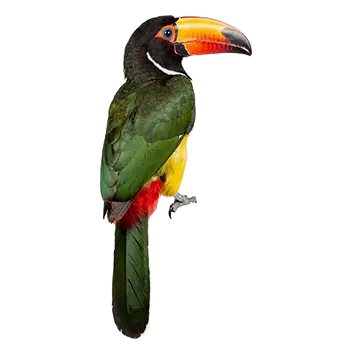

Green Aracaris are active, agile birds that spend much of their day hopping between perches, making short flights, and exploring their surroundings. Unlike parrots, which often climb cage bars using their feet and beaks, aracaris are primarily perch-to-perch fliers and hoppers. This movement pattern means that enclosure length and width matter more than height, though vertical space is still appreciated. The absolute minimum enclosure size for a single Green Aracari is approximately four feet long by two feet wide by three feet tall, but larger is always better, and serious keepers typically provide considerably more space.
Flight cages and small indoor aviaries are the most appropriate housing for this species. A cage that allows at least a few wing beats of sustained flight between perches promotes cardiovascular health, muscle tone, and behavioral wellbeing. Green Aracaris that are confined to cages too small for flight often develop muscle atrophy, obesity, and stereotypic behaviors such as repetitive hopping or feather damage. If outdoor housing is an option in a suitable climate, a planted outdoor aviary provides the gold standard of captive housing for ramphastids.
Bar spacing is a critical safety specification. Green Aracaris are slender-bodied birds that can wedge themselves through surprisingly narrow gaps. Bar spacing between half an inch and three-quarters of an inch is generally appropriate, preventing the bird from pushing its head or body through the bars while still allowing adequate visibility and airflow. Wider spacing designed for macaws or cockatoos poses an entrapment risk, while the very narrow spacing of finch cages restricts visibility and ventilation unnecessarily.
Enclosure material should be stainless steel or powder-coated steel rated as bird-safe. Zinc-coated or galvanized wire is toxic to birds if ingested through chewing or contact with acidic foods, and while aracaris chew cage bars less aggressively than parrots, the risk is not worth taking. Stainless steel cages command a higher price but resist corrosion, clean easily, and last indefinitely, making them the preferred material for long-lived species. Powder-coated cages offer a more affordable alternative if the coating is verified non-toxic and inspected regularly for chips or flaking.