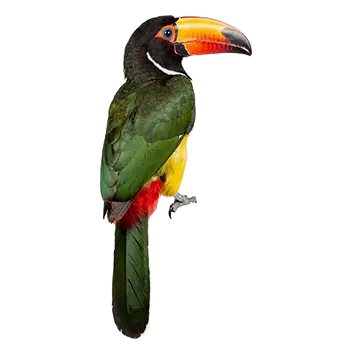

The Green Aracari belongs to the family Ramphastidae, making it a true toucan rather than a parrot, and this distinction carries profound dietary implications. Ramphastids are obligate frugivores whose digestive tracts are designed for rapid processing of soft, high-moisture fruits. Their relatively short intestinal length means food passes through quickly, and their bodies are adapted to extract sugars, vitamins, and water from fruit pulp with remarkable efficiency. Any feeding plan that ignores this fundamental biology and attempts to treat the Green Aracari like a seed-eating hookbill will produce serious health consequences.
Iron storage disease, formally known as hemochromatosis, is the single most critical dietary concern for all ramphastids kept in captivity. Toucans and aracaris are extremely sensitive to dietary iron, absorbing and storing it at rates far higher than most other bird families. Excess iron accumulates in the liver and other organs, eventually causing organ failure and death. This sensitivity means that every food item offered to a Green Aracari must be evaluated not only for its general nutritional value but specifically for its iron content. Products formulated for parrots, mynahs, or other softbills frequently contain iron levels that are dangerous for toucans.
Beyond iron restriction, the Green Aracari requires a diet rich in natural sugars, vitamin C, carotenoids, and moderate protein. In the wild, these birds consume a wide variety of tropical fruits supplemented by insects, small lizards, and the eggs and nestlings of other birds. This mixed diet provides a complete nutritional profile that captive feeding must approximate. Protein content should comprise roughly fifteen to twenty percent of the overall diet by dry weight, sourced from low-iron insects and occasional animal proteins rather than from plant-based protein concentrates.
Hydration is another consideration that shapes food selection. Because Green Aracaris derive most of their water from fruit, birds fed an overly dry diet of pellets without adequate fresh fruit can become chronically dehydrated. The kidneys of ramphastids are not well adapted to concentrating urine the way seed-eating birds can, so consistent access to high-moisture foods is a physiological requirement rather than a preference.