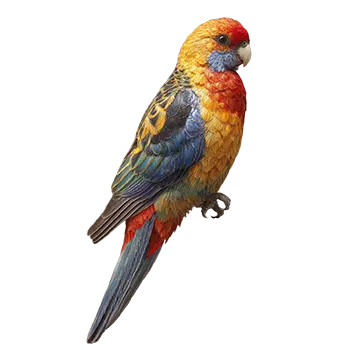

Golden-Mantled Rosellas are intelligent, active birds that require consistent mental and physical stimulation to thrive in captivity. In the wild, these parakeets spend the majority of their waking hours engaged in foraging, exploring varied terrain, interacting with flock members, and navigating complex environments. Captive housing, no matter how spacious, eliminates most of these natural challenges, and toys and enrichment devices serve as the primary means of replacing that lost complexity.
The consequences of insufficient enrichment in rosellas manifest as behavioral and physical problems. Feather plucking, repetitive pacing, excessive screaming, and self-directed aggression are all documented responses to environmental monotony in this species. These behaviors, once established, can be extremely difficult to reverse, making proactive enrichment planning far more effective than reactive intervention. A rosella that is consistently engaged with a variety of appropriate toys is significantly less likely to develop these compulsive patterns.
Rosellas interact with toys differently than the large hookbill species that dominate the pet bird market. They are less likely to manipulate objects with their feet in the way that cockatoos or macaws do, and they tend to favor toys that can be shredded, pecked, tossed, or foraged through rather than complex mechanical puzzles requiring dexterous foot manipulation. Understanding this behavioral profile is essential for selecting toys that the bird will actually use rather than ignore.
Toy rotation is a key concept in rosella enrichment. Rather than filling the cage with every available toy simultaneously, which reduces flight space and can overwhelm the bird, experienced keepers maintain a library of toys and rotate three to four items in and out of the cage on a weekly or biweekly basis. This approach preserves the novelty factor that drives investigation and play while keeping the interior of the enclosure uncluttered and navigable.