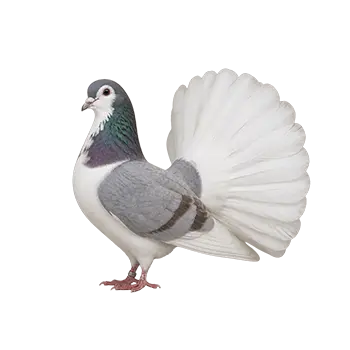

Enrichment for Fantail Pigeons looks fundamentally different from enrichment for parrots, and understanding this distinction is essential for selecting products that actually benefit the bird. Pigeons are not manipulative foragers in the way that parrots are. They do not use their feet to hold objects, they do not disassemble puzzles with their beaks, and they show little interest in the kinds of hanging toys and mechanical devices that dominate the parrot toy market. Pigeon enrichment centers instead on ground-level foraging, social interaction, bathing, environmental exploration, and visual stimulation.
Fantails are among the most docile and sedentary of all pigeon breeds, which makes enrichment particularly important for their physical and psychological well-being. Without stimulation, Fantails in small enclosures can become lethargic and develop repetitive behaviors such as excessive preening, feather picking, or pacing. While these behaviors are less dramatic than the screaming and self-mutilation seen in understimulated parrots, they still indicate compromised welfare and can lead to feather damage that is especially consequential for a breed whose appearance depends on plumage quality.
Effective enrichment for Fantails capitalizes on their natural behaviors: pecking at and sorting through substrate to find food, bathing in shallow water, sunning themselves in warm spots, cooing and displaying to flock mates, and exploring novel objects and textures placed in their environment. The goal is not to teach the bird to perform complex tasks but to provide an environment that encourages natural activity throughout the day rather than allowing the bird to sit passively on a perch from morning to evening.
Social enrichment deserves emphasis for this highly gregarious species. Pigeons are flock birds that derive significant psychological benefit from the company of their own kind. A solitary Fantail, no matter how many physical enrichment items are provided, is missing the most fundamental form of stimulation. Keepers who maintain a single bird as a companion should invest heavily in daily human interaction and consider whether the bird's quality of life would be better served by the addition of a second pigeon.