
Feeders and Waterers

Selecting the right feeders and waterers for Fantail Pigeons involves considerations that go beyond what most general bird-keeping guides address. Pigeons eat by picking up individual grains with their beaks and swallowing them whole, which means they need feeders with openings wide enough to accommodate their heads but designed to minimize waste and contamination. Open dish feeders are the simplest option and allow easy monitoring of food consumption, but they are also the most vulnerable to fouling by droppings, particularly if positioned beneath perches or in high-traffic areas of the loft.

Hopper-style feeders that dispense grain from a reservoir through a narrow trough offer significant advantages in terms of hygiene and waste reduction. The enclosed reservoir protects the bulk of the grain from contamination, and the trough design limits the amount of feed exposed at any time. For Fantail Pigeons specifically, the feeder trough should be positioned at a height that allows the bird to reach in comfortably without its chest or tail pressing against the feeder housing. Most pigeon hopper feeders are designed to sit on the floor or mount at a low height, which suits the ground-oriented feeding style of the breed.

Pigeon waterers require particular attention because of the unique way pigeons drink. Unlike most birds that scoop water and tilt their heads back to swallow, pigeons immerse their beaks and draw water upward by suction, similar to drinking through a straw. This behavior requires a water vessel deep enough to submerge the beak, typically at least two inches of water depth. Vacuum-style waterers with a reservoir that refills a shallow base are popular because they maintain a constant water level and keep the supply relatively clean. The base should be narrow enough that the birds cannot bathe in it, as pigeons will attempt to bathe in any accessible water and quickly foul the drinking supply.

Heated waterers are essential in regions where temperatures drop below freezing. A pigeon deprived of liquid water for even a few hours during cold weather can become dangerously dehydrated, and birds will not eat ice or snow in sufficient quantities to meet their needs. Heated bases designed for poultry waterers keep the water above freezing without consuming excessive electricity. Immersion heaters designed for livestock use can also be placed directly in larger water containers, though care must be taken to ensure that electrical cords are protected from curious beaks and that the heater is rated for the container material being used.

Leg Bands and Identification

Leg bands are a fundamental accessory for any serious Fantail Pigeon keeper, serving purposes that range from individual identification to breeding record-keeping to compliance with show and club registration requirements. Seamless aluminum bands are applied to young squabs at approximately five to seven days of age, slipped over the three forward toes and up over the rear toe and hock before the leg grows too large for the band to pass. These bands are permanent and carry a unique number that identifies the bird for life, along with a year code and the issuing organization's abbreviation.

Band sizing for Fantail Pigeons typically calls for a nine-millimeter inside diameter band, which is the standard size for most medium-bodied domestic pigeon breeds. Ordering bands from a recognized pigeon organization, such as a national pigeon club or the appropriate regional federation, ensures that the bands meet size standards and carry verifiable registration numbers. Unregistered bands purchased from generic suppliers may be useful for personal identification but do not carry the provenance needed for show entry or official record-keeping.

Split plastic bands offer a supplementary identification system that can be applied to birds of any age. These C-shaped bands snap around the leg and come in a range of colors, allowing keepers to color-code birds by year, breeding line, sex, or any other category. While they are not permanent and can be removed or replaced, split bands are invaluable for quick visual identification of individuals in a flock. For Fantail keepers managing multiple breeding pairs, color-coded split bands make it possible to identify birds at a glance without catching and reading the numbered seamless band on each individual.

Electronic identification through microchip implants or RFID leg bands is emerging as a supplemental identification method for valuable breeding stock and show birds. Microchips, similar to those used in dogs and cats, are implanted subcutaneously and read with a handheld scanner. RFID leg bands transmit a unique signal when scanned and can be integrated with automated tracking systems. While these technologies are not yet standard practice in most pigeon-keeping circles, they offer a level of identification security that physical bands alone cannot provide, as they are virtually impossible to remove or alter without detection.

Grooming and Feather Care

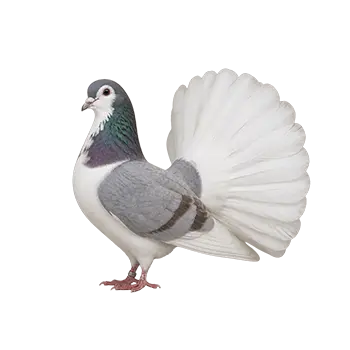
Grooming a Fantail Pigeon is a more involved process than grooming most other pigeon breeds, owing to the breed's signature tail fan and the importance of plumage condition for both aesthetic appeal and show competition. The tail of a well-bred Fantail comprises thirty to forty broad feathers arranged in a semicircular fan that the bird carries erect behind its head. Maintaining this tail in optimal condition requires attention to cleanliness, feather integrity, and the prevention of damage from the environment, flock mates, and improper handling.

Regular bathing, discussed in detail in the enrichment section of this guide, is the foundation of feather care. Between baths, spot cleaning may be necessary for birds with soiled tail or belly feathers. A damp cloth or cotton pad can be used to gently clean individual feathers without subjecting the entire bird to a full bath. For dried-on soil or droppings, a brief soak of the affected feathers in lukewarm water followed by gentle blotting with a clean towel is more effective and less stressful than scrubbing. Forced drying with a hair dryer set to low heat and held at a safe distance can speed the process, but many pigeons find the noise and airflow stressful, so this should be introduced gradually.

Feather conditioning sprays designed for show poultry and pigeons can enhance the sheen and smoothness of the plumage. These products typically contain light oils or silicone-based compounds that coat the feather surface, improving light reflection and providing a degree of water resistance. They should be used sparingly and only on clean feathers, as applying conditioner over dirty plumage simply seals in the debris. For show preparation, conditioning spray is typically applied the day before the event and the feathers are gently arranged by hand to ensure proper alignment.

Nail and beak maintenance is an occasionally necessary grooming task. Fantails kept on soft bedding may not wear their nails down naturally, leading to overgrown nails that can catch on surfaces and cause injury. Small animal nail clippers or dedicated bird nail trimmers can be used to clip the nail tips, avoiding the quick, which is visible as a darker shadow within the nail in light-nailed birds. Beak overgrowth is less common but can occur in birds with misaligned mandibles. A veterinarian or experienced fancier should address significant beak issues, as improper trimming can cause pain, bleeding, and difficulty eating.

Carriers and Transport Equipment

Transporting Fantail Pigeons safely requires carriers designed with the breed's physical characteristics in mind. Standard small-animal carriers and travel cages may work for common pigeons, but Fantails need additional clearance behind the body to accommodate the tail fan without compression or bending. A carrier that forces the tail feathers into a cramped position can cause broken feathers, kinked shafts, and stress to the tail muscles. The ideal Fantail carrier provides at least twelve to fourteen inches of depth from the front opening to the rear wall and sufficient height for the bird to stand in its natural upright posture.

Show carriers made specifically for ornamental pigeons are available from specialty pigeon supply vendors and represent the best option for keepers who transport birds to exhibitions regularly. These carriers are typically wooden or molded plastic boxes with wire front panels, ventilation holes on the sides, and a removable top or front door for easy access. Individual compartments prevent birds from damaging each other's plumage during transit, and padded interiors or removable fabric liners provide cushioning. Show carriers are designed to stack securely, which is important at crowded show halls where floor space is limited.

For occasional transport, such as veterinary visits, a well-ventilated cardboard box of appropriate dimensions can serve as a temporary carrier. The box should be tall and deep enough for the bird to stand naturally, with ventilation holes punched in the sides and a secure closure at the top. A layer of clean paper towels or newspaper on the bottom provides traction and absorbs droppings. While cardboard is not suitable for repeated use or long journeys, it is a practical and inexpensive solution for short trips and has the advantage of being disposable after use, which eliminates the risk of disease transmission between trips.

Transport timing and environmental management during the journey are as important as the carrier itself. Pigeons are susceptible to heat stress in enclosed carriers, and a car that feels comfortable to the driver can reach dangerous temperatures in a carrier placed in direct sunlight on the back seat. Position the carrier in a shaded, well-ventilated area of the vehicle, away from heating vents in winter and direct sun exposure in summer. For longer journeys, a small water dish secured inside the carrier prevents dehydration, though many birds will not drink during transit due to stress. Offering water during rest stops is an alternative approach that reduces the risk of spillage.

Show Preparation Supplies

Exhibiting Fantail Pigeons at pigeon shows is a tradition that demands meticulous preparation, and a dedicated kit of show supplies makes the process efficient and consistent. The show preparation process typically begins several weeks before the event with an assessment of each candidate bird's condition, feather quality, weight, and overall health. Only birds in peak condition should be shown, as judges evaluate not just breed-standard conformation but also the quality and cleanliness of the plumage, the brightness of the eyes, and the overall vitality of the bird.

Show cages are standardized enclosures provided at most pigeon shows, and birds must be comfortable and display well within them. Training birds to settle calmly in a show cage is part of the preparation process. Many exhibitors keep a show cage in the loft and periodically place their birds inside it for increasing periods, rewarding calm behavior with treats. A bird that panics, crouches in the corner, or flails against the cage bars will not show well regardless of its physical quality. Fantails should learn to stand proudly in the cage with their tail fan displayed, which requires confidence and habituation that only practice provides.

Cleaning supplies for show preparation include mild avian-safe shampoo for pre-show baths, cotton swabs for cleaning around the eyes and beak, and soft cloths for drying and polishing feathers. White and light-colored Fantails may need a whitening shampoo to remove yellowing caused by sun exposure or dietary pigments, though overuse of whitening products can damage the feather structure. Leg scales should be cleaned and lightly oiled with a food-grade mineral oil to present a smooth, healthy appearance. The beak can be polished gently with a soft cloth, and any flaking or rough areas addressed carefully to avoid causing discomfort.

Record-keeping supplies round out the show preparation kit. A notebook or digital record of show entries, results, judge comments, and placement details allows the exhibitor to track progress, identify areas for improvement, and make informed breeding decisions based on how their birds perform against the competition. Many experienced exhibitors keep detailed records spanning years, building a database that informs both their breeding program and their show strategies. Printed copies of band numbers, entry forms, and health certificates should be organized and readily accessible on show day to avoid last-minute scrambling.

Health and First Aid Supplies

A well-stocked first aid kit tailored to pigeon-specific health issues is an essential accessory for every Fantail Pigeon keeper. Pigeons are stoic birds that often mask illness until it is advanced, making early detection and prompt intervention critical for successful treatment. The first aid kit should be stored in a clean, accessible location near the loft and checked periodically to replace expired products and restock used items.

Basic wound care supplies form the foundation of the kit. Sterile gauze pads, self-adhesive bandage wrap, antiseptic solution suitable for avian use such as dilute chlorhexidine or povidone-iodine, and styptic powder for stopping minor bleeding are essential components. Fantails, with their elaborate tail plumage, occasionally sustain feather injuries that result in bleeding from broken blood feathers. A pair of hemostats or needle-nose pliers should be included for pulling broken blood feathers that continue to bleed despite styptic application, a common emergency procedure that every pigeon keeper should know how to perform.

Antiparasitic products should be on hand for both internal and external parasites. Pigeon-specific wormers effective against roundworms and hairworms are available in water-soluble and individual-dose formats. External parasite treatments for pigeon lice, feather mites, and red mites include permethrin-based sprays and powders labeled for avian use. Loft-level treatments such as diatomaceous earth for dusting perches and nest boxes and acaricidal sprays for crevices where red mites hide during the day are important preventive tools that should be applied on a regular schedule rather than only in response to visible infestations.

Electrolyte solutions and crop needles complete the emergency supply list. Birds that are dehydrated from illness, heat stress, or transport stress benefit from oral electrolyte solutions formulated for birds, which restore fluid balance and provide energy. A crop needle, which is a blunt-tipped syringe attachment that allows liquid to be delivered directly into the crop, is an invaluable tool for administering fluids and medications to birds that are too weak or reluctant to eat and drink on their own. Learning to use a crop needle safely requires instruction from an experienced fancier or avian veterinarian, as improper technique can injure the crop or trachea.

Cleaning and Sanitation Products

Maintaining a hygienic living environment is one of the most important ongoing responsibilities of Fantail Pigeon ownership, and the right cleaning tools and products make the task more efficient and effective. Pigeons produce substantial amounts of droppings relative to their body size, and a loft housing even a small flock requires daily attention to prevent the accumulation of waste that harbors bacteria, fungi, and parasites.

Scrapers and shovels designed for loft cleaning are indispensable daily tools. A flat-bladed scraper with a comfortable handle allows the keeper to remove droppings from perches, shelves, and hard floor surfaces with minimal effort. For larger lofts, a short-handled garden hoe or a purpose-built loft scraper with a wider blade speeds the process. Droppings should be collected in a bucket or bag and disposed of promptly rather than swept outside the loft door, where they attract flies and vermin and create a contamination zone near the enclosure entrance.

Disinfectants formulated for animal housing should be used on a regular schedule, typically weekly for the entire loft and more frequently for high-contamination areas like feeding stations, water stations, and nest boxes. Quaternary ammonium compounds, commonly known as quats, are widely used in pigeon husbandry because they are effective against a broad spectrum of bacteria and viruses and have relatively low toxicity to birds when used at recommended dilutions. The loft should be emptied of birds, scraped clean of organic material, washed with the disinfectant solution, and allowed to dry thoroughly before the birds are returned. Disinfectants do not work effectively on surfaces coated with organic debris, so mechanical cleaning must precede chemical disinfection.

Pressure washers and garden sprayers simplify the deep-cleaning process for larger lofts. A moderate-pressure washer can blast droppings and biofilm off concrete floors, walls, and perches in a fraction of the time required for manual scrubbing. After pressure washing, a pump-style garden sprayer filled with diluted disinfectant allows even application across all surfaces. Keepers should wear respiratory protection during pressure washing, as the aerosolized droplets from pigeon droppings can contain chlamydophila psittaci, the agent responsible for psittacosis, a zoonotic disease that causes flu-like illness in humans and can be serious if untreated.

Always consult a qualified professional before making any health-related decisions. This content is provided for informational reference only and should not replace professional guidance specific to your animal.