
Enrichment Needs

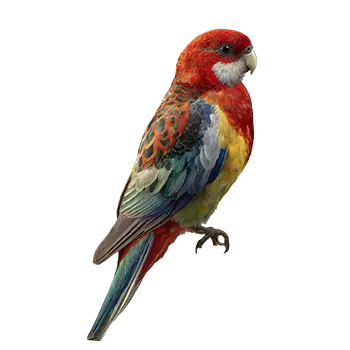
Eastern Rosellas are intelligent, curious birds that spend the majority of their waking hours in the wild engaged in active foraging, social interaction, and environmental exploration. In captivity, where food is delivered in a bowl and predator vigilance is unnecessary, a rosella that lacks enrichment redirects its mental energy into destructive behaviors, repetitive movements, and feather-damaging habits. Providing a thoughtful rotation of toys and enrichment devices is not optional embellishment but a fundamental component of responsible rosella care.

The enrichment needs of Eastern Rosellas differ in important ways from those of larger parrot species. Rosellas are not heavy chewers in the way that cockatoos or macaws are, so massive hardwood blocks and indestructible acrylic toys are largely wasted on them. Instead, rosellas respond best to items they can manipulate, shred, forage through, and explore. Their play style tends toward quick, investigative interactions rather than prolonged destruction sessions, which means a variety of smaller, replaceable toys serves better than a few large permanent fixtures.

Rotation is the single most effective enrichment strategy. A toy that fascinates a rosella on Monday may be completely ignored by Thursday. Rather than interpreting this as rejection, understand it as the bird having exhausted the novelty value of that particular item. Removing toys after a few days and reintroducing them after a week or two of absence often restores interest. Maintaining a library of fifteen to twenty toys and cycling five or six into the cage at any given time keeps the environment perpetually fresh without requiring constant new purchases.

Placement within the cage matters as much as selection. Toys clustered in one area create visual clutter without expanding the bird's activity zone. Distributing individual toys and foraging opportunities throughout the cage encourages movement across the full enclosure and promotes the kind of active, exploratory behavior that supports both physical fitness and psychological health.

Foraging Toys

Foraging toys are the most behaviorally valuable category of enrichment for Eastern Rosellas. In the wild, rosellas spend several hours each day searching for food across a varied landscape. This foraging effort provides physical exercise, cognitive engagement, and a sense of purpose that disappears when food is simply poured into an open dish. Foraging devices reintroduce the work component of feeding and represent one of the most impactful welfare improvements an owner can make.

Entry-level foraging toys include simple devices that require the bird to remove a lid, pull paper from a cup, or reach through openings to extract food. These are appropriate starting points for birds that have never been asked to work for their food and need a low-frustration introduction to the concept. Stainless steel or acrylic foraging cups with removable covers, paper-wrapped treat bundles, and food hidden in crumpled paper inside a small cardboard box all serve as effective introductory foraging challenges.

Intermediate foraging devices increase the number of steps required to access the food reward. Rotating foraging wheels, pull-drawer compartments, and stacking foraging trays require the bird to solve a simple mechanical problem before the food is revealed. These devices sustain interest longer than basic foraging toys because the problem-solving component adds a cognitive dimension beyond simple physical manipulation. Eastern Rosellas, while not as puzzle-driven as African Greys or cockatoos, are fully capable of mastering multi-step foraging devices with brief acclimation periods.

Natural foraging opportunities are often overlooked in favor of commercial products but can be the most engaging enrichment of all. A bundle of native grass seed heads tied to the cage bars, a pinecone stuffed with small seeds, or a shallow tray of sterilized soil with millet seeds scattered through it allows the bird to forage in a way that closely mirrors wild feeding behavior. These naturalistic foraging setups are inexpensive, easy to prepare, and consistently popular with rosellas that may show little interest in plastic commercial foraging devices.

Chew and Shred Toys

While Eastern Rosellas do not possess the destructive beak power of larger parrots, they are active chewers that benefit from a steady supply of shreddable materials. Chewing serves multiple functions beyond simple entertainment. It maintains beak condition by wearing down the continuously growing keratin layers, it provides a physical outlet for nervous energy, and the act of shredding materials satisfies a deeply rooted behavioral drive connected to nest-building and foraging behavior.

Softwood and vegetable-fiber toys are the best match for a rosella's moderate beak strength. Balsa wood blocks, yucca chips, sola wood flowers, and palm leaf bundles all shred satisfyingly under a rosella's beak without being so hard that the bird loses interest. Cork bark pieces are another excellent option, as they crumble apart in a way that many rosellas find highly rewarding. These materials should be untreated, undyed, and free of chemical preservatives. Vegetable-based dyes marketed as bird-safe are generally acceptable, but natural, uncolored materials are always the safest default.

Paper and cardboard toys offer low-cost enrichment that can be replenished daily without expense. Untreated cardboard tubes, small cardboard boxes with treats hidden inside, and strips of plain paper woven through the cage bars give the bird something to shred without the concern of hardware or small-part hazards. Avoid cardboard printed with heavy inks or glossy coatings, as these may contain chemicals that are inappropriate for oral contact.

Leather strips and vegetable-tanned leather components appear in many commercially assembled bird toys. These are generally safe for rosellas, but the quality of the leather matters. Only vegetable-tanned leather from reputable bird toy manufacturers should be used. Chrome-tanned leather, which is standard in most consumer leather goods, contains residual chromium compounds that are toxic if ingested. When in doubt about the tanning method used in a particular product, omit the leather component entirely and substitute with sisal rope or palm leaf strips.

Interactive and Puzzle Toys

Interactive toys that respond to the bird's actions with movement, sound, or visual changes provide a different quality of engagement than passive chew or shred toys. Bells are the classic example and remain popular with many rosellas, who enjoy both the auditory feedback and the swinging motion of a well-mounted bell. Stainless steel bells are the safest option, as they resist corrosion and do not contain the lead-based solder joints sometimes found in cheap jingle bells. The bell's clapper should be firmly attached or enclosed to prevent the bird from removing and swallowing it.

Swinging and rocking toys exploit the rosella's natural comfort with motion. Swings designed for medium parakeets, suspended ladders, and rocking perches all encourage balancing behavior that engages core muscles and provides vestibular stimulation. Many rosellas develop a strong preference for swinging and will spend extended periods on a favored swing, particularly in the late afternoon when activity levels naturally rise before the evening roosting period.

Puzzle toys that require the bird to manipulate sliding panels, lift covers, or unscrew components introduce cognitive challenge into the play experience. These toys should be selected at an appropriate difficulty level. An overly complex puzzle that the bird cannot solve after repeated attempts produces frustration rather than enrichment, while a puzzle that is solved instantly offers no lasting engagement. The best approach is to start with simple single-step puzzles and progress to more complex designs as the bird demonstrates proficiency and sustained interest.

Mirrors are a contentious enrichment item that warrants careful consideration. Some Eastern Rosellas enjoy interacting with their reflection, treating it as a social companion. Others become aggressively territorial toward the mirror bird or develop compulsive mirror-fixation behaviors. For rosellas housed alone, a mirror can provide a modest social surrogate, but its effect on the individual bird's behavior should be monitored closely during the first week of introduction. If signs of aggression, excessive regurgitation toward the mirror, or obsessive contact develop, the mirror should be removed permanently.

Foot and Preening Toys

Foot toys are small, lightweight objects designed to be held in the bird's foot while it chews, manipulates, or plays. Eastern Rosellas use their feet dexterously, picking up food items and small objects with ease, and many individuals develop a strong preference for this style of play. Small wooden blocks, vegetable-tanned leather knots, wicker balls, vine balls, and plastic chain links sized for medium parakeets all function well as foot toys.

The ideal foot toy for a rosella is light enough to grip comfortably, textured enough to hold without slipping, and composed of materials that are safe if chewed and partially ingested. Foot toys tend to spend time on the cage floor after being dropped, so they should be easy to wash and resistant to moisture-related degradation. Having multiple foot toys scattered on the cage floor creates a ground-level foraging and play zone that encourages natural floor activity.

Preening toys serve a behavioral function distinct from chew or foot toys. These items feature materials with textures that mimic feather structure, such as thin leather strips, cotton rope knots, and feather-like fabric strips. A bird that runs its beak through these textures engages its preening drive in a way that redirects potential over-preening of its own feathers. Preening toys are especially valuable for single rosellas that lack a companion bird to engage in mutual allopreening, which is a core social behavior in wild rosella flocks.

Positioning preening toys near the bird's preferred roosting perch capitalizes on the natural preening period that occurs after rest and before sleep. Most parrots engage in intensive self-maintenance preening during these transition periods, and having a preening toy within easy reach during these times maximizes its use. Preening toys should be inspected regularly for loose threads or fibers that could entangle toes, and any toy showing significant material degradation should be retired promptly.

Material Safety

Every toy introduced into an Eastern Rosella's environment must meet strict material safety standards, as birds interact with objects using their beaks and inevitably ingest small quantities of whatever they chew. The consequences of toxic material exposure in a bird weighing just four to five ounces can be swift and severe, making material vetting a nonnegotiable step in toy selection.

Metals present the highest acute toxicity risk. Lead and zinc are the most dangerous and most commonly encountered toxic metals in bird environments. Lead appears in some paint pigments, soldering compounds, and decorative metalwork. Zinc is present in galvanized wire, cheap quick-link connectors, and some imported toy components. Both metals cause heavy metal poisoning that manifests as weakness, green-tinged droppings, seizures, and organ failure. Only stainless steel and nickel-plated hardware should be used in toy construction and hanging mechanisms.

Plastics should be hard, durable, and free of phthalate plasticizers. Acrylic, polycarbonate, and food-grade polypropylene are all appropriate materials for bird toy components. Soft, flexible plastics and vinyl are more likely to contain plasticizers that leach during chewing and should be avoided. Any plastic component that shows tooth marks, cracks, or splintering should be replaced before sharp edges can cause oral or crop injuries.

Natural materials require their own safety considerations. Wood must be from non-toxic species and free of chemical treatments. Common safe woods include pine, birch, balsa, manzanita, java wood, and fruit woods from unsprayed trees. Toxic woods to avoid include cedar, red cherry, and any wood treated with pressure-treating chemicals. Rope components should be cotton, sisal, jute, or hemp. Synthetic ropes made from nylon or polyester can cause crop impaction if ingested in significant quantities. All natural materials should be inspected for mold, insect contamination, and chemical odors before introduction to the cage.

DIY Enrichment Ideas

Homemade enrichment items extend the toy rotation without ongoing commercial expense and allow owners to tailor challenges specifically to their rosella's preferences. The simplest DIY enrichment requires nothing more than items already in most households. A cupcake tin with treats hidden under crumpled paper balls in each cup creates a foraging station that most rosellas engage with immediately. A small paper bag loosely stuffed with clean straw or paper strips and containing a few seeds becomes a five-minute shred-and-forage session.

Natural materials sourced from safe trees and plants offer enrichment opportunities that commercial products cannot replicate. A freshly cut branch from an unsprayed apple tree, complete with leaves and perhaps a few blossoms, provides chewing material, perching surfaces, and visual novelty all at once. The branch can be wedged into cage bars or zip-tied to the cage top to create an overhead canopy that transforms the cage's vertical space. Eucalyptus branches, where available, are particularly appropriate for this Australian species, though they dry quickly and should be replaced when they become brittle.

Frozen treat blocks made by freezing chopped fruits and vegetables in water inside small cups or ice cube trays provide simultaneous foraging enrichment and cooling during warm weather. The bird must work to extract the food items as the ice slowly melts, extending the engagement period far beyond what the same food items would provide if offered in a dish. These should be placed in a shallow dish on the cage floor to contain meltwater.

Rotating household objects through the bird's play area introduces novel shapes, textures, and challenges at zero cost. A clean wooden clothespin, a stack of plastic bottle caps threaded on a sisal string, or a bundle of dried grass tied to the cage bars all provide legitimate enrichment. The key safety principle with DIY toys is to evaluate every component for toxicity, ingestion risk, and entanglement hazard before offering it. When in doubt about any material, exclude it. The goal is zero-risk enrichment, and the available safe materials are numerous enough that compromising on safety is never necessary.

Always consult a qualified professional before making any health-related decisions. This content is provided for informational reference only and should not replace professional guidance specific to your animal.