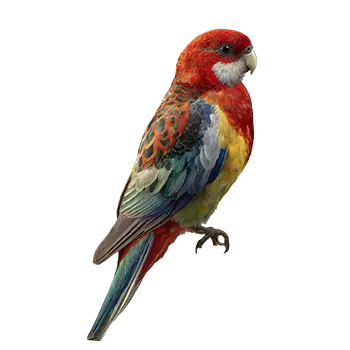

Eastern Rosellas are vigorous, fast-flying parakeets that require significantly more flight space than their moderate body size might suggest. In the wild, these birds cover large distances daily while foraging across open woodlands, farmland edges, and suburban gardens throughout southeastern Australia. Confining a species adapted to sustained horizontal flight in a cramped cage produces stress behaviors, feather plucking, and muscle atrophy that no amount of out-of-cage time fully compensates for.
The absolute minimum cage dimensions for a single Eastern Rosella are 36 inches long, 24 inches deep, and 36 inches tall, though this should be considered a baseline that serious keepers will exceed. Rosellas fly horizontally rather than climbing vertically like many hook-billed parrots, so cage length is the most critical dimension. A cage that is four feet or longer allows short flight bursts that maintain pectoral muscle tone and cardiovascular health. Tall, narrow cages marketed as parrot towers are a poor fit for this species despite their generous cubic volume, because the usable flight corridor is too short.
Bar spacing is a non-negotiable safety parameter. Eastern Rosellas require bar spacing of one-half to five-eighths of an inch. Wider spacing, common in cages designed for larger parrots, allows a rosella to push its head through the bars and become trapped, which can result in strangulation or severe neck injury. Narrower spacing designed for finches or budgies is acceptable from a safety standpoint but may make the cage feel visually closed and dark.
Bar orientation also influences the bird's experience. Horizontal bars on at least two sides of the cage allow rosellas to climb and move laterally along the walls, which provides exercise and expands the usable interior space beyond just the perches. Vertical-bar-only cages limit movement to hopping between perches, which is a less natural and less stimulating movement pattern for this species.