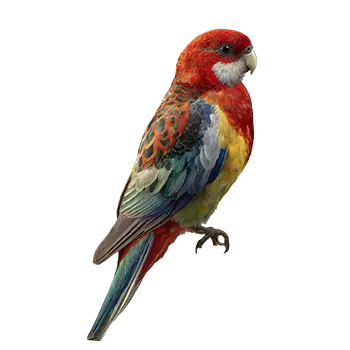

The integration of consumer technology into avian husbandry has accelerated significantly in recent years, giving Eastern Rosella keepers access to monitoring and management tools that were previously available only in professional breeding facilities and veterinary clinics. Smart cameras, digital scales, environmental sensors, and automated lighting systems allow owners to track their bird's health metrics, observe behavior remotely, and maintain optimal environmental conditions with a precision that manual observation alone cannot achieve.
For Eastern Rosellas specifically, technology addresses several care challenges inherent to the species. Rosellas are naturally reserved birds that often mask signs of illness until a condition has advanced considerably. This survival instinct, evolved to avoid drawing predator attention in the wild, means that subtle early warning signs such as minor weight loss, reduced vocalization, changes in droppings, or slight shifts in activity patterns may go unnoticed without systematic monitoring. Technology provides the continuous data stream that catches these changes before they become crises.
The value of any monitoring technology lies entirely in how consistently it is used and how its data is interpreted. A digital scale that sits unused on a shelf provides no benefit, and a camera feed that is never reviewed offers no insight. The most effective approach is to build technology use into the daily care routine so that data collection becomes as habitual as feeding and water changes. Even simple tools used consistently outperform sophisticated systems used sporadically.
Cost is a legitimate consideration when building a tech toolkit. The most impactful tools for rosella care, a gram-accurate digital scale and a basic temperature and humidity sensor, are among the least expensive. More advanced options like smart cameras, air quality monitors, and automated lighting systems add convenience and additional data points but are not essential for every keeper. Prioritizing purchases based on the specific gaps in the current care setup ensures that each investment delivers meaningful benefit.