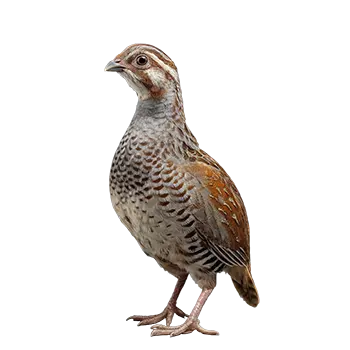

Coturnix Quail are not typically thought of in the same enrichment-dependent category as parrots or corvids, but their behavioral needs are real, consequential, and frequently unmet in captive settings. In the wild, Coturnix spend the majority of their waking hours engaged in ground-level foraging, dust bathing, exploring cover, and navigating complex vegetation. A bare wire cage with a feeder and waterer eliminates virtually all of these natural behaviors, leaving the bird with nothing to do for the twelve to sixteen hours it is awake each day. The behavioral vacuum that results is not a neutral condition. It produces measurable stress.
Feather pecking is the most visible symptom of insufficient enrichment. When quail lack outlets for their natural pecking and foraging drives, they redirect those behaviors toward flockmates, pulling feathers from backs, heads, and vents. Once established in a group, feather pecking can escalate to cannibalism, with wounded birds becoming targets for the entire flock. This is not a problem of individual aggression. It is a management failure rooted in environmental poverty. Providing appropriate enrichment outlets dramatically reduces the incidence and severity of feather pecking across the flock.
Reproductive behavior also benefits from enriched environments. Hens in stimulating enclosures with hiding options, substrate variety, and foraging opportunities lay more consistently and produce eggs with stronger shells than hens in barren cages, even when the nutritional inputs are identical. The physiological mechanism behind this observation involves cortisol. Chronic stress suppresses reproductive hormones, and enrichment reduces chronic stress by allowing the expression of species-typical behaviors that the bird is neurologically driven to perform.
Enrichment for Coturnix does not require elaborate or expensive equipment. It requires an understanding of what these birds are motivated to do and the provision of simple opportunities to do it. The most effective enrichment strategies for this species center on substrate interaction, foraging complexity, cover and hiding options, and environmental novelty. None of these require the climbing structures, puzzle feeders, or manipulable objects that dominate the enrichment market for parrots and other psittacines.